Welcome to the Marienborn district
Marienborn has a village character in an attractive location. On this page, we introduce you to the district at the foot of the Rhine-Hessian plateau and offer practical links for life in Marienborn - from the children's map, events, daycare centers and senior citizens' guide to the local administration.
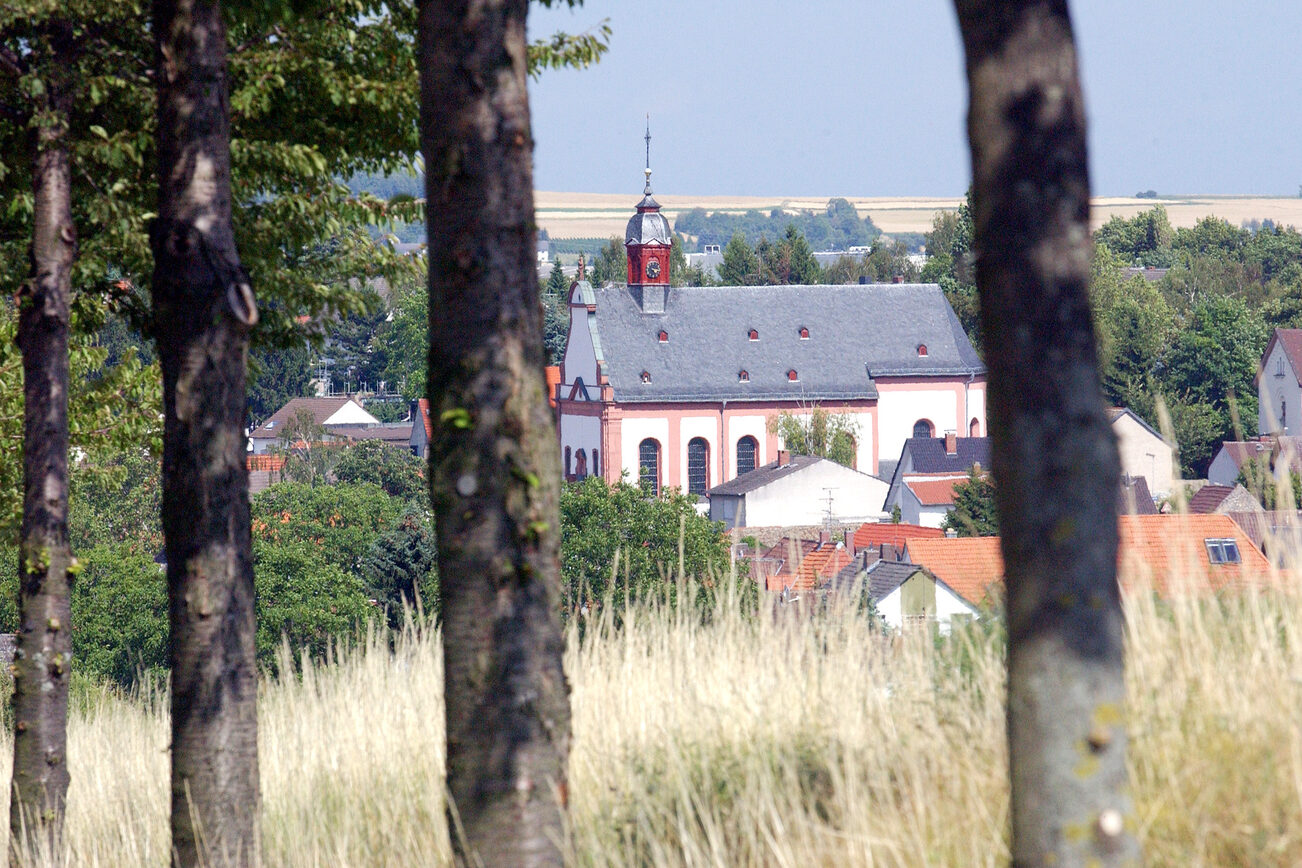
District portrait
Marienborn, located southwest of the state capital, is the second smallest district of Mainz, situated between the Mainz-Alzey railway line and the Mainz-Süd motorway junction. There was no indication that it would develop into a popular residential suburb. People were initially reluctant to settle in the heavily wooded area that is now Marienborn.
Although there was already a well-developed Roman road to Gaul and Roman villas, it was not until the 10th century that large-scale clearing began in order to establish settlements. Then, however, a prominent Mainz resident made his mark: at the behest of Archbishop Willigis (975-1011), builder of the cathedral and St. Stephen's Church in Mainz, a chapel is said to have been built in Marienborn. Over time, the name "Kapelle zu Brunnen" (Chapel at the Fountain) became "Born" and, in the 17th century, "Marienborn" for the first time. In the 18th century, the village church with its Baroque interior was built.
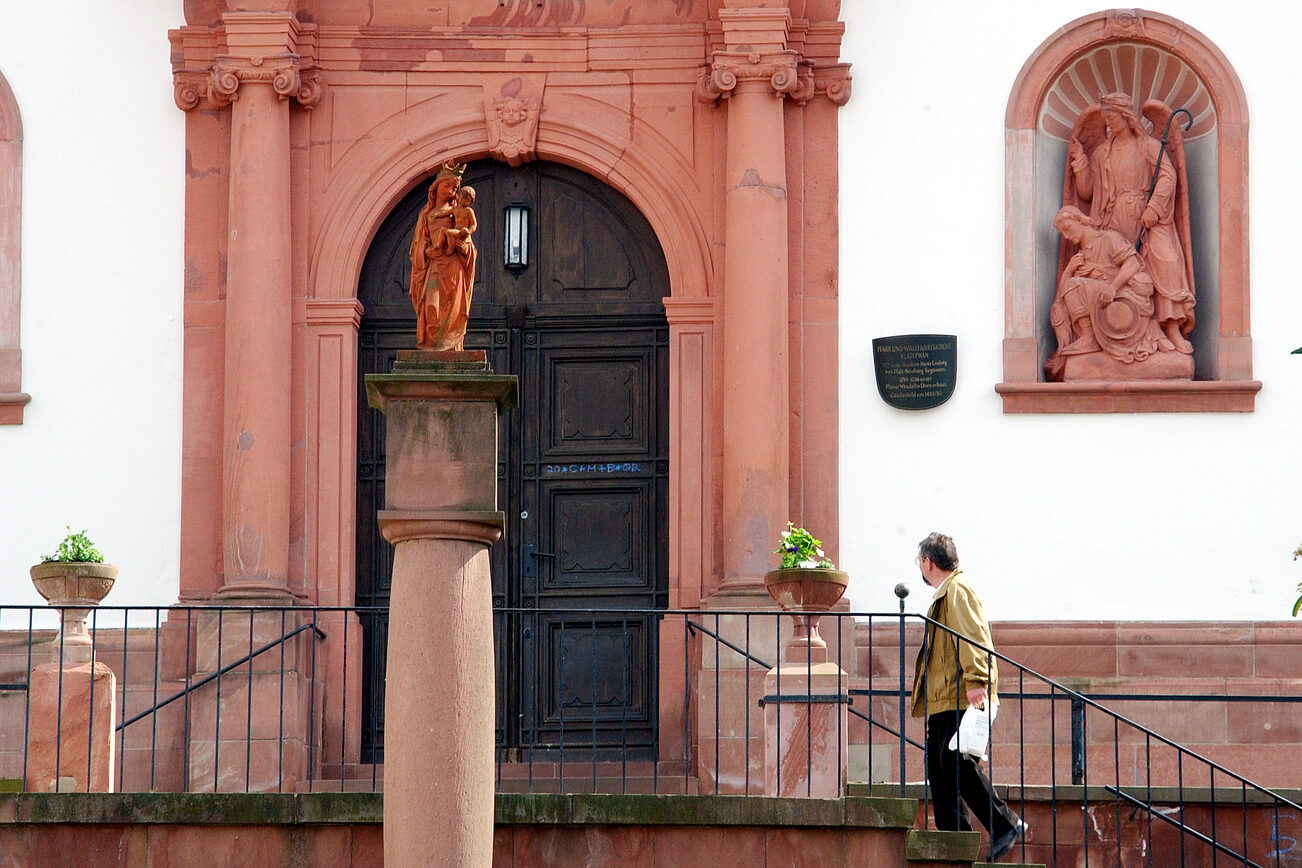
The sacred image in the altar from 1748 dates back to the 15th century and attracts numerous pilgrims to Marienborn throughout the year. In the 18th and 19th centuries, Marienborn was an important part of the fortifications surrounding Mainz.
The location, at the foot of the Rhine-Hessian plateau, was ideal as a military headquarters. This was also the case in 1793, when a Prussian army recaptured Mainz from the French. The troops of Duke Karl August von Weimar were also stationed at Marienborn at that time. The duke had brought his minister of state, Johann Wolfgang von Goethe, with him. Goethe wrote "The Siege of Mainz" and parts of his "Reinecke Fuchs" in the Chausseehaus. The young Heinrich von Kleist and Carl von Clausewitz were also in Marienborn at that time.
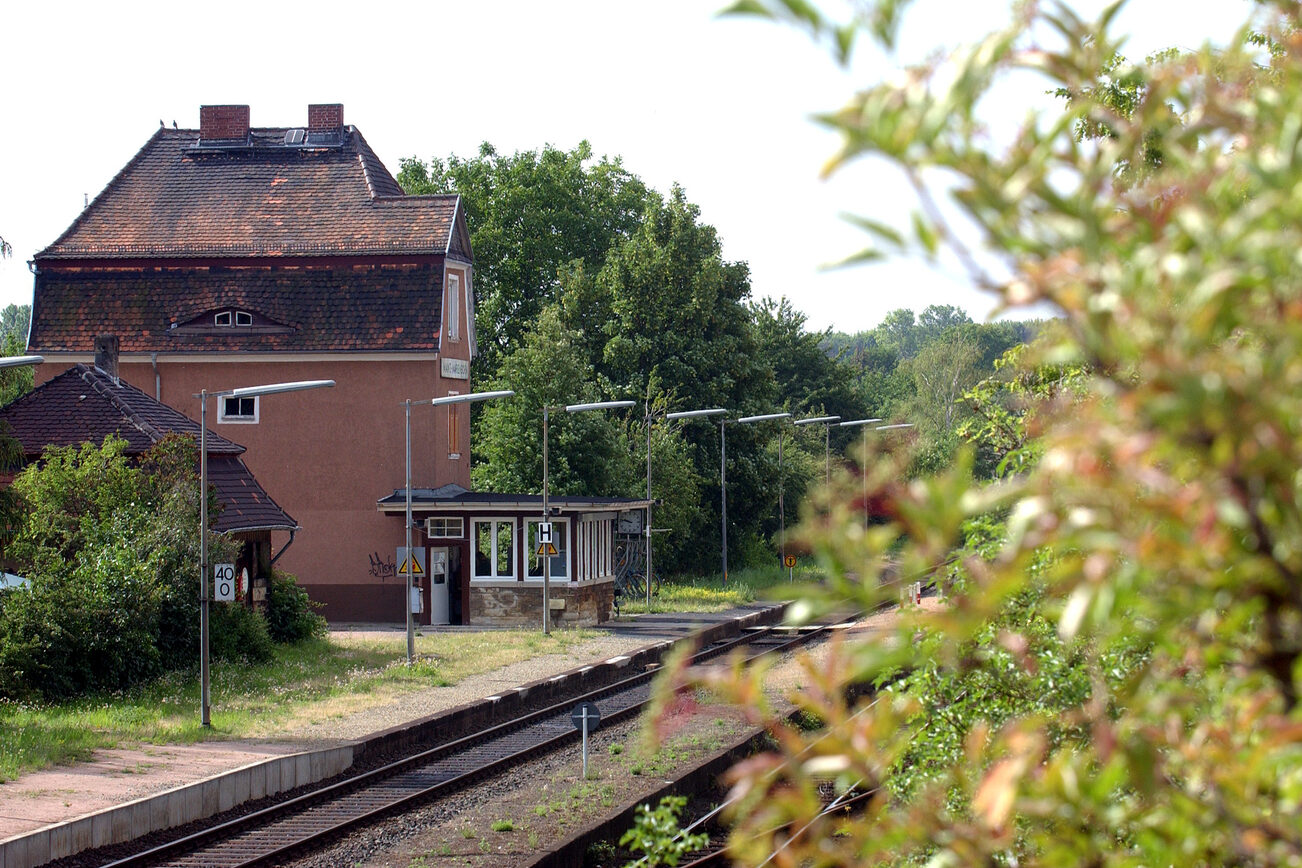
With the construction of the Ludwigsbahn railway line to Alzey in 1871, the town gained a direct connection to Mainz and was finally incorporated into the capital of Rhineland-Palatinate on June 8, 1969. Marienborn is also attractive due to its close proximity to the ZDF television station and the research center of the glass manufacturer SCHOTT.
Marienborn has retained its village character. The medieval layout with the typical Central German farmsteads surrounding the church is a good example of this. The lively club scene, as well as the activities of the churches and community institutions and the festivals, are evidence of an intact community. The "Marienborner Kerb" or Christmas market are an integral part of community life in this small but charming district.
Life in Marienborn
Note
Some districts offer private websites where you can find further information about local life. However, the city of Mainz accepts no responsibility for the accuracy or timeliness of this information.