
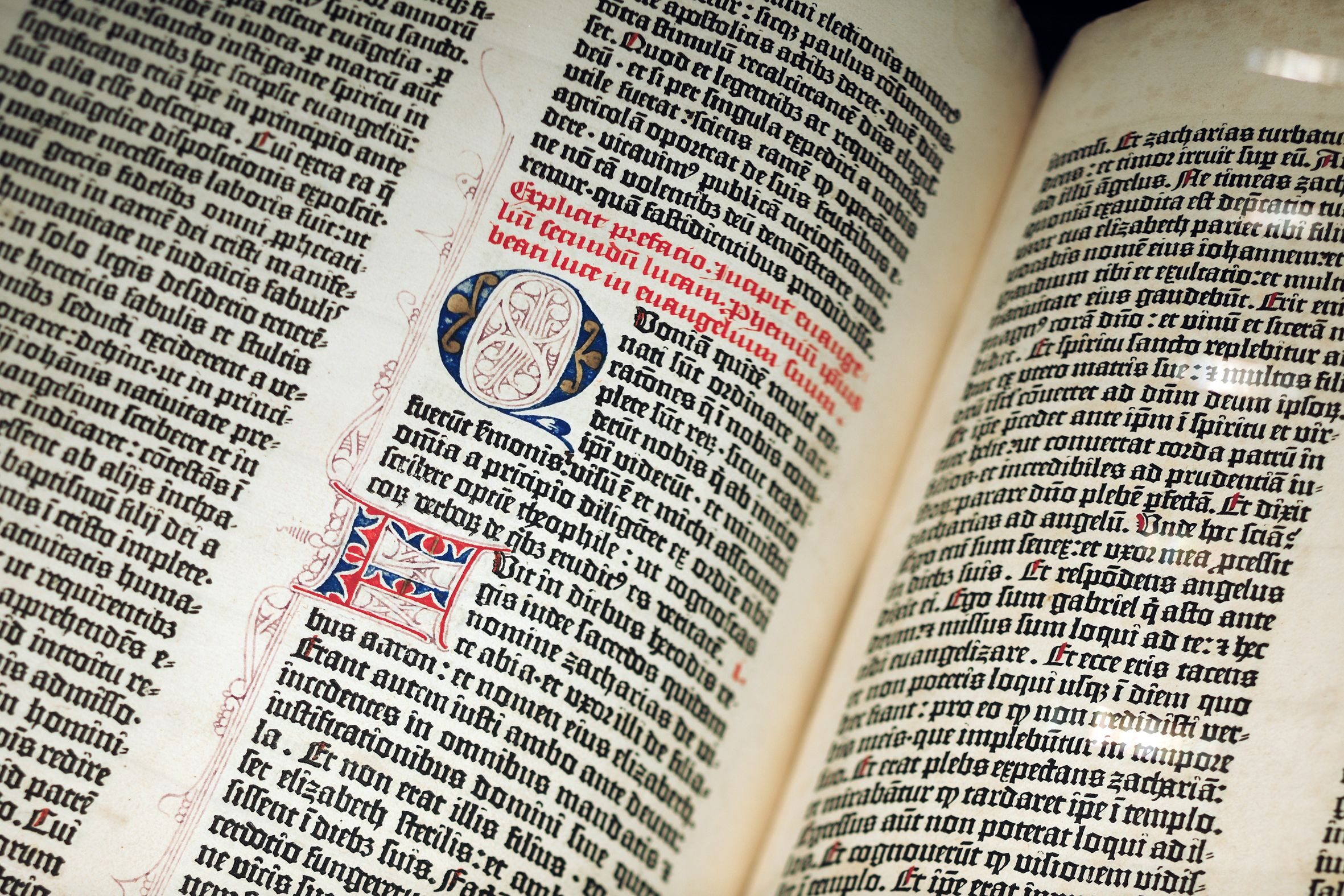
The Gutenberg Bibles
The 42-line Bible (known as "B42") represents the pinnacle of Johannes Gutenberg's work. To this day, it remains one of the most beautiful and valuable printed books ever produced and marks the impressive beginning of the age of book printing. Two of the forty-nine surviving copies worldwide are held in the collection of the Gutenberg Museum.
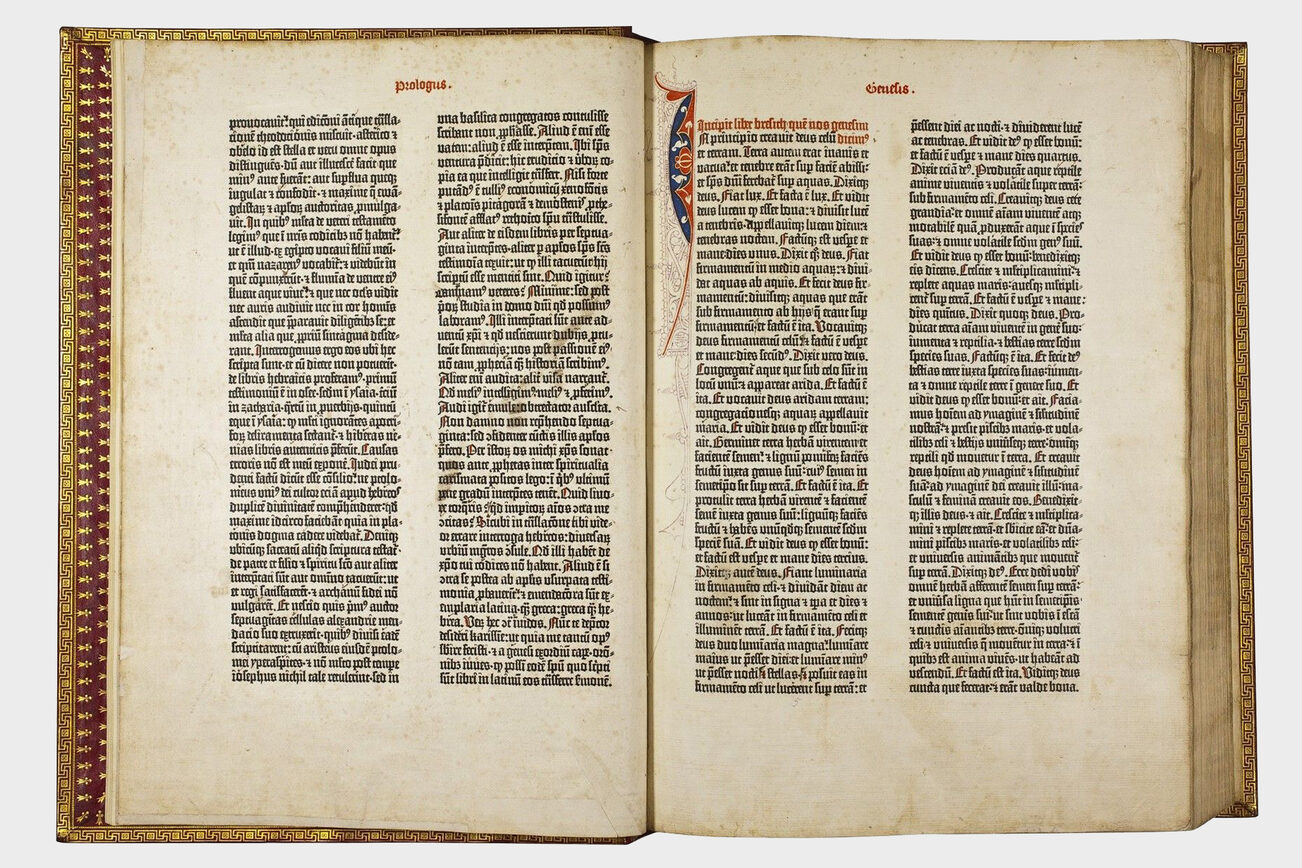
Gutenberg's masterpiece
Gutenberg created the two-volume work, comprising a total of 1,282 pages, between 1452 and 1455 with the help of numerous assistants. Of the approximately 180 copies produced in his edition, 150 were probably printed on paper and 30 on more expensive parchment. After initial attempts with red printing, only the text was printed. Each buyer had the colored decoration and binding made independently by specialized craftsmen, the rubricators and illuminators. That is why each copy of the Gutenberg Bible is unique.
With the "B42," Gutenberg placed the printed book on the same aesthetic level as the previously widespread manuscripts. The development of printing with movable type led to a veritable revolution in science, economics, and culture, and became a milestone in human history.