
Maintenance of green spaces
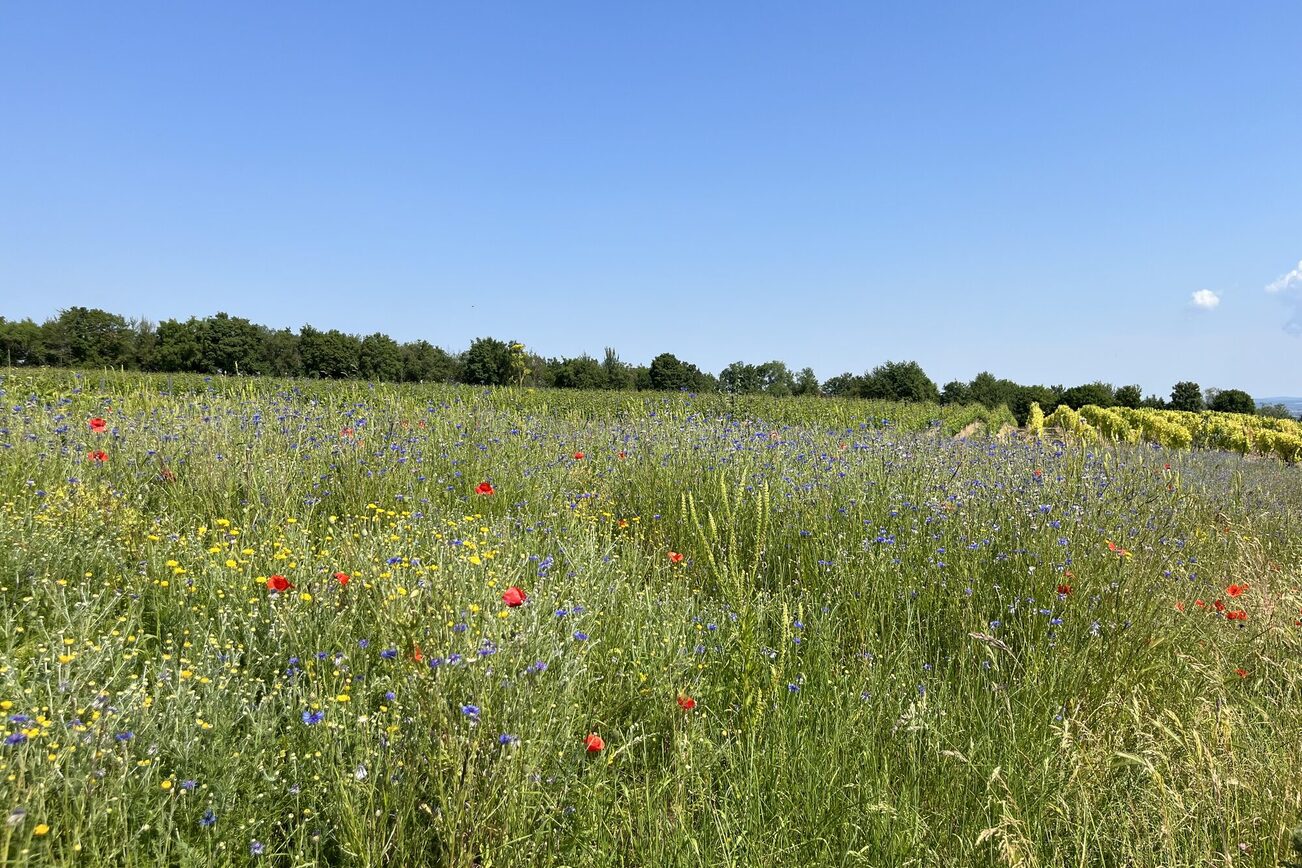
Extensive meadows - colorful flowers & diverse insects
The ongoing intensive cultivation of grassland and the progressive sealing of open spaces are leading to a continuing loss of biodiversity. This immense decline in the biological diversity of native animal and plant communities therefore requires additional near-natural habitats—including in the urban area of Mainz. Only in this way can a diverse and stable fauna and flora be established in Mainz in the future.
For many years, the Parks and Environment Department of the state capital Mainz has therefore been striving to promote the spread of meadow flowers and wild bees in roadside greenery and suitable green spaces through extensive, i.e., reduced, maintenance. This approach is also in line with the Mainz Biodiversity Strategy (LINK) adopted by the Mainz City Council in 2020. Across the city, around 60% of lawns are now extensively managed and mowed only one to three times a year. This is also the reason why greater biodiversity has now established itself there. The timing of mowing is not the same every year, but is based in particular on weather conditions.

Wherever it makes sense and is possible, extensification will be consistently pursued and qualitatively improved. In the future, meadows at selected and suitable locations will only be mowed once or twice a year. Mowing will be carried out in a mosaic pattern to protect insects. Some fringe areas will remain untouched until early summer as winter habitats for insects and microorganisms. Mowing is carried out with an insect-friendly bar mower and the cuttings are cleared away as far as possible. This removes nutrients from the soil, making it poorer and providing good conditions for less competitive meadow flowers. This allows them to seed and reproduce well after they have finished flowering.
However, traffic safety must also be taken into account when maintaining green spaces. Accordingly, green structures must not obstruct the various road users in moving and stationary traffic. For this reason, 1 m wide safety strips along paths and roads are mowed more frequently.
The extensive meadows catch the eye in the cityscape. They differ from the closely mowed lawns at first glance, as the grasses and flowering plants have grown taller. Some people are bothered by what they perceive as "inadequate" maintenance. However, it is only through the maintenance concept described above that species-rich and near-natural meadows can gradually develop, enabling them to meet the challenges of climate change and species extinction.
Signs draw attention to special care features
Biotopes are habitats for specific animal and plant species.
These habitats deserve protection because they are either
- are extremely rare,
- have high ecological value, or
- are threatened with destruction.
The information signs are intended to draw the attention of interested observers to special green structures and components that are maintained by the Parks and Environment Department.


