
Pleistocene
Over the last million years, our climate has repeatedly fluctuated between cold and warm periods. These changes are typical of ice ages.

2.6 MILLION YEARS - 0.0117 MILLION YEARS
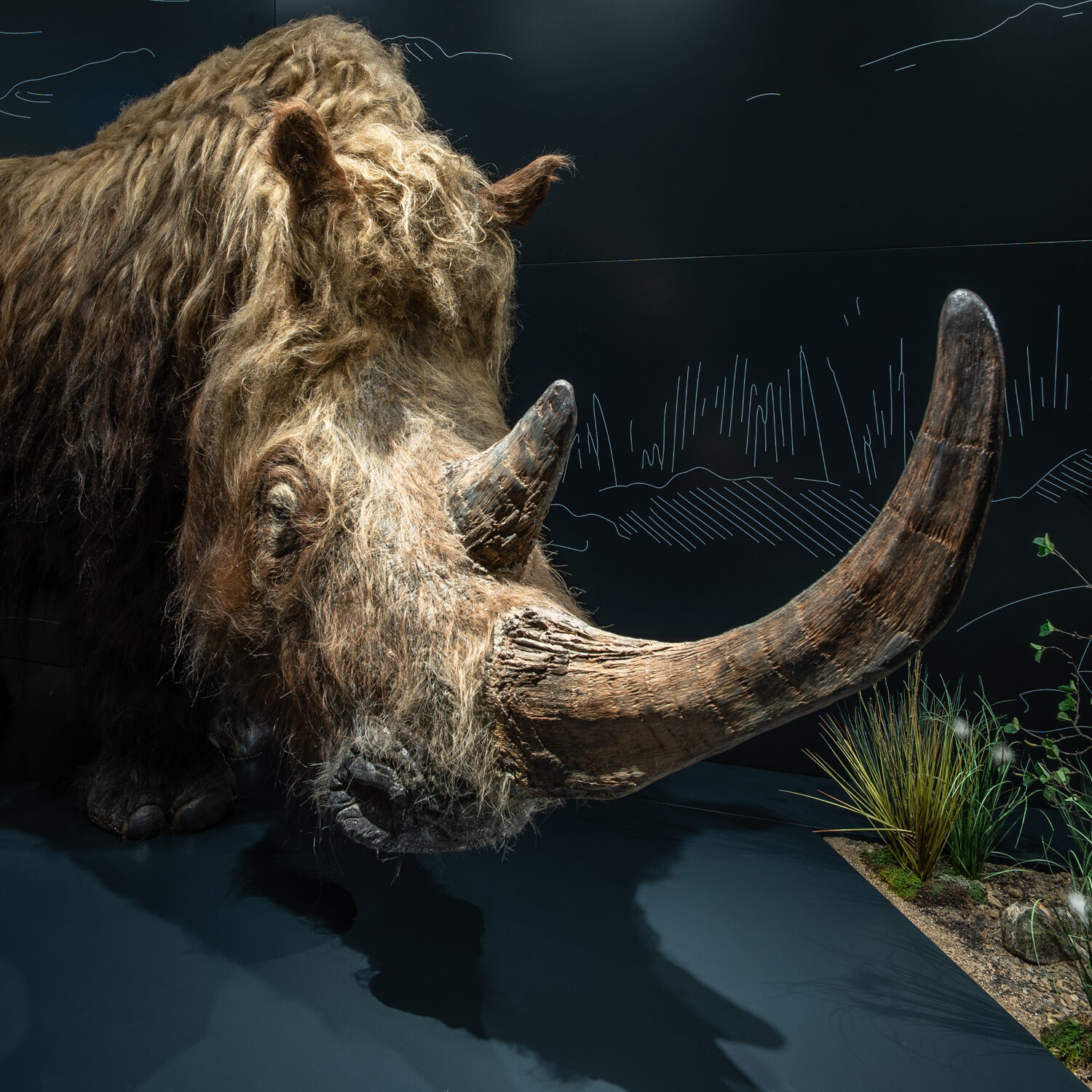
The woolly rhinoceros
During the cold periods of the Ice Age, vast cold steppes dominated the landscape. Although the vegetation appeared sparse at first glance, it provided sufficient nourishment for herbivores. Among the animals that were able to cope with the freezing cold were woolly rhinoceroses. They fed mainly on grasses and sedges. However, their diet also included composite flowers, cotton grass, willows, and alders. They used their long noses to "sweep" across the ground to expose plants. This is confirmed by fossil finds in which the underside of the horn is worn down. In addition, the horn was certainly a dangerous weapon, as it is for today's rhinos. The Ice Age rhinos preferred river lowlands as their habitat.

THE STEPPE MAMMOTH MAMMUTHUS TROGONTHERII
The steppe mammoth is considered to be a descendant of the southern mammoth and an ancestor of the woolly mammoth. While the woolly mammoth was no larger than a modern elephant, the steppe mammoth can truly be described as mammoth in size. With a shoulder height of up to 5 m and tusks that could reach a length of 5 m, steppe mammoths are among the largest proboscids of all time. They roamed the Rhine Valley between 900,000 and 400,000 years ago.
Left: Steppe mammoth
Mammuthus trogontherii
Largest upper arm of a
proboscidean ever found
