"Mainz Shines" Pilot Project Enhances Münsterplatz and the Central Downtown Axis
The state capital of Mainz, the municipal sanitation department, and city-affiliated companies are coordinating cleaning and maintenance efforts from Bahnhofstraße to Schillerstraße.
A coordinated cleanup campaign taking place between August 10 and 15, 2026, will improve the area along the route from Bahnhofstraße to Münsterplatz to Schillerstraße and on to Kleine Langgasse. The campaign is part of the “Mainz Glänzt” initiative and is intended to further evaluate and develop a cleaning and organizational model that can be used citywide in the future.
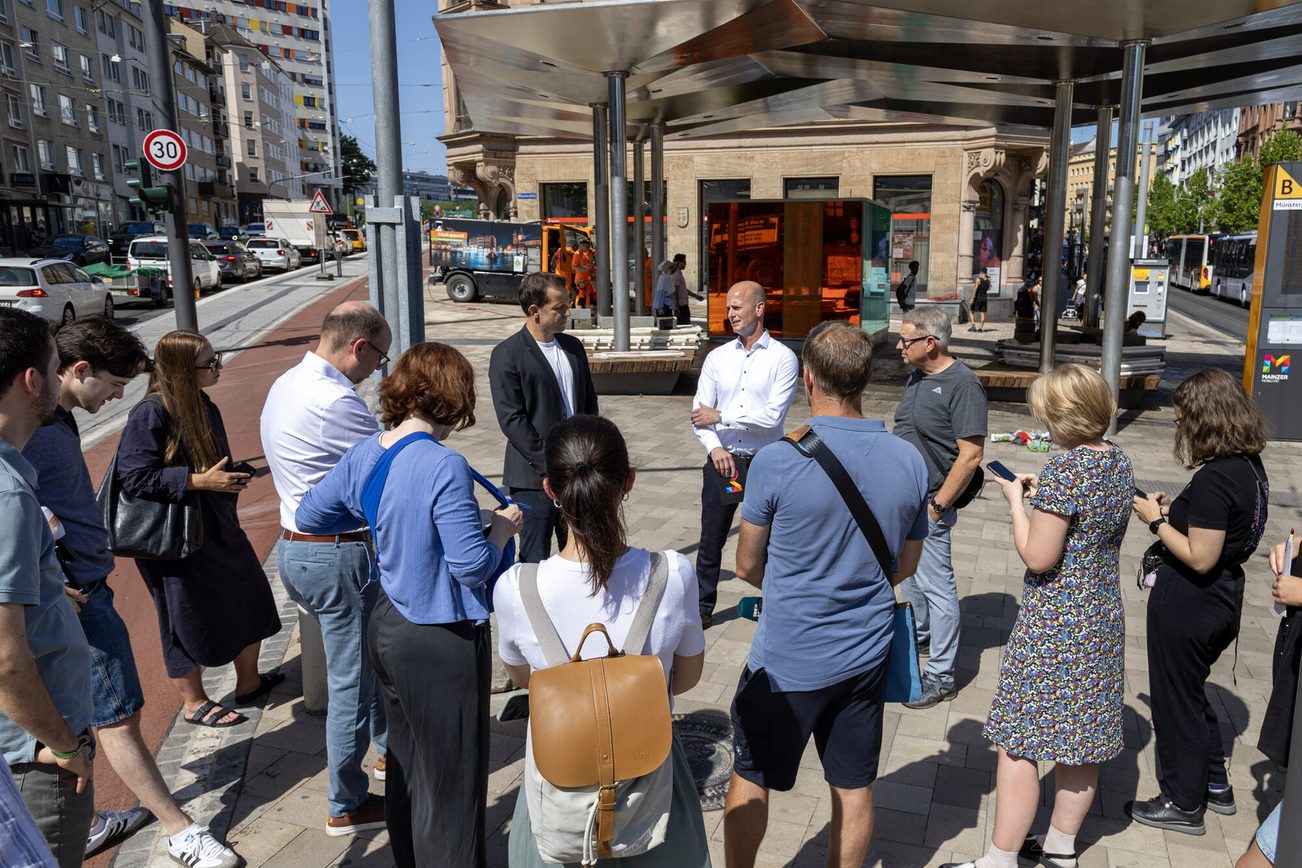
Münsterplatz and the adjacent streets are among the busiest public areas in downtown Mainz. In preparation for the upcoming reopening of Binger Straße, numerous city departments, municipal agencies, and city-affiliated companies, as well as external partners, are coordinating intensive cleaning of the ground, as well as the cleaning of trash cans, green spaces, benches, signs, transit stops, bicycle infrastructure, and restroom facilities.
“With ‘Mainz Shines,’ we don’t just want to improve individual areas in the short term. Our goal is to organize urban cleanliness more efficiently, in a more coordinated and transparent manner, on a permanent basis,” says Mayor Nino Haase. “That’s why we’re testing an integrated concept for an entire urban space at Münsterplatz. The experience we’ve already gained at MVG transit stops, on Lotharstraße, and on Schusterstraße is helping us develop clear standards and responsibilities and create a solid foundation for further measures in the city center.”
Intensive Cleaning with Hot Water
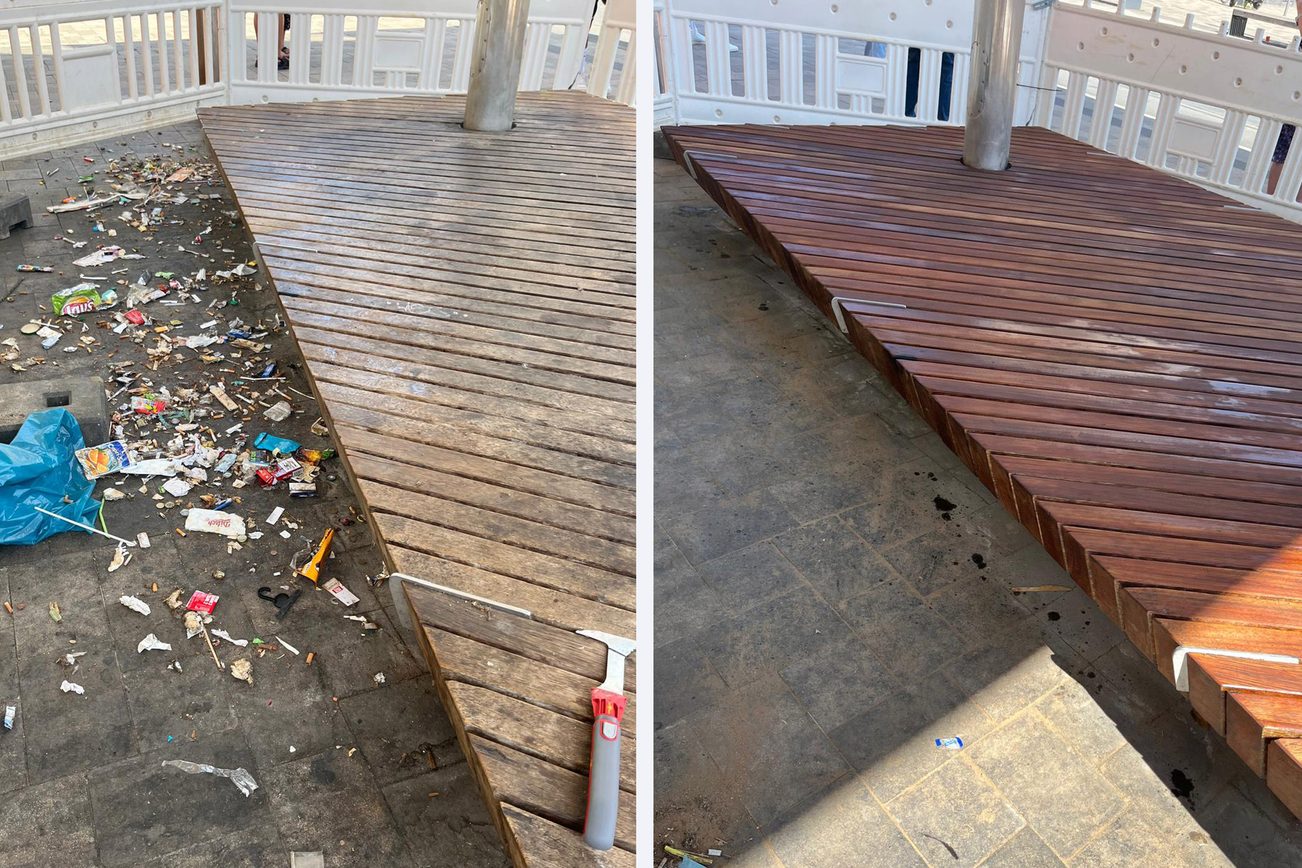
The municipal cleaning department is removing litter from the project area, cleaning the ground surfaces and trash cans, and removing chewing gum residue, among other things. In addition, flower beds and tree pits are being cleaned.
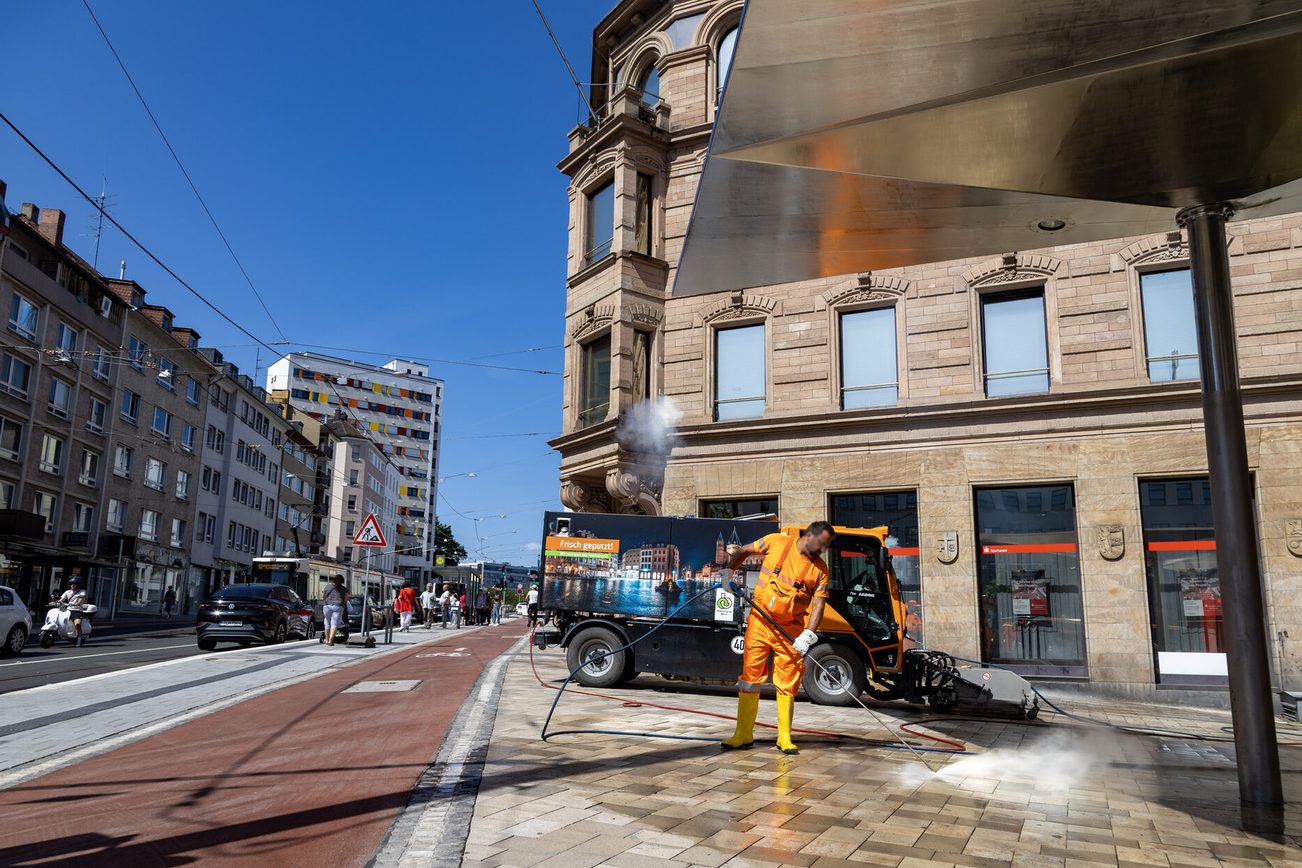
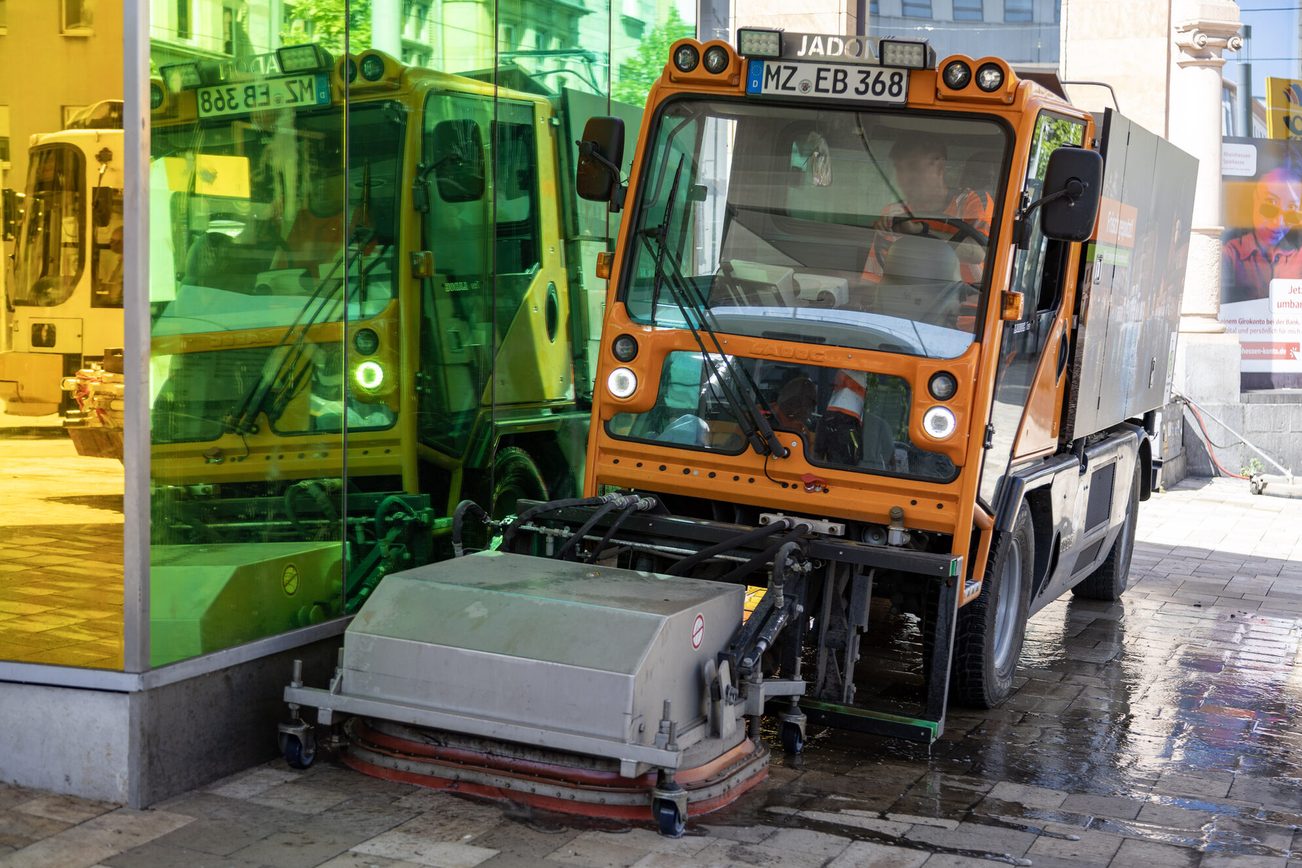
On Bahnhofstraße and Münsterplatz, a so-called JADON machine—a specialized device for deep-cleaning heavily trafficked paved areas—is also being used. This machine operates with high pressure and heated water, but without chemical cleaning additives. This allows even deeply embedded dirt—which has accumulated in the pavement over many years—to be loosened.
Other teams are responsible for, among other things, green spaces and benches, signage and bike racks, electrical boxes, bus stops and ticket machines, as well as the removal of graffiti and stickers. These efforts are coordinated in terms of both organization and timing.
“Keeping the city clean is a shared responsibility. When we use reusable items instead of disposable ones and make sure to dispose of waste properly, we conserve resources and actively work to prevent environmental pollution. I would like to thank the people—especially the city sanitation workers—who keep our squares, streets, and green spaces clean every day and who are also actively pitching in and showing great dedication here on the Münsterplatz project,” explains Janina Steinkrüger, Head of the Department of Environment and Mobility.
Mainzer Mobilität Cleans Transit Stop Infrastructure
Mainzer Mobilität is contributing to the Münsterplatz project by, among other things, cleaning and inspecting mobility information kiosks, ticket vending machines, its own waste bins, and meinRad stations. Graffiti and stickers are also being removed, and any damage found is being repaired whenever possible.
This work builds on the transit stop initiative launched in December 2025 in collaboration with the city and Mainzer Stadtwerke. The initiative aims to improve cleanliness, functionality, and the quality of the passenger experience at transit stops.
“Clean transit stops with up-to-date and reliably functioning passenger information are an important part of the quality our passengers experience every day,” explains Florian Wiesemann, Managing Director of Mainzer Verkehrsgesellschaft. “Many different areas of responsibility intersect in the vicinity of a transit stop, extending far beyond our own. Close coordination—particularly with city officials as part of the ‘Mainz Glänzt’ initiative—helps us improve the conditions around our transit stops more effectively.”
Results will be evaluated jointly
Once the pilot project is complete, the measures and workflows will be evaluated. The analysis will focus in particular on the effectiveness and sustainability of the cleaning procedures, the required allocation of personnel and resources, and opportunities for better coordination of responsibilities and response procedures. The goal is to use these findings to develop a transferable operational model for other heavily frequented areas of the city center.
At the same time, Mayor Haase appeals to everyone to help keep the cleaned areas clean in the long term: “Despite all the hard work of our employees, the most effective way to keep things clean is for all of us to pitch in. Gum, cigarette butts, and other trash belong in the trash cans, not on the ground. Only together can we ensure that Mainz doesn’t just shine after a deep clean.”
During the work, there may be temporary section-by-section closures, noise, and water vapor in the project area. Nearby businesses and residents were informed of the measures in advance.