
Bretzenheim gold guilder treasure discovered in KENOM
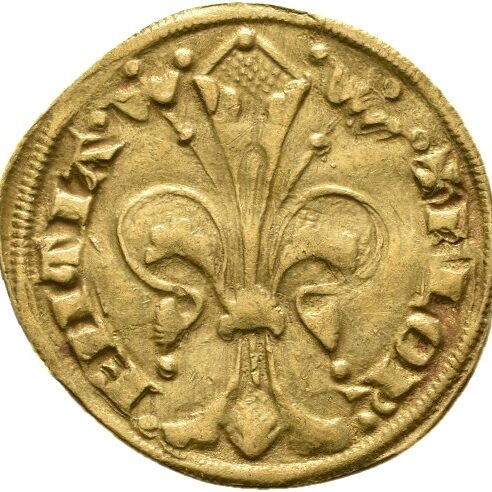
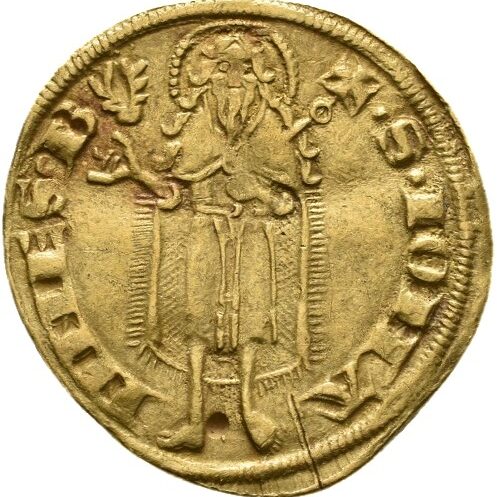
The hoard of coins discovered in 1882 in a field near Bretzenheim—consisting of 1,005 gold guilders—is the second-largest medieval gold coin hoard ever found in Germany. The hoard, which was presumably buried around 1390 during the war raging in Rheinhessen between the Rhenish League of Cities and Elector Ruprecht I of the Palatinate, reflects the circulation of money in the Rhineland toward the end of the 14th century.
In addition to the bulk of Florentine gold guilders, it contained Venetian ducats as well as Bohemian, Silesian, Hungarian, southern French, Burgundian, Dutch, southern German, and Lübeck guilders, as well as numerous guilders from the electors of Cologne, Trier, the Palatinate, and Mainz. To finance the purchase, most of the treasure was sold to collectors and other coin cabinets in 1883 after it had been scientifically cataloged. Seventy-six specimens remained in the possession of the municipal coin cabinet.
As part of an exercise on late medieval coin history at the History Department of Johannes Gutenberg University Mainz and a subsequent student project, the part remaining in the coin cabinet of the city archives has now been cataloged by Maya Lerner, a student of philosophy, and can be searched at www.kenom.de.
Further information
To view the gold guilders, enter "Bretzenheim treasure" in the search function.