
Himalayan birch
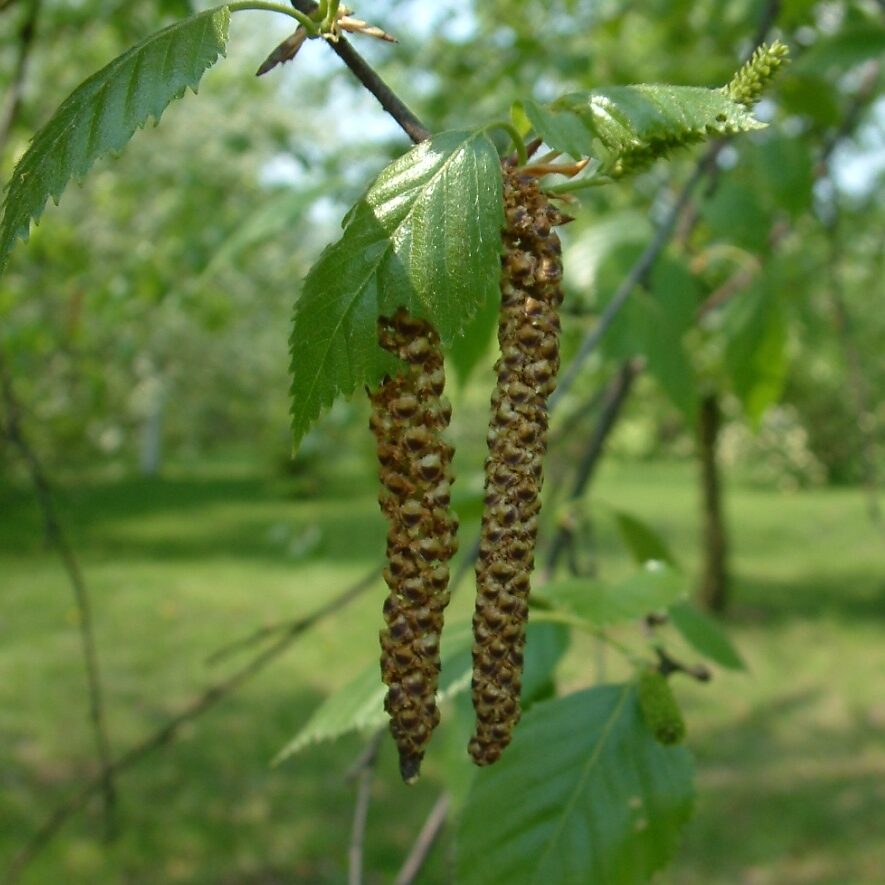
The Himalayan birch, often referred to as snow birch due to its bright white bark, grows significantly slower than the sand birch and is also much smaller, reaching a maximum height of 20 meters. It is often seen as a large shrub with multiple stems. Due to its rather modest growth, it is ideal for use in gardens as a framing and space-creating structural plant at the boundaries of the property.
- Origin: Western Himalayas
- Growth height: up to 20 meters
- Leaves: 5–7 cm long, heart-shaped with pointed tips; light green; slightly serrated at the edges; autumn color golden yellow
- Flower: May; 5 cm long, hanging, green-yellow catkins
- Fruit: August/September; cylindrical fruit catkins
- Soil/location: extremely undemanding; neutral to acidic soils; very frost-resistant
- Special feature: In contrast to the sand birch, the Himalayan birch develops a comparatively deep root system. This anchors it better in the soil and makes it less susceptible to strong winds. In addition, it very rarely has fine roots in the upper soil layer, which allows it to compensate better for compaction.