Laubenheimer-Bodenheimer Ried
The current nature reserve was designated in two stages. In 1982, 71 hectares were designated as the Laubenheimer-Bodenheimer Ried Nature Reserve, and in 1998, the reserve was expanded to approximately 180 hectares. In 2010, the first section designated in 1982 was designated as a bird sanctuary and a FFH (Fauna-Flora-Habitat) area.
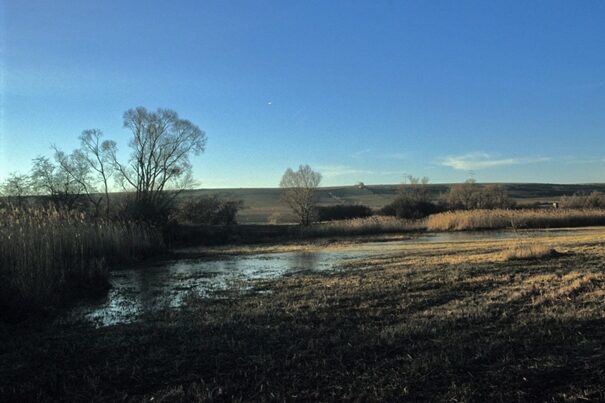
The extraction of clay in the 19th century created the diverse waters of the North and South Ponds, which were supplemented by the newly created East Pond during the construction of the polder. Together with the former flood channels of the Rhine and the high groundwater level, they form a rich mosaic of floodplain habitats and are home to a variety of animal and plant species. In addition to extensively used meadows, other characteristic habitats include extensive reed beds and species-rich river valley meadows.

Wildlife
The conservation measures focused in particular on the rich and endangered bird life of the waters and reed beds. Endangered species such as the bluethroat, kingfisher, reed warbler, marsh harrier, spotted crake, and little bittern depend on these habitats and are now found nationwide only in the Upper Rhine Valley. Meadow breeders and water's edge dwellers such as the lapwing and various wading birds benefit from the wide open spaces and man-made ponds. Several pairs of white storks have returned in recent years and can be easily observed. In addition to the hairy root moth, many species of dragonflies and snails, the crested newt and grass snake are also among the inhabitants of the Ried. In the occasionally flooded fields and meadows, the primitive and rare leaf-footed crustaceans hatch in summer.
Species of birds under special protection and their habitat requirements


Plant world
The varying water supply leads to a high degree of diversity in the location. This results in the special biodiversity of the river valley meadows of the Ried. The favorable climatic conditions (wine-growing climate) also allow plants from the Mediterranean region and continental Asia to penetrate as far as the Upper Rhine Plain. To date, over 630 plant species have been identified in the area, which can be discovered along the designated paths by flood channels and ditches. Botanical highlights include the meadow iris, which is restricted to a tiny area, and the rich populations of marsh spurge and marsh mallow, which are rare elsewhere. The rare divine herb and toothed sweet clover are further botanical specialties.
Other plant species in the Laubenheimer-Bodenheimer Ried
Danger, protection and request for consideration
The Laubenheim-Bodenheim Ried is subject to several categories of protection, including the highest EU protection as an FFH area. These emphasize the special value and irreplaceability of the animal and plant species living here. The communities, which have also been shaped by human influence, are unique and thus part of our cultural heritage. Their preservation is therefore a special responsibility of the region, which is realized through extensive maintenance measures by numerous stakeholders. We invite you to discover and enjoy this natural wealth. You too can play an important role in its protection by observing the regulations within the nature reserve and behaving in a considerate manner.
Rules of conduct for the protection of endangered species:
- Please stay on the paths and do not make any noise.
- Please protect bird nests and keep dogs on a leash.
- If you are a horse rider, please use the designated riding trails.
- Please do not pick plants or disturb animals.
- Please do not leave any litter behind.
Contact us
Address
Environmental planning
Grün- und Umweltamt, Haus D
Geschwister-Scholl-Straße 4
55131 Mainz
Postal address
55028 Mainz