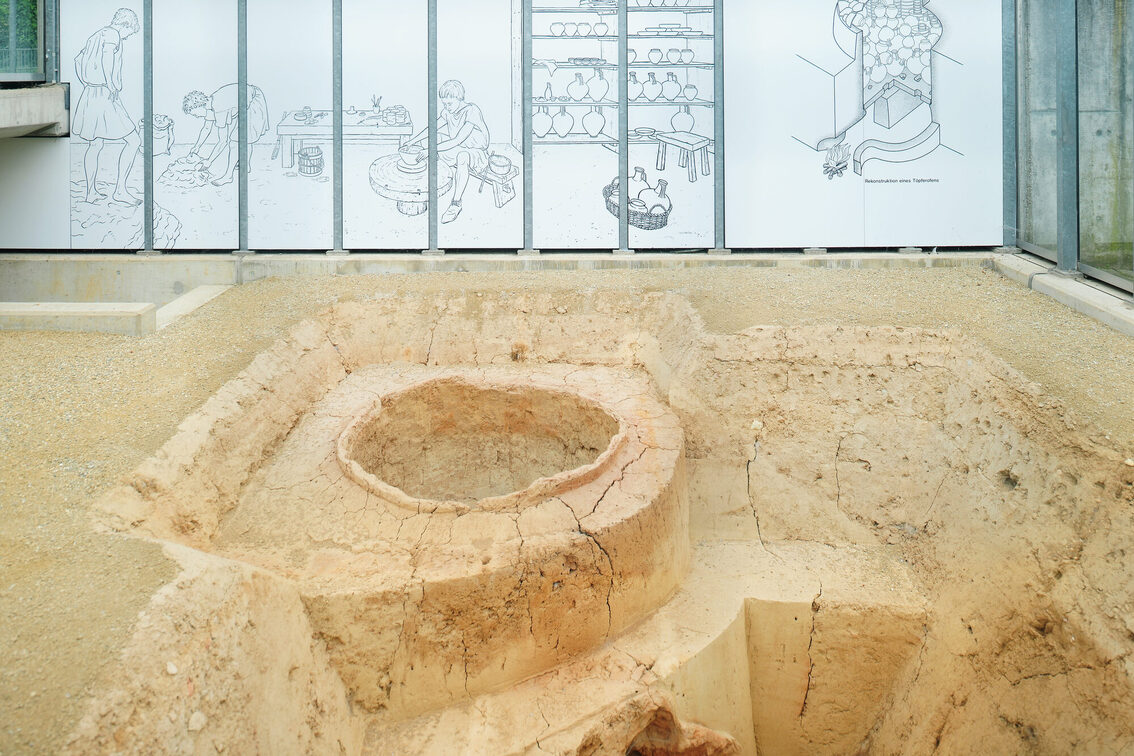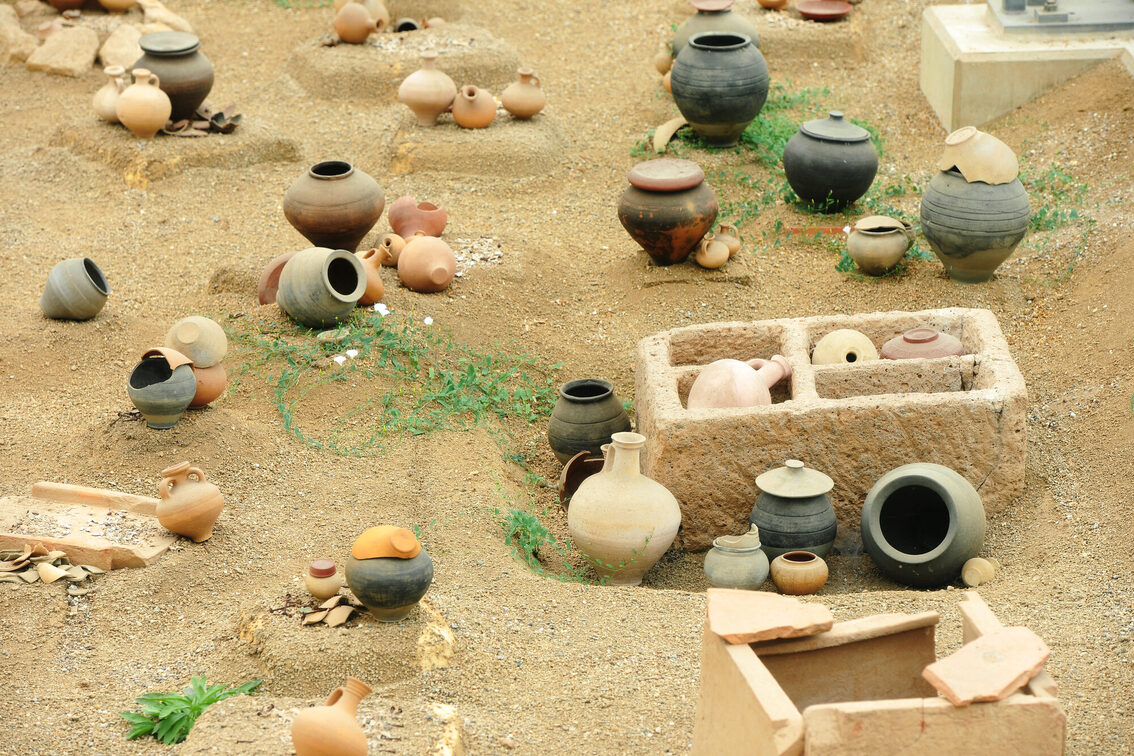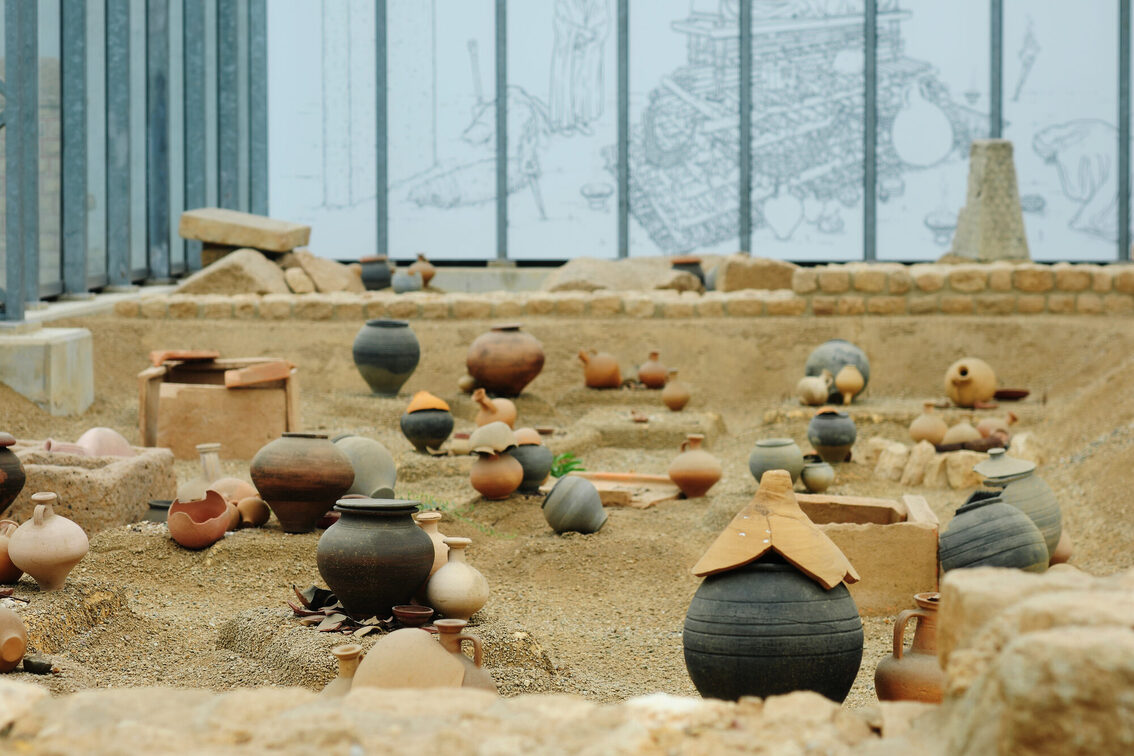
In Mogontiacum, burial sites were established along several arterial roads. One of these is the Via sepulcrum, which ran along the route connecting the two military camps on the Kästrich and in Weisenau. Over a length of about 2.5 kilometers, simple graves for soldiers were created in the 1st century AD, and soon representative burial sites for the wealthier civilian population were added.
Incidentally, the burial of the dead along busy roads can be explained by the Romans' desire not to be forgotten. The best places were therefore right by the roadside. Passers-by were supposed to see the graves and remember the dead.
However, this burial site lost its significance again in the following century. The Romans began to use other places in Mogontiacum for burial sites.
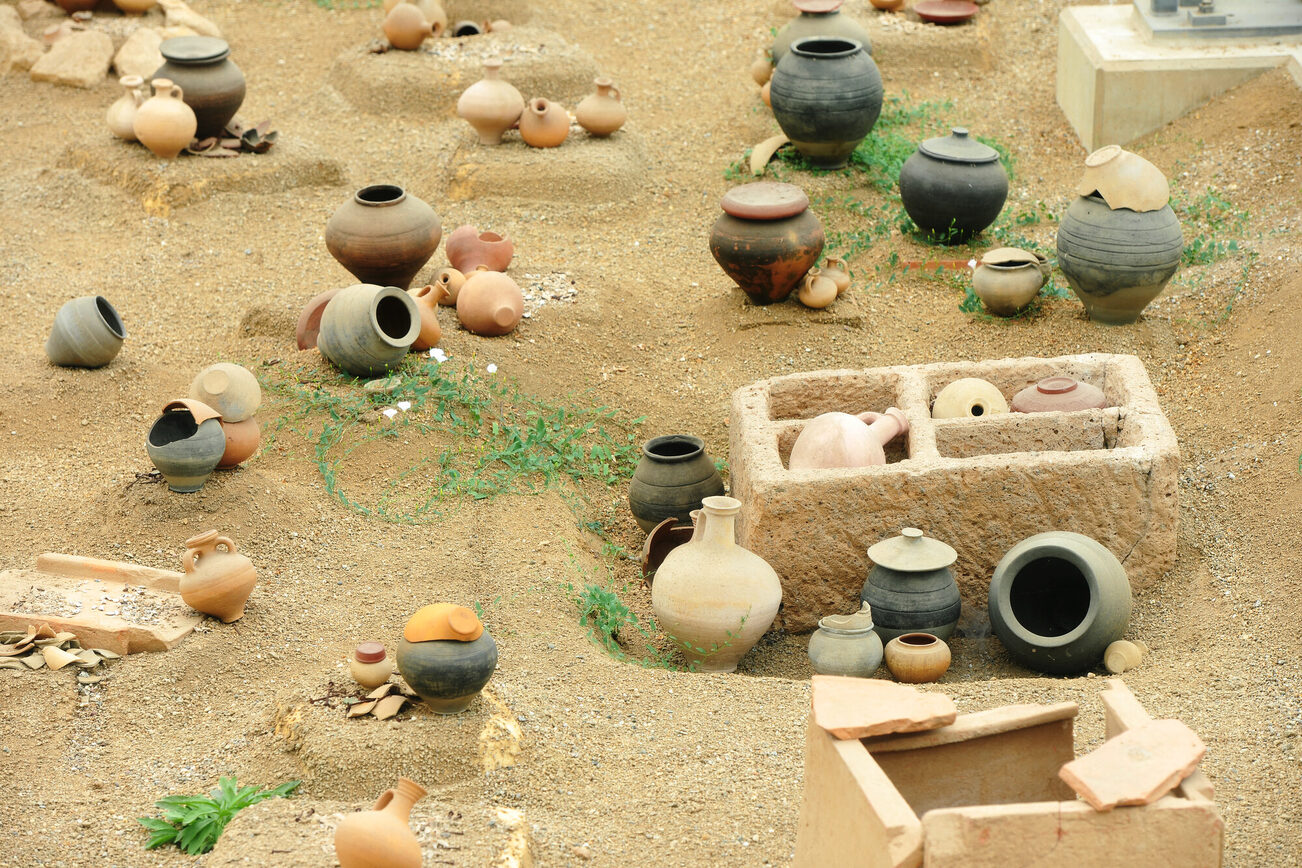
Grave goods
Fruits and olives from the Mediterranean region suggest that the multinational legion camp Mogontiacum was supplied by merchants from southern Europe.
Civilian settlement
The grave goods also contain evidence of a civilian settlement next to the military camp. The best example of this is the gravestone of the shipowner Blussus. The one-and-a-half-meter-high stone shows the shipowner and his wife, as well as either their house slave Satto or their son Primus.
Excavation
From 1982 to 1992, excavations were carried out in part of the area of the former Gräberstraße. This area was well explored and documented archaeologically.