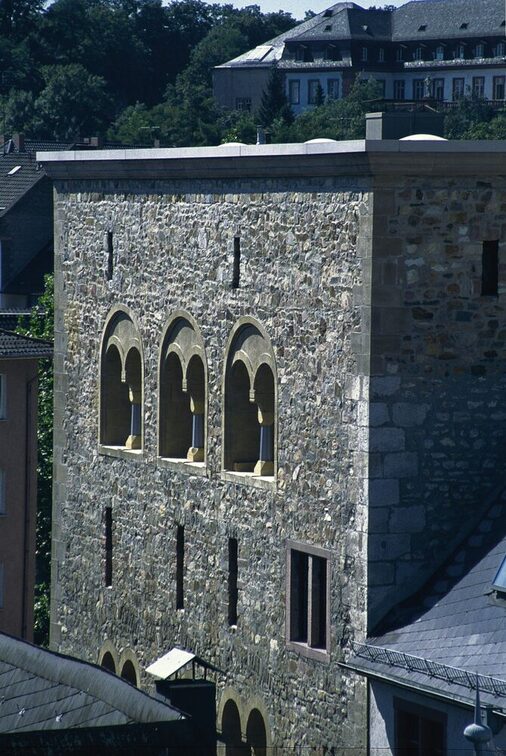
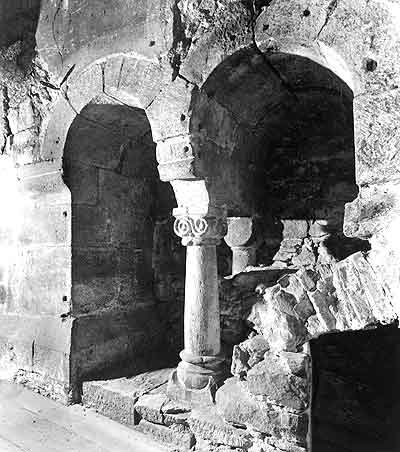
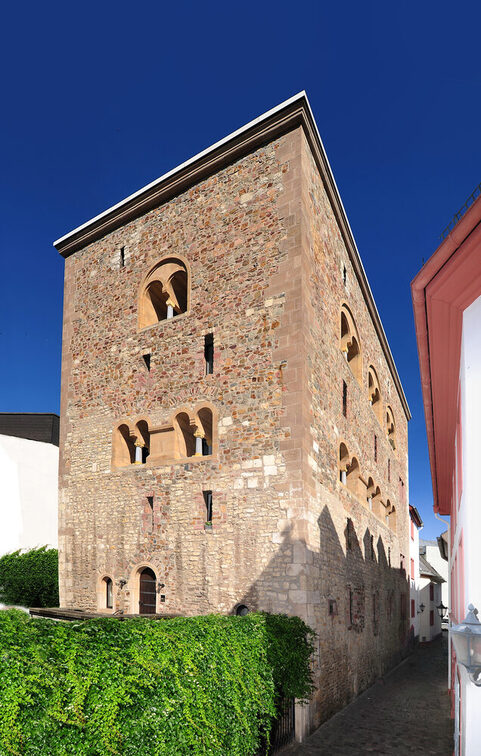
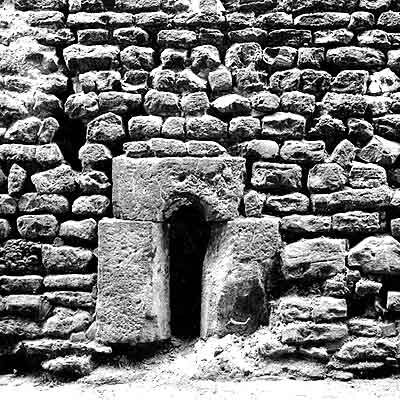
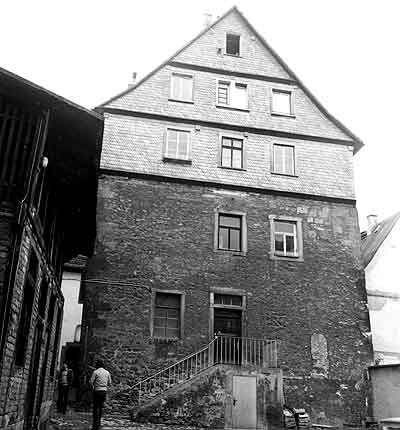
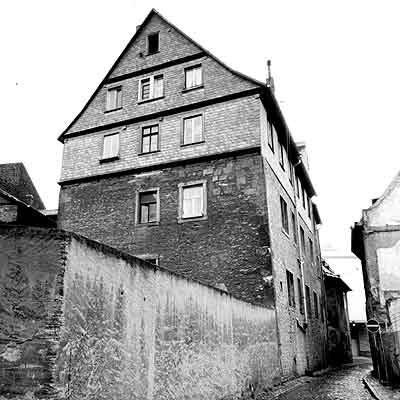
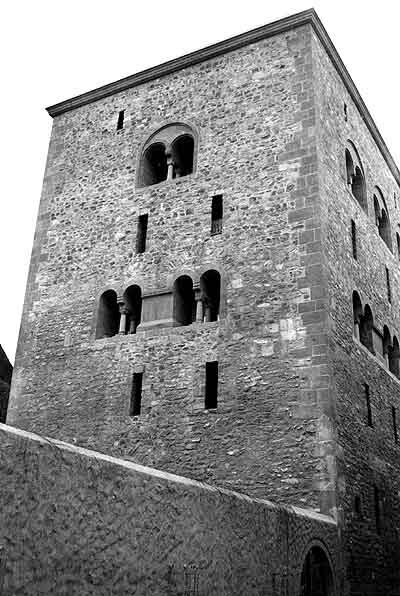
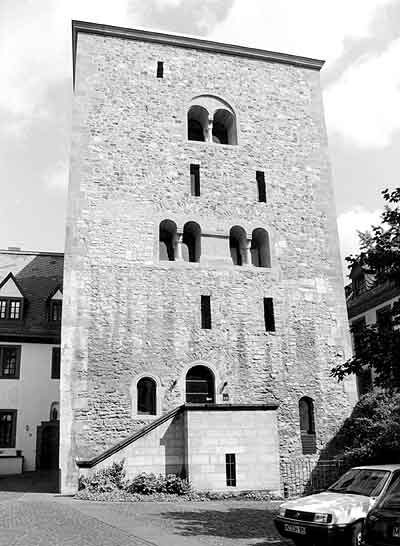
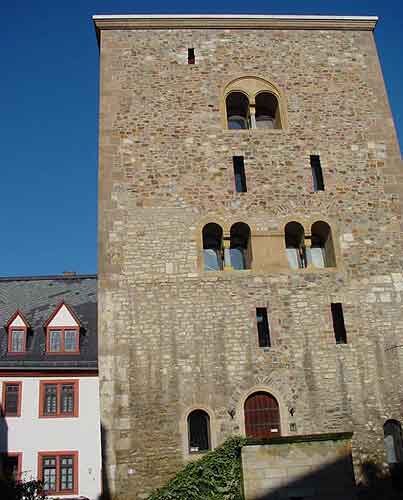
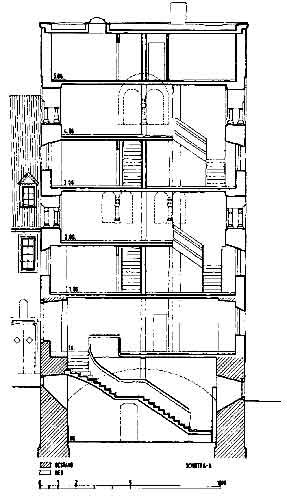
The architectural and structural characteristics allow conclusions to be drawn about the significance and functional use of the building. With its 1.40-meter-thick walls, the tower was part of the medieval fortifications. The high entrance, which is otherwise common in residential towers, cannot be found at the Haus zum Stein. However, the windows were only installed at a height of nine meters above the street level at that time. The basement had only a few slit windows, two of which are still preserved on the east side at street level.
This closed construction of the lower part of the building, as well as the thick solid walls, testify to the defensive capabilities of the Haus zum Stein. Until the city wall was extended in the 14th century, it probably served as a protective and defensive structure for the suburb of Seelenhofen.
Due to its height, the tower provided a good view of the surrounding area. Conversely, it served as a signpost for knights, merchants, and travelers. It was also frequently used in documents to indicate the location of other, smaller houses in the vicinity.
The fortified residential building was developed from models of noble towers in northern and central Italy. There were a large number of such towers in Tuscany in the Middle Ages. Owned by influential patrician families and located in favorable locations, they helped to secure the dominance of individual families over the entire city. Residential towers became widespread in Germany from the 12th century onwards. The Haus zum Stein was also built during this period.