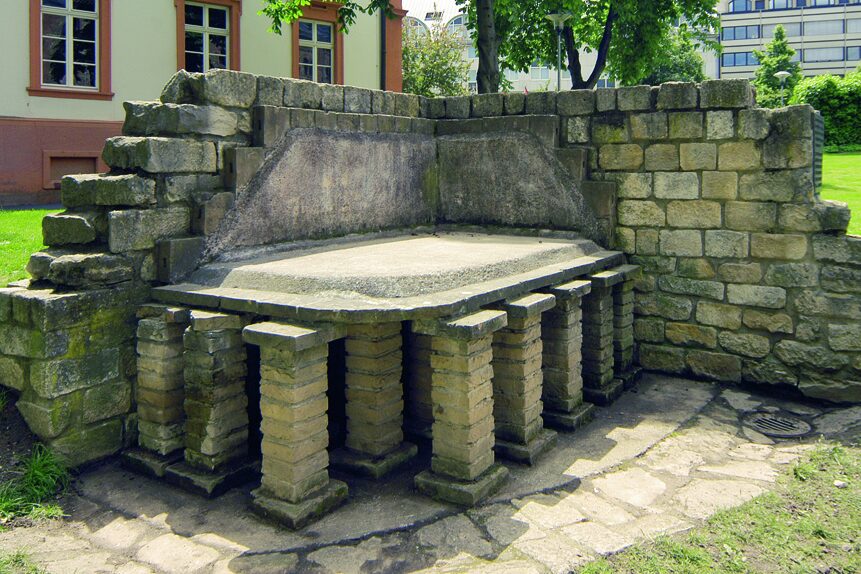
The idea for a type of underfloor heating actually originated with the Greeks (Greek hypocauston = "heating from below"). The floor, which was often richly decorated, was supported by small pillars. A wood fire distributed its heat in the channel-like passages created directly under the floor, ensuring pleasant temperatures of around 25 degrees Celsius.
Underfloor heating was part of the advanced Roman building culture, which also already had an industrialized brick industry.
Thermal baths and bathing culture
The hypocaust was often equipped with wall heating, through whose chimney-like shafts the smoke from the fire could escape to the outside. Only a few rooms in a Roman residence of a higher standard featured this intelligent heating system. Due to the large consumption of wood or charcoal, the heaters were very energy-intensive.
This heating technology was therefore mainly used in Roman baths, which were just as sophisticated as the hypocaust technology. The bathing rooms sudatorium, caldarium, and tepidarium differed in their temperature levels. There were also swimming pools, gymnasiums, and even libraries. However, in keeping with the ancient need to bring body and mind into harmony, men and women were only allowed to pursue this goal separately.
Excavation
During the construction of the Schillerplatz parking garage in 1979, archaeologists discovered the remains of a Roman residential building with underfloor heating several meters below the current street level. The model reconstruction of such a hypocaust in the park refers to this discovery. It illustrates how the heating system worked.