There is currently a disruption affecting the "Civento" application and process platform. As a result, there may be limitations on digital citizen services (as of Oct. 23, 1:00 p.m.).
We use ReadSpeaker on mainz.de. ReadSpeaker reads the texts on mainz.de to you. To be able to use this function, you must open it by clicking on the "Share external content" button. You can revoke your consent at any time in the data protection settings at https://www.mainz.de/datenschutz.
Field weeds - establishment of conservation fields
The Bingen University of Applied Sciences and the state capital Mainz are cooperating in the project "Return and protection of wild herbs - establishment of conservation fields in Rhineland-Palatinate". The project is funded by Aktion Grün of the state of Rhineland-Palatinate.
Wild herbs are the most important component of biodiversity in fields. However, the populations of many species have continued to decline in recent years. Many species are already on the brink of extinction.
The aim of the project is therefore to reintroduce wild field herbs by creating a network of conservation fields and to test the acceptance and economic viability of conservation fields. Optimal conditions for wild field herbs are created on the conservation fields by sowing the grain less densely and focusing on the wild field herbs rather than the grain yield. Another goal is to
The populations of wild field herbs and locations suitable for their establishment in Rhineland-Palatinate are being documented. In addition, a seed bank in Mainz will continue to be supplied with samples to ensure even more comprehensive preservation of wild field herbs.
The project is a model project for testing new concepts and methods for the conservation of endangered plant species.
Image gallery, 13 images
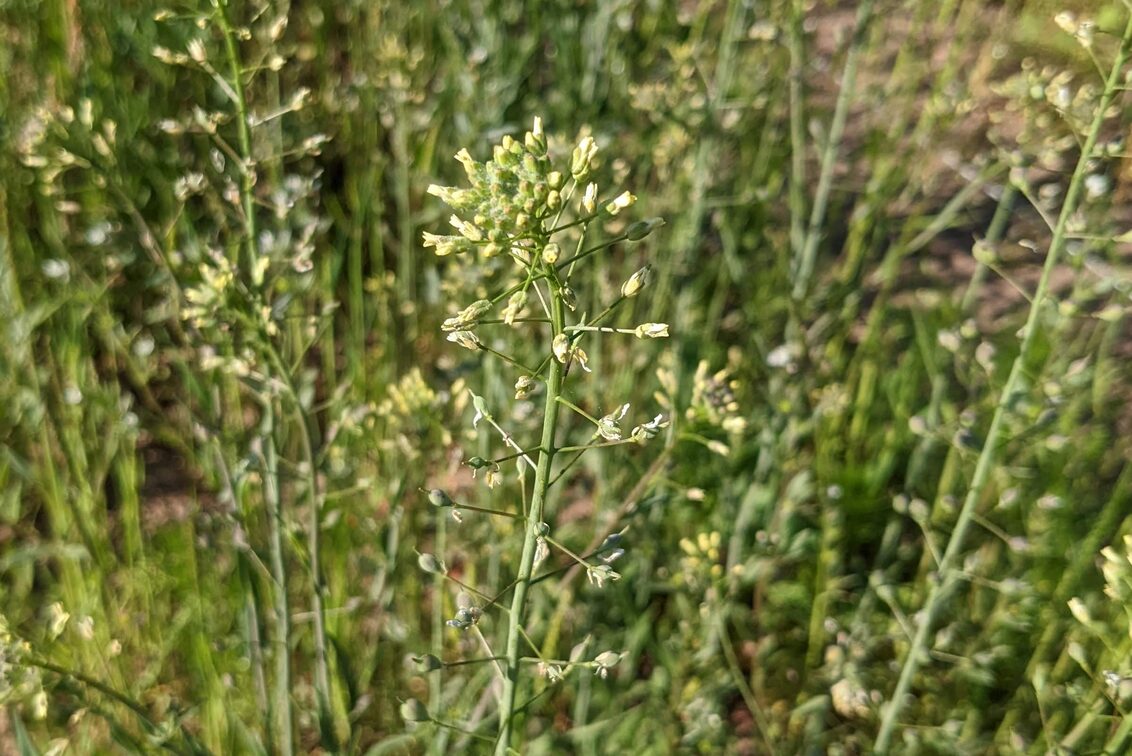
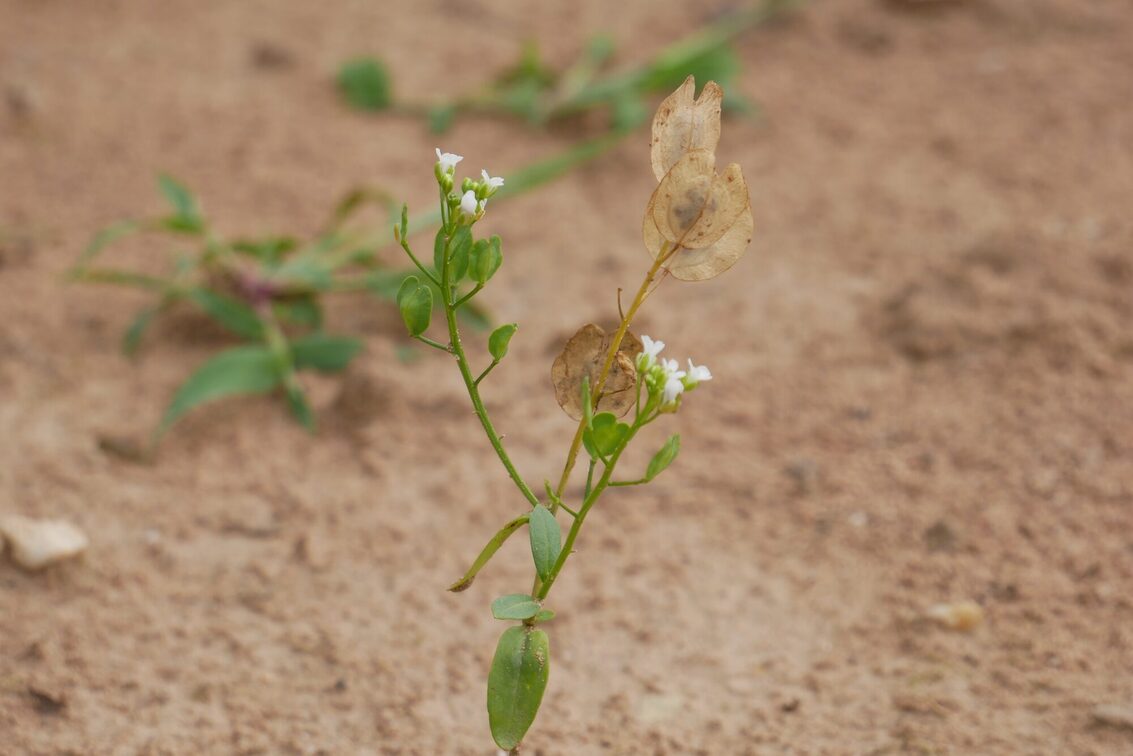
Field ragwort - Thlaspi arvense
Red List RLP:
* (not threatened)
Red List D:
* (not threatened)
Flower:
White
Leaf:
Middle and upper leaves sessile, arrow-shaped at the base, embracing the stem
Growth form:
10–50 cm, leek-like smell, stems angular
Flowering period:
April–September
Habitat
Fields and ruderal flora
Cultivation:
Winter cereals, as they germinate in autumn
Interesting facts:
Almost circular, hence the German name Hellerkraut (light herb)
Soil type:
Loamy soils
Community:
Characteristic species of the Hellerkraut-Erdrauch community
Site conditions:
No specific Moist, neutral, mesotrophic
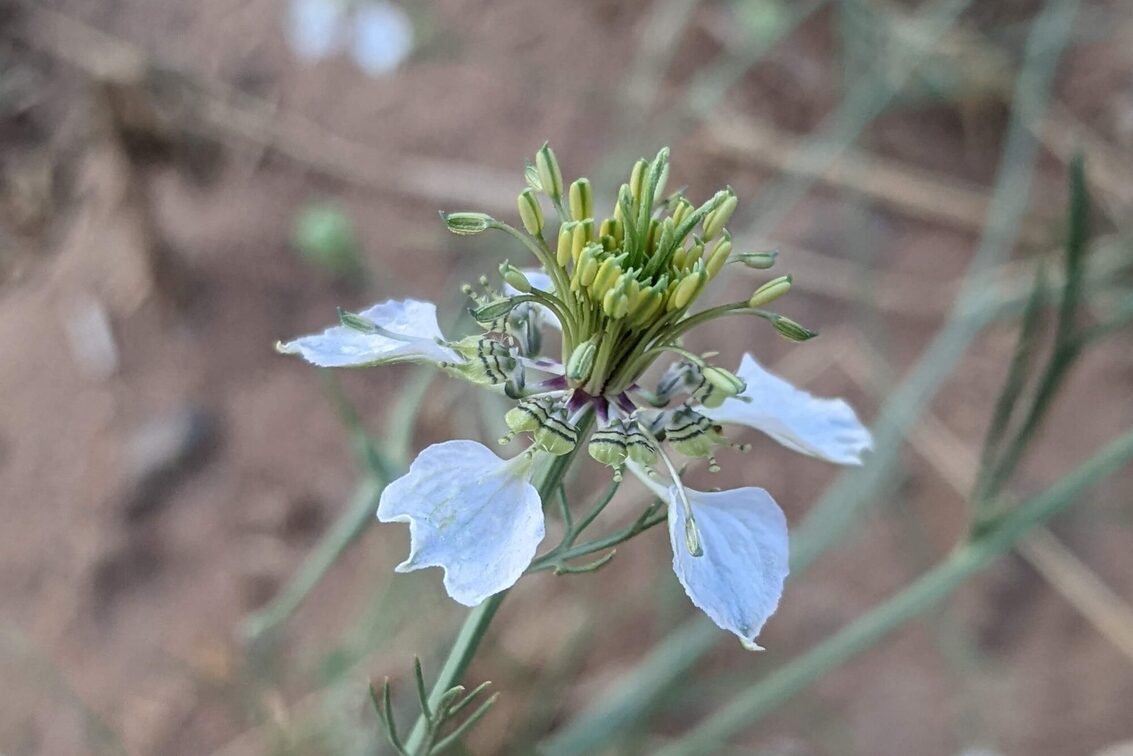
Field black cumin - Nigella arvensis
Red List RLP:
1 (critically endangered)
Red List Germany:
1 (critically endangered)
Flower:
White, flower without bracts, 23–34 mm in diameter
Leaf:
2–3 times pinnate with linear thread-like segments
Growth form:
15–40 cm, branched
Flowering period:
July–September
Habitat
Cereal fields and fallow land
Management:
Extensive cultivation; due to late seed ripening, it is important to leave high stubble and plow late.
Soil type:
Loamy, stony fields
Community:
Characteristic species of the sticky umbel community
Site conditions:
dry, alkaline, oligotrophic
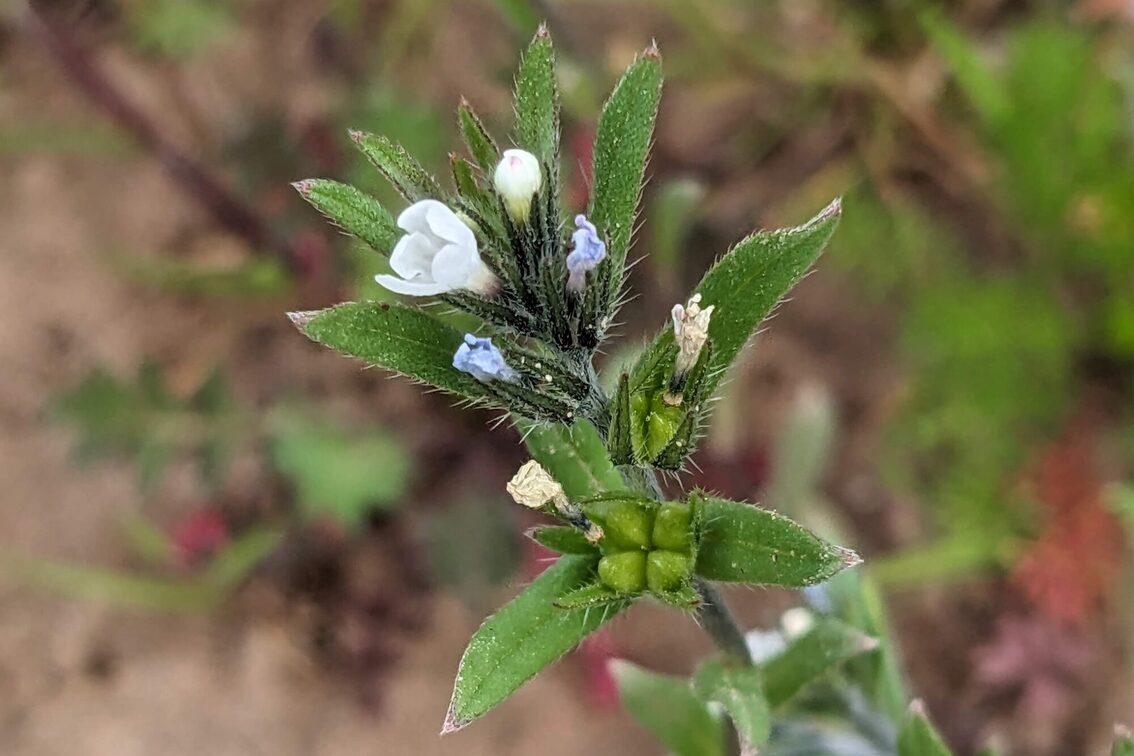
Field stonecrop - Buglossoides arvensis
Red List RLP:
3 (endangered)
Red List D:
V (early warning list)
Flower:
grow in elongated clusters, mostly white
Leaf:
Elongated ovate to lanceolate and densely bristly hairy, alternate
Growth form:
10–50 cm, branched at the base, pressed-borst hairy
Flowering period:
April–July
Habitat:
Fields and fallow land, roadsides
Cultivation:
Extensive cultivation
Interesting facts:
lower seeds are ripe while the top is still flowering
Soil type:
Shallow, skeletal limestone fields, fields on loess, loam, or clay soil
Community:
Characteristic species of the sticky umbel community
Site conditions:
Indifferent to moisture, neutral, mesotrophic
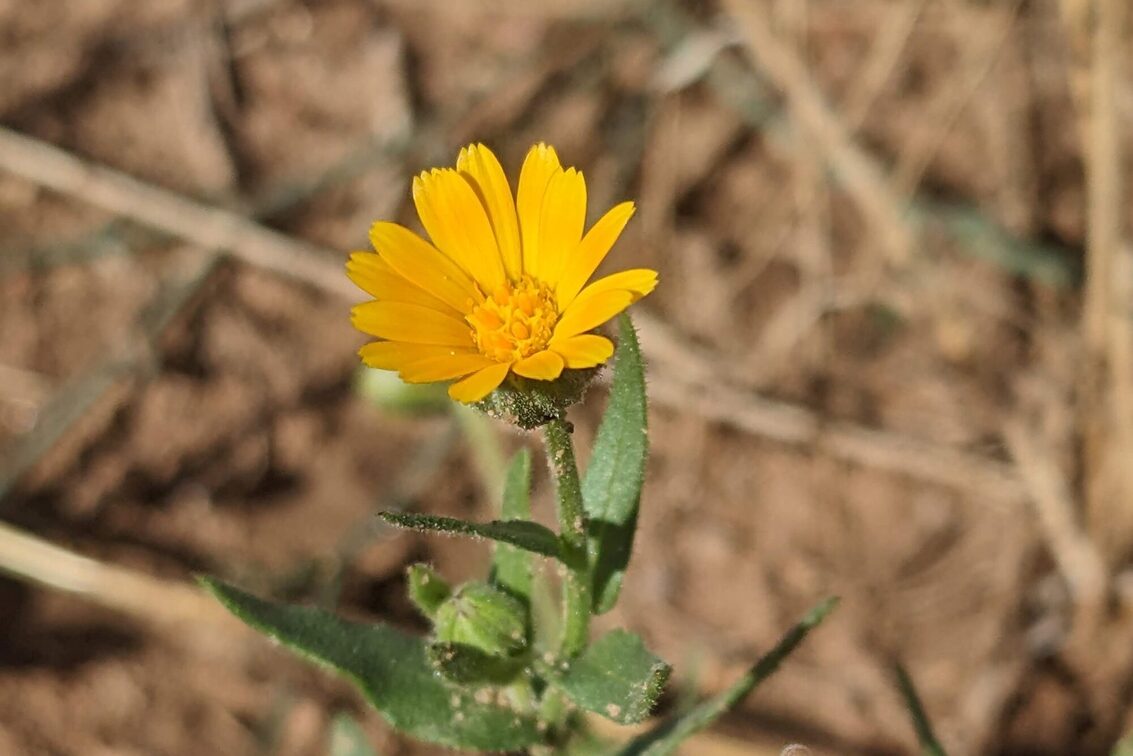
Field marigold - Calendula arvensis
Red List RLP:
1 (critically endangered)
Red List D:
1 (critically endangered)
Flower:
Light yellow
Leaf:
elongated lanceolate, distantly toothed
Growth form:
10–40 cm
Flowering period:
April – October
Habitat
especially vineyards, sandy to loamy, dry fields, fallow land
Cultivation:
Extensive cultivation, can be sown in both spring and fall
Interesting facts:
Main distribution area is wine-growing regions
Soil type:
Preferably calcareous soils
Community:
Association differential species of the vineyard garlic community
Site conditions:
dry, alkaline, mesotrophic
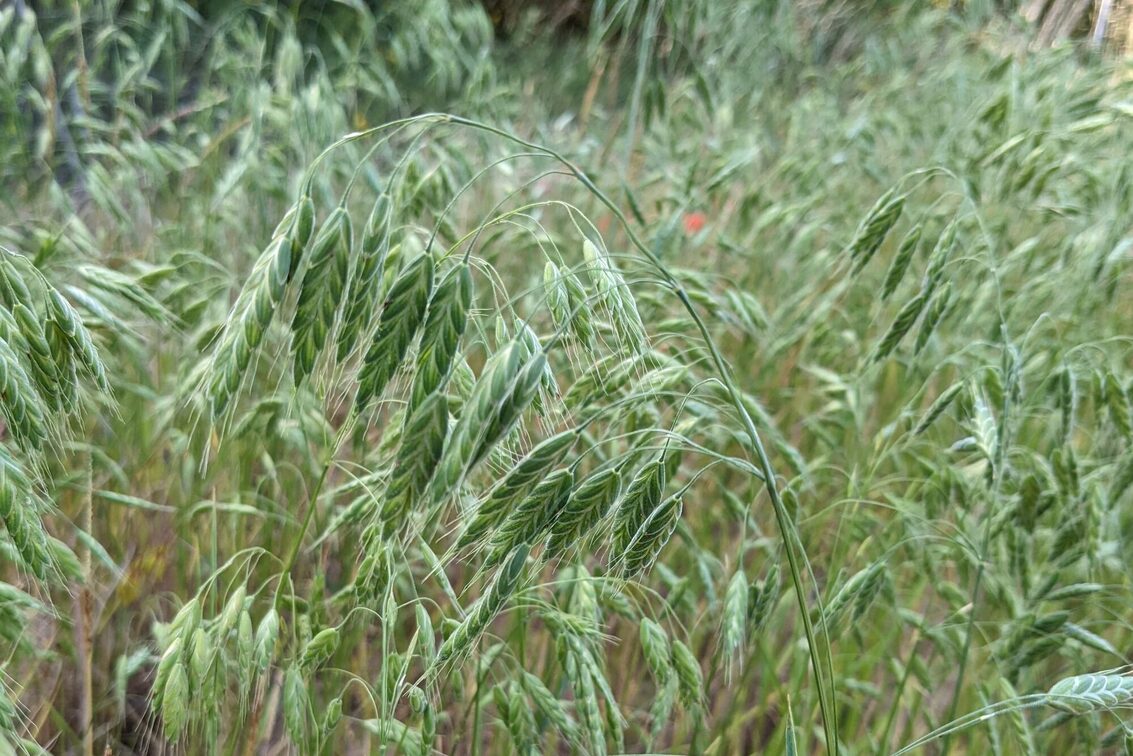
Bromus grossus - Bromus grossus
Red List RLP:
1 (critically endangered)
Red List D:
2 (highly endangered)
Flower:
Panicle up to 20 cm, loose, hanging, spikelets with awns 30-50 mm
Leaf:
5–10 mm wide, lower leaf margins glabrous or sparsely hairy
Growth form:
30–130 cm height
Flowering period:
June - July
Habitat
Cereal fields, field margins, grassy field paths, meadows
Cultivation:
Cultivation of winter cereals, soil-conserving cultivation
Interesting facts:
The only legally protected wild field herb
Can be confused with:
Rye brome (Bromus secalinus)
Soil type:
No special requirements
Society:
Classification species of the field lady's mantle-chamomile community
Site conditions:
Moderate moisture, neutral, mesotrophic
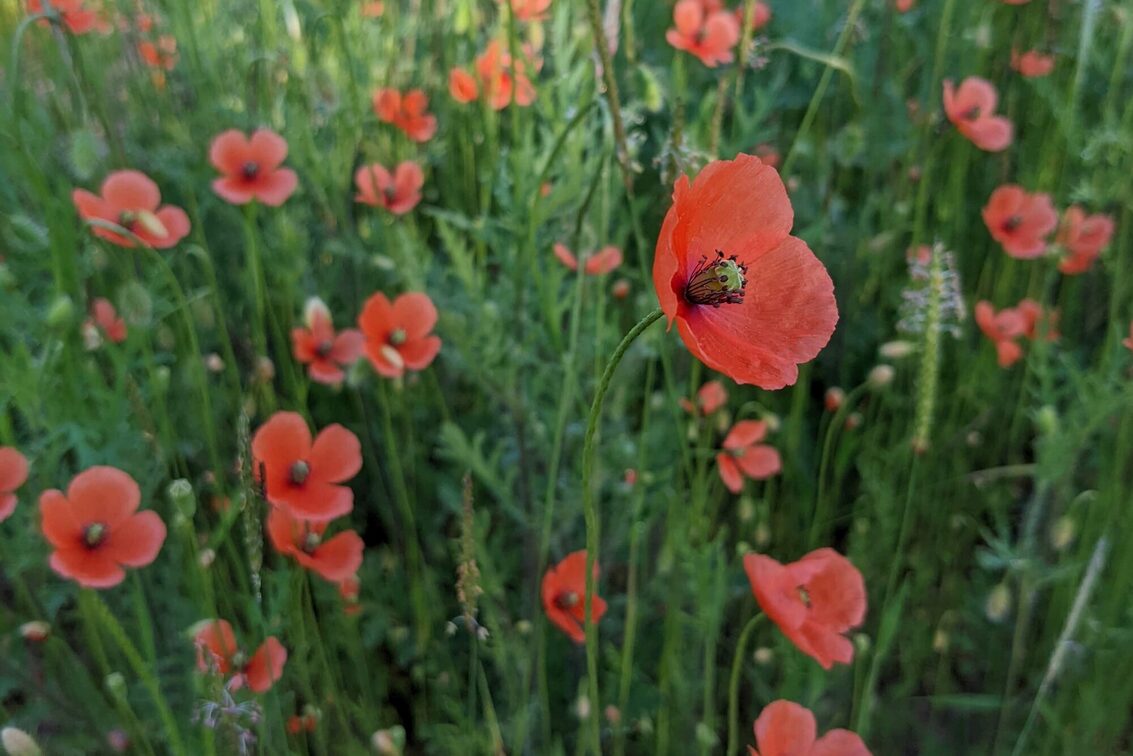
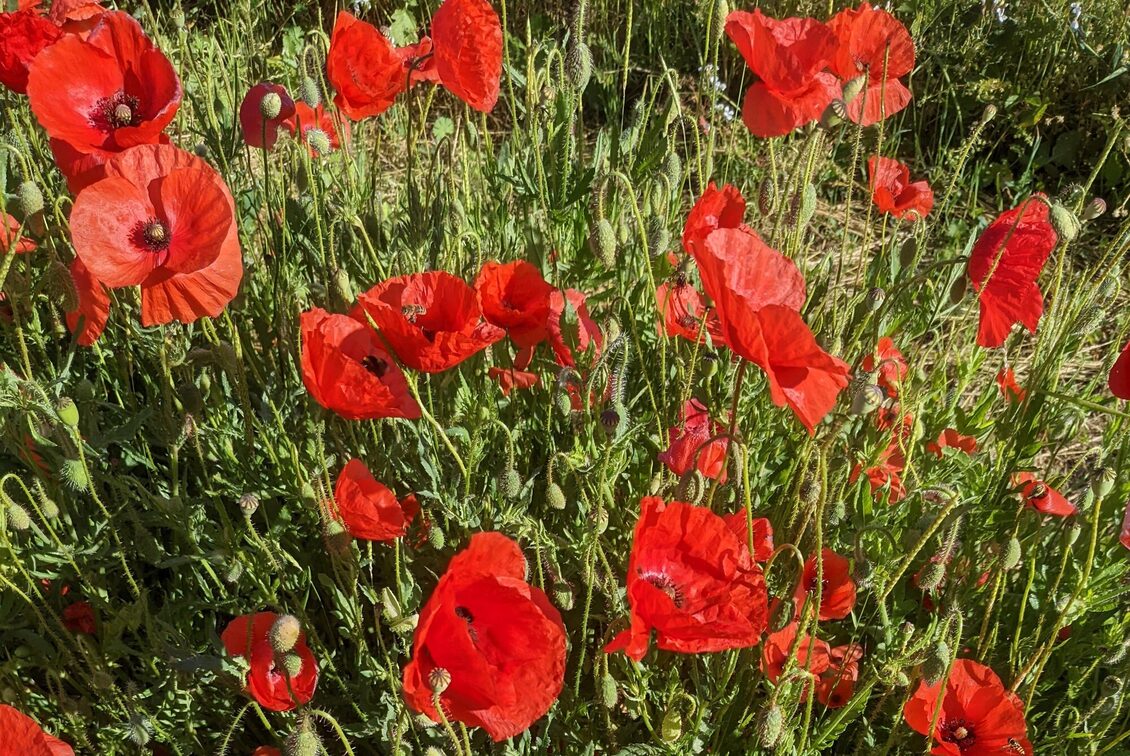
Corn poppy - Papaver rhoeas
Red List RLP:
* (not threatened)
Red List D:
* (not threatened)
Flower:
Flowers solitary, up to 10 cm in diameter, 4 scarlet to purple petals, with a large black spot at the base
Leaves:
lanceolate, pinnate to doubly pinnate, with coarsely incised to sharply serrated segments, bristly hairy
Extensive, mainly winter cereals, on ruderal areas such as roadsides or fallow land
Interesting facts:
Deep-rooted (reaching depths of up to 1 meter)
Soil type:
Loamy and nutrient-rich soils
Community:
Classification species of the chickweed-field weed community
Site conditions:
Moderately moist, neutral, mesothropic
Small-fruited camelina - Camelina microcarpa
Red List RLP:
3 (endangered)
Red List D:
V (early warning list)
Flower:
Light yellow, petals hairy, fruit with distinct midrib
Leaf:
5–10 mm wide, lower leaf margins glabrous or sparsely hairy
Growth form:
30–70 cm tall, hairy
Flowering period:
June – August
Habitat
Loess embankments, fallow land
Cultivation:
Loose cereals, root crops, fallow year, field margins
Interesting facts:
Formerly a subspecies of gold-of-pleasure, cultivated with it as an oil plant
Can be confused with:
Gold-of-pleasure (Camelina sativa)
Soil type:
Loess loam to limestone fragments
Community:
Chickweed-field weed community
Site conditions:
Moderately dry, alkaline, oligotrophic
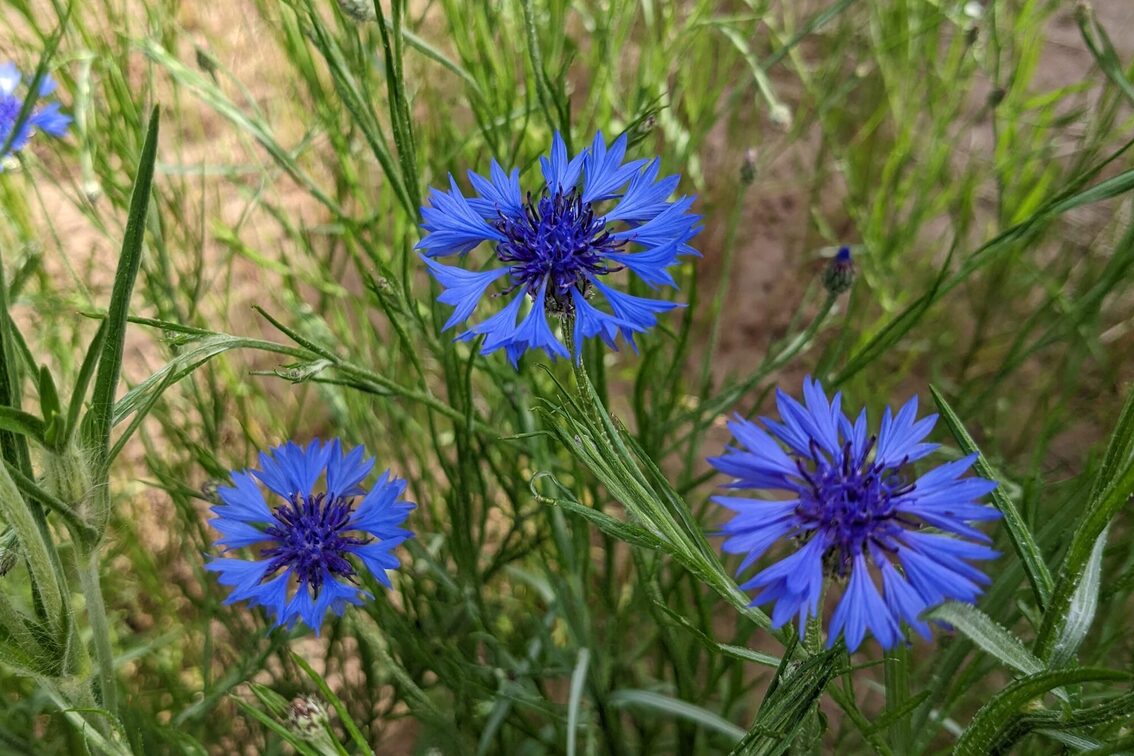
Cornflower - Centaurea cyanus
Red List RLP:
V (early warning list)
Red List D:
V (early warning list)
Flower:
Bright blue marginal flowers and tubular flowers
Leaves:
Leaves narrow-lanceolate and hairy
Growth habit:
30–80 cm
Flowering period:
June–October
Habitat:
Fields and short-lived weed patches, field margins, dry loam and sandy fields
Management:
Sensitive to herbicides, late stubble plowing (not before mid-September), winter cereals
Interesting facts:
Introduced 7,000 years ago with the advent of agriculture, often miscolored cultivated forms in flower mixtures
Soil type:
Loamy and sandy fields
Community:
Characteristic species in the field asparagus community
Site conditions:
No special requirements
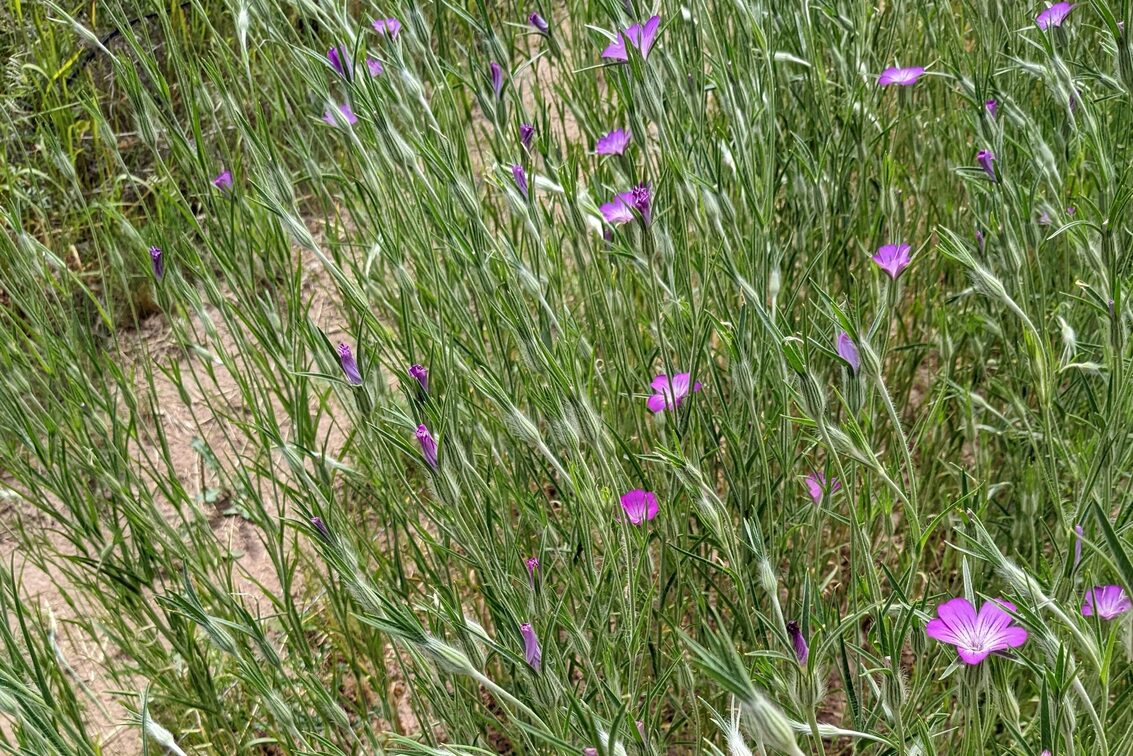
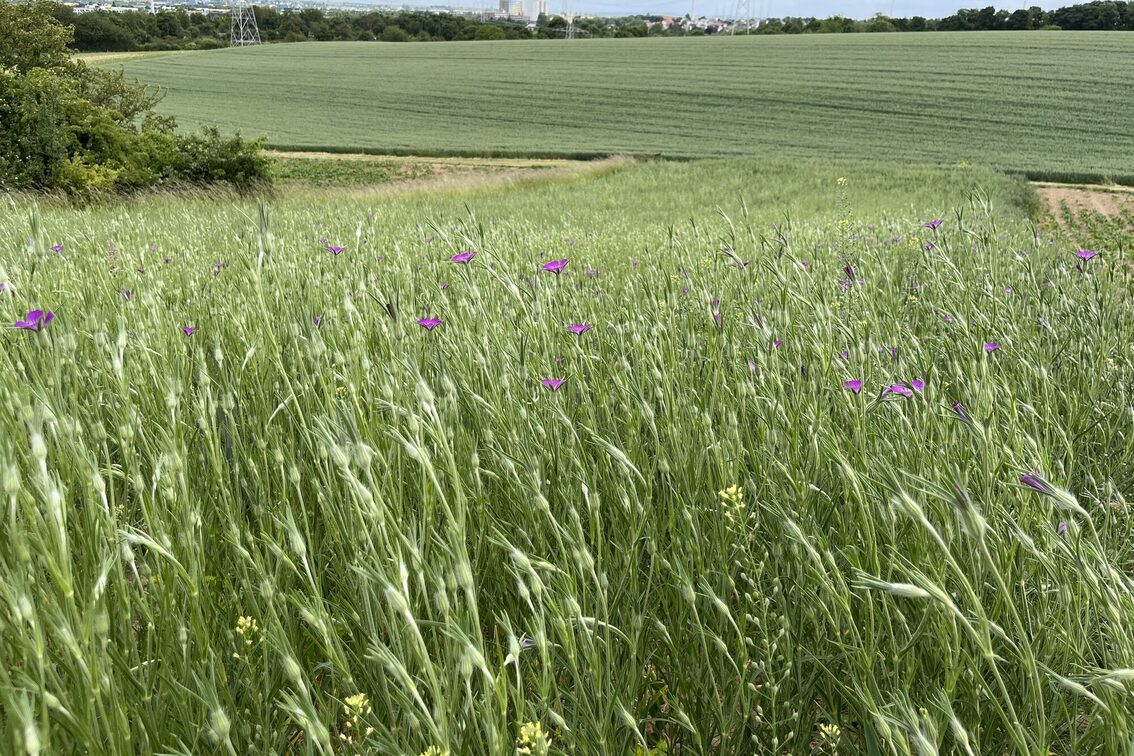
Corncock - Agrostemma githago
Red List RLP:
0 (extinct)
Red List Germany:
2 (critically endangered)
Flower:
2–4 cm long, pink-violet petals, without secondary corolla, tubular calyx with silky hairs and linear tips
Leaves:
Narrow lanceolate leaves
Growth form:
30–90 cm tall, densely covered with gray to felt-like hairs, single flowers at the ends of the branches
Flowering period:
June–July
Habitat
Cereal and fallow fields
Management:
Must be actively sown, as seed cleaning removes the seeds; extensive cultivation
Interesting facts:
Poisonous, 85 cm long taproot, old crop follower dependent on grain cultivation
Soil type:
No requirements
Society:
Characteristic species of the poppy community
Site conditions:
No requirements
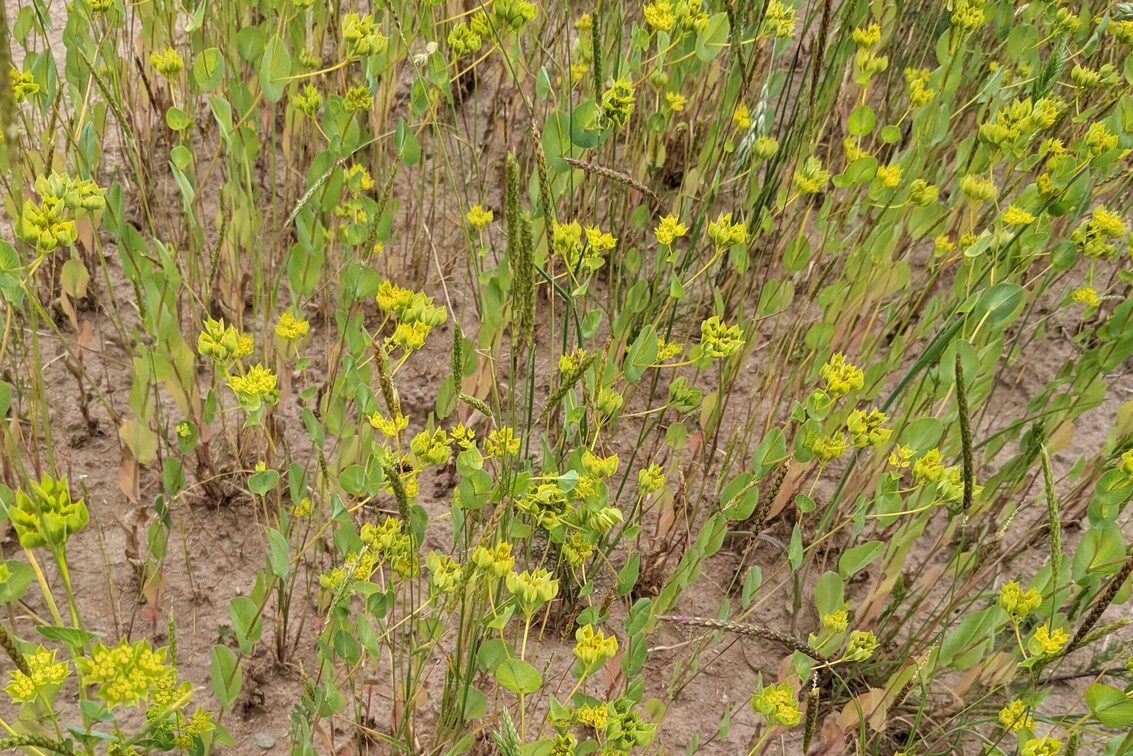
Round-leaved hare's ear - Bupleurum rotundifolium
Red List RLP:
1 (critically endangered)
Red List Germany:
2 (highly endangered)
Flower:
Umbel, bracts exceed the flower, yellow-green
Leaf:
upper, rounded stem leaves completely surround the stem, lower stem leaves clasp the stem
Growth form:
15–60 cm tall, branched in the upper section
Flowering period:
June–July
Habitat
Fields and short-lived weed patches, nitrogen-poor, dry loamy fields
Cultivation:
Extensive cultivation, winter and summer cereals possible
Soil type:
Low-nitrogen, calcareous loamy fields
Community:
Characteristic species of the sticky umbel community
Site conditions:
dry, alkaline, oligotrophic
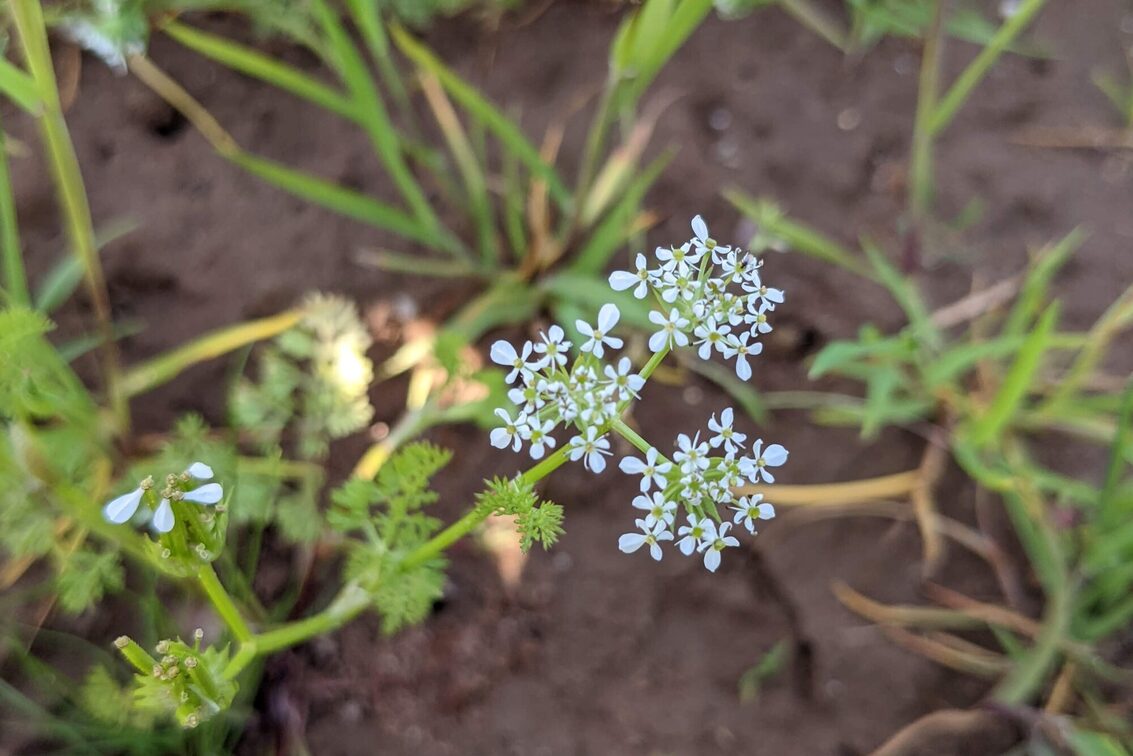
Venus crest - Scandix pecten-veneris
Red List RLP:
1 (critically endangered)
Red List D:
2 (highly endangered)
Flower:
White, umbels with 1–3 rays
Leaf:
2–3 times pinnate
Growth form:
10–40 cm, scattered bristly hairs
Flowering period:
May–July
Habitat
Fields and short-lived weed communities
Cultivation:
Only in winter cereals (germination in fall), extensive cultivation
Interesting facts:
Fruit has a long beak, overwinters in the rosette stage
Soil type:
Loess, loam, limestone, or clay soil
Community:
Characteristic species of the sticky umbel-Venus comb community
Site conditions:
dry, alkaline, oligotrophic
Misunderstood poppy - Papaver confine
Red List RLP:
* (not threatened)
Red List D:
* (not threatened)
Flower:
four orange to red petals, black spot at the base possible
Leaf:
highly divided, hairy, sessile, and not stem-enclosing
Growth form:
30–60 cm, protruding hairs
Flowering period:
May–July
Habitat
Fields and short-lived weed communities, embankments, ruderal dry grasslands
Cultivation:
Extensive cultivation, occurring in both winter and summer cereals
Interesting facts:
Flowering period about four weeks before that of the corn poppy, elongated and hairless capsules
Can be confused with:
Yellow poppy (Papaver lecoqii)
Soil type:
Sandy soil
Association:
Characteristic species of the sand poppy community
Site conditions:
Moderately dry, moderately acidic, mesotrophic
Conservation field on the Lerchenberg
Following a conference held by Bingen University of Applied Sciences in early 2024 on the topic of "Endangered Wild Field Herbs," the state capital of Mainz provided an area for a so-called "conservation field." In the fall of 2024, a local farmer sowed the twelve rare wild field herbs together with winter wheat on the field.
Despite the overall dry weather, the first seeds on the conservation field on Lerchenberg sprouted well. The field was threshed in mid-July and the tall stubble was left standing so that the seeds of the late-flowering species could ripen. The new wild field herb seeds were also harvested along with the grain.