
Energy-conscious heating
Environmental tip from the Mainzer Umweltladen
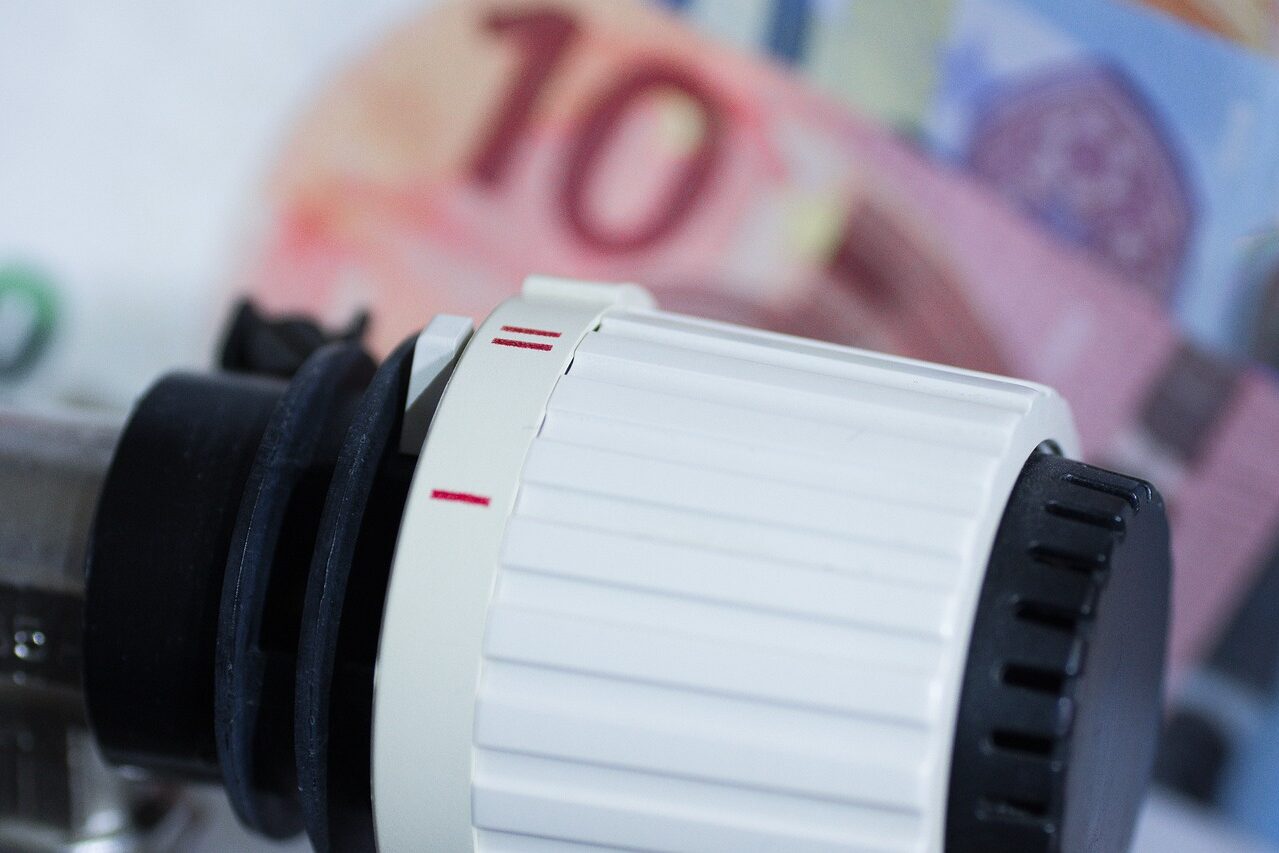
Energy-conscious heating pays off, especially in times of rising energy prices. A household can save energy simply by heating in a targeted manner, without having to compromise on heating comfort. Lowering the room temperature by just one degree reduces heating costs by around six percent on average. It therefore makes sense to adjust the temperatures in individual rooms to suit your needs. In most rooms, the thermostat never needs to be set higher than heating level 3 (which corresponds to 20°C). Keep the doors to less heated rooms closed. When deciding on the optimal temperature for each living area, you can use the following overview as a guide:
- Hallways and corridors: 13° to 16°C; level 1-2
- Bedrooms: 16° to 17° C; level 2
- Study: 18° to 20°C, level 2-3
- Children's rooms: 18° to 20° C, level 2-3
- Kitchen: 18° to 20° C; level 2-3
- Living rooms: 20° to 22° C; level 3-4
- Bathroom: 22° to 23° C; level 4
To heat up your home more quickly on cold days, it is no use turning the thermostat on the heater up to the maximum (this only has an effect with old on/off valves).
Modern valves open or close automatically depending on the set temperature. However, if they are turned up to the maximum setting for rapid heating, the open valve will aim for a high target temperature. This quickly exceeds the desired room temperature and wastes a lot of energy unnecessarily.
However, due to the poor controllability of old valves, we recommend that you have them replaced immediately by a specialist company with modern thermostats. These are quick to install and pay for themselves after a short time.
If radiators gurgle or heat up too slowly, there is usually air in the water circuit and this should be removed by a specialist company. However, you can also bleed the radiators yourself using a bleed key with a hose and a bucket.
If a radiator remains at a constant temperature, this indicates a defective thermostatic valve. Valves are also defective if they are very difficult to turn. In both cases, the defective valves should be replaced with new ones.
During ventilation, the thermostatic valves should always be closed, otherwise they will switch to full power unnecessarily.
Heavy curtains and furniture in front of radiators, as well as radiator covers, hinder heat dissipation – this can result in up to 40 percent energy loss.
Window areas should also be protected from heat loss in winter by roller shutters and curtains.
Environmental tip for November 2010