
Every little helps - small household appliances
Environmental tip from the Mainzer Umweltladen
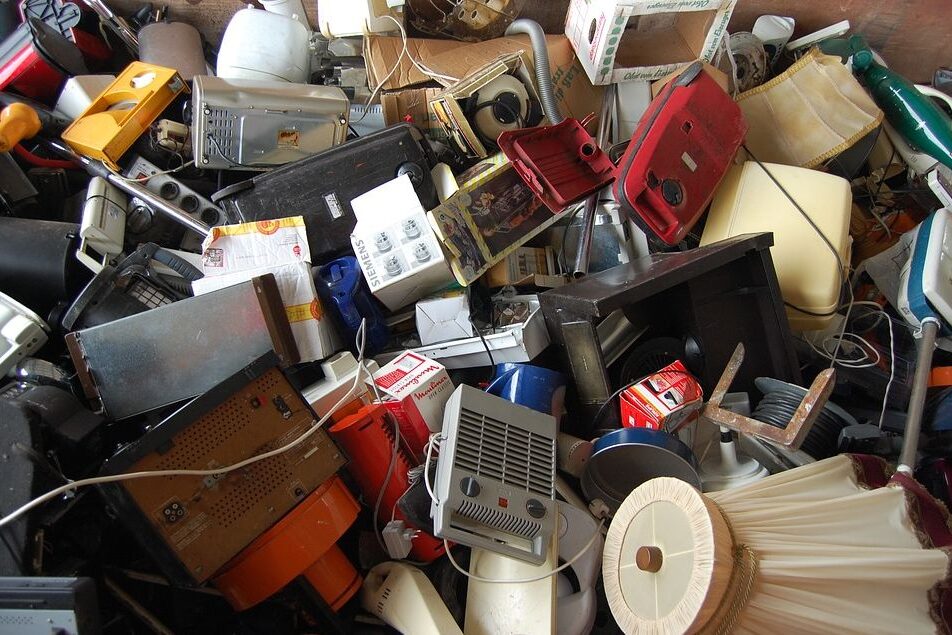
Small electronic devices such as shavers, irons, cordless toothbrushes, and blenders consume very little energy individually, but together they account for up to 20 percent of household electricity consumption. It is therefore worth paying attention to the power consumption of small appliances. Before purchasing such a device, you should always ask yourself: Do I really need this device? Some special appliances, such as electric can openers, knives, or fruit presses, are only suitable for quantities that are rarely found in a normal household.
Alarm clocks
Although the importance of alarm clocks has declined in the age of cell phones, radio alarm clocks in particular are still widely used. A radio alarm clock on standby continuously consumes two watts of electricity. Devices that came onto the market before 2010 consume significantly more. Alternatives to the classic radio alarm clock are mechanical wind-up alarm clocks, which can still be found in stores, and solar alarm clocks, which obtain the necessary energy from the sun free of charge and in an environmentally friendly way.
Electric toothbrush
Even though manufacturers repeatedly claim that electric toothbrushes clean teeth more thoroughly, independent studies show that manual brushing cleans teeth just as well. This means that, in addition to the purchase cost of an electric toothbrush, a lot of electricity can be saved in everyday use.
Electric razor
Some electric dry shavers have improved in performance, but wet shaving by hand trims stubble more thoroughly, irritates the skin less, and, of course, saves energy. If you do want an electric shaver, look for energy-efficient devices with good batteries for a long runtime.
Hair dryer
If you blow-dry your hair every day, you consume 65 kilowatt hours of electricity per year—that's about as much as a modern refrigerator needs. Hair dryers are among the most energy-intensive small appliances, so when buying one, look for devices with the Blue Angel eco-label—these consume about a third less electricity than standard devices. Or protect your hair and dry it naturally without using electricity.
E-readers
For people who read a lot, an e-book reader is definitely worthwhile, because it saves paper and energy if it replaces ten or more printed books per year. Readers with E-Ink screens are more economical than those with LCD displays because they do not require backlighting. As a result, the batteries in these devices last days longer than those in LCD devices. For reasons of resource conservation, the device's battery should be removable.
Flashlight
Battery-powered flashlights are a thing of the past. The current state of the art is lamps that can be charged by pressing, shaking, or cranking and emit light immediately. Such devices are equipped with energy-saving LED light sources that reach an illuminance of up to 7000 lux after just 30 seconds of mechanical charging.
Iron
Steam helps with ironing, making it easier to smooth out laundry. However, this costs energy—90 percent of the electricity consumed by a steam iron is used to generate steam. If you absolutely must iron your laundry, do so while it is still damp. This reduces the amount of steam required and saves electricity.
Kitchen scales
Battery-powered digital scales dominate kitchens today. However, beam and spring scales, which do not require any electricity, would be perfectly adequate for normal household use. If you still need a display that is accurate to the milligram, solar scales are available that weigh just as accurately as battery-powered devices.
Hand mixer
Electric mixers consume between 250 and 500 watts of electricity. However, they often fail when mixing yeast dough and suffer motor damage. Kneading dough and whipping cream by hand is just as possible with a little muscle power—think of it as everyday fitness training. Mechanical mixers, whose beaters rotate at high speed thanks to a gear transmission, are an electricity-free alternative to pure muscle power.
Charger
To avoid unnecessary power consumption in general, charging stations for battery-powered devices such as shavers and electric toothbrushes, as well as cell phone charging cables and the like, should be unplugged from the power outlet after charging.
More info
Contact us
Address
Environmental store
Mainzer Umweltladen
Steingasse 3
55116 Mainz