
Washing laundry in an environmentally friendly way
Environmental tip from the Mainzer Umweltladen
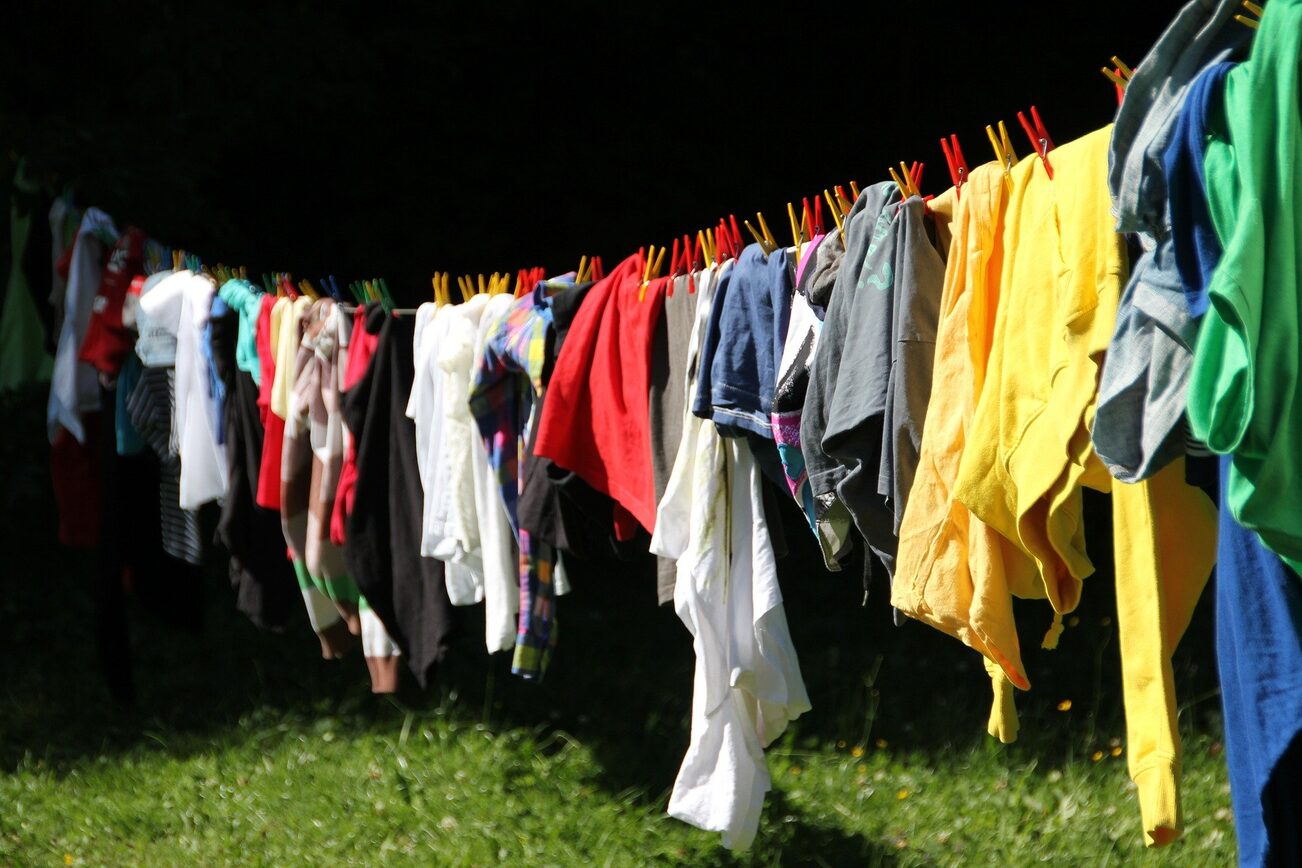
A good 15 percent of the electricity consumed in a household is used for washing and drying laundry; surfactants from detergents pollute our waters; fragrances from fabric softeners and similar products endanger our health. To save electricity, avoid unnecessary environmental pollution, and protect your health, here are some tips on doing laundry:
The washing machine
If possible, use a brand-name washing machine with low electricity and water consumption. Studies by Stiftung Warentest have shown that brand quality pays off when it comes to washing machines. Compared to "cheap and no-name machines," these appliances have a longer service life, usually feature an automatic load sensor that adjusts water consumption to the amount of laundry, a better safety system against water damage, and longer warranties. The EU energy label can help guide you in your search for an energy-efficient machine. It divides appliances into efficiency classes ranging from energy savers (A, green) to energy guzzlers (G, red) and provides information on water consumption.
The detergent
Always use detergents whose surfactants are completely biodegradable. However, since detergents can also contain bleaching agents, softeners, optical brighteners, and a number of other substances, it is advisable to use them sparingly and to use a so-called modular detergent, whose individual components can be dosed according to need and type of laundry. Due to the higher surfactant content of liquid heavy-duty detergents, powder detergents are always preferable. The fragrances and bleaching agents in detergents and fabric softeners can cause allergic reactions in humans and irritate the skin and respiratory tract. Therefore, be careful not to use too much detergent.
The washing process itself
You can save energy and water by following a few simple guidelines:
- Sort your laundry by delicacy and color before washing.
- Always wash your laundry at lower temperatures to save energy.
- Pre-treat stubborn stains accordingly. You can find tips on this in the environmental tip "Oranges instead of bathroom cleaner – environmentally friendly household tips."
- Fully loaded machines work most efficiently. Therefore, always load your machine fully, but make sure you do not overload it. You will find the maximum load capacity in the washing machine's operating instructions.
- You can save up to 30 percent energy by not using the pre-wash cycle. Pre-washing is not usually necessary to get textiles clean. It generally only makes sense for very dirty laundry.
- Most fabrics do not need to be washed after every wear. Excessive washing causes colors to fade and fibers to wear out.
- If the water in your home is heated by solar panels rather than electricity, it is worth connecting the washing machine to the hot water pipe to save electricity.
- If you put your laundry in a dryer after washing, you will save the most by spinning at 1000 revolutions per minute. Or simply let your laundry dry on the clothesline.
More info
Contact us
Address
Environmental store
Mainzer Umweltladen
Steingasse 3
55116 Mainz