Dealing with clothing
Environmental tip from the Mainzer Umweltladen
No longer dispose of clothing in residual waste
Where do you put sweaters, blouses, socks, bed sheets, or shoes once they are worn out? Clothing and shoes alone account for 5.2 million tons of waste in the EU every year, which corresponds to 12 kg of waste per person per year. It is estimated that currently less than one percent of all textiles worldwide are recycled into new products.
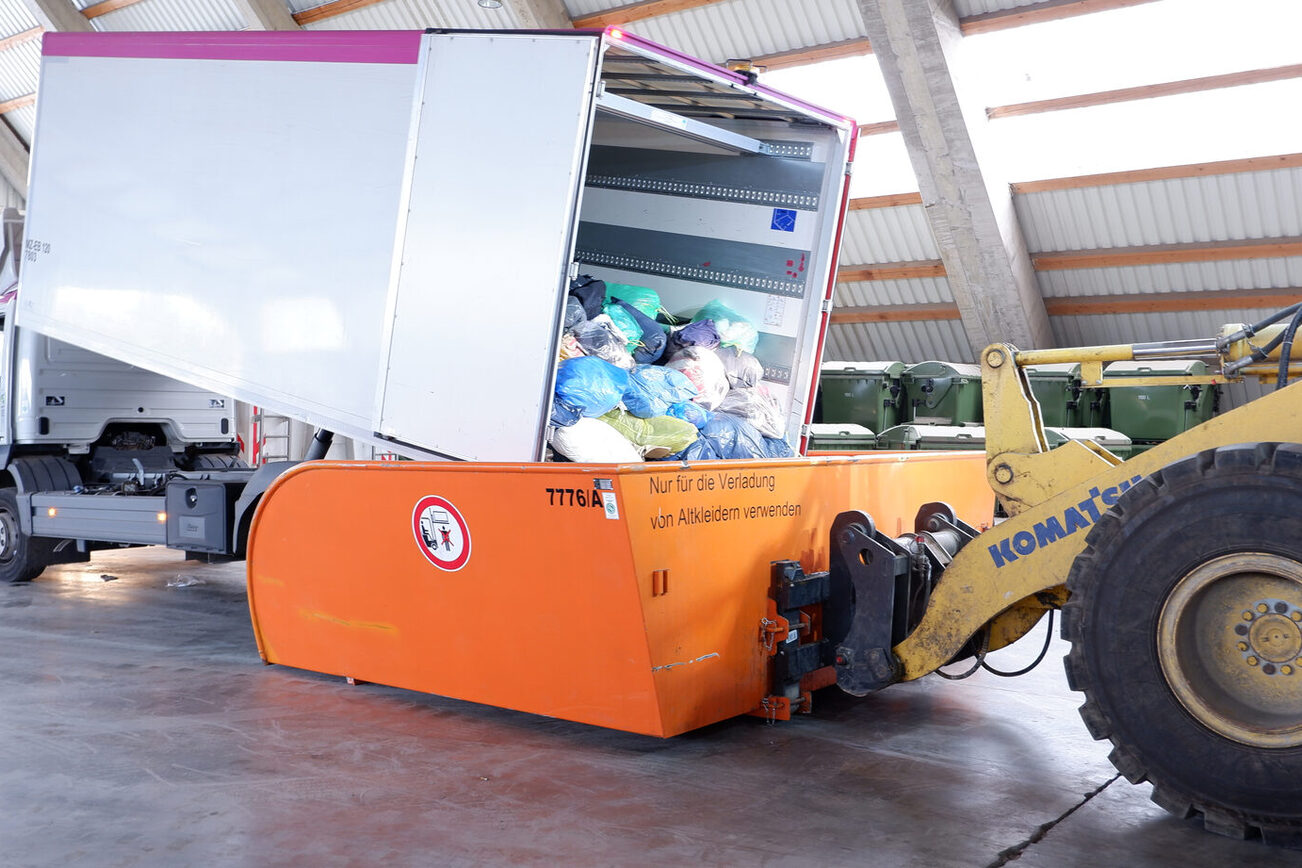
Until now, textiles in Germany could be disposed of in residual waste, among other places. Clothing donation bins—mostly provided by non-profit and private clothing collectors—were not mandatory and were generally only intended for wearable clothing and shoes. The contents of the bins were resold or donated. Mainz has been forward-thinking in this regard for many years. Back in 2013, the municipal waste disposal company, now known as Kommunale Abfallwirtschaft (KAW), launched an exemplary cooperation with the German Red Cross. As a municipal waste disposal company, it ensured that the collections did not end up in incinerators. Worn-out, unwearable clothing has been recycled in Mainz for 11 years and given a new lease of life as painter's fleece, cleaning rags, or insulation material, for example.
From January 2025, all municipal waste disposal companies must ensure that textile waste is collected separately. This is stipulated in the amended Closed Substance Cycle Waste Management Act (KrWG). The European Waste Framework Directive also obliges EU member states to collect textiles separately from other types of waste, among other things. The aim is to create a closed material cycle in order to reduce textile waste and increase the use of recycled materials in textile production. To achieve this, a new infrastructure for the separate collection, sorting, reuse, and recycling of old clothes must be created in the EU.
The "fast fashion" problem
The business is becoming increasingly unattractive for charitable and private collectors of used clothing. On the one hand, sales markets are disappearing because some countries have imposed import bans on used textiles. On the other hand, the material yield and processing of the collected quantities is no longer worthwhile.
The reason for this is the poor quality of the fabrics used in clothes that end up in containers after only a short period of wear: referred to as "fast fashion," new trends and collections are coming onto the market at ever shorter intervals. Many low-quality garments are purchased at "cheap" prices and worn for only one season.
The production conditions are "approved" in this case: conventional cotton cultivation requires fertilizers and large amounts of water, especially in areas with water shortages. Garments are treated with insecticides and pesticides. Dyes and other chemicals also pollute the wastewater in production countries, which often do not have adequate sewage treatment plants. In addition, seamstresses in many production countries work under inhumane conditions. The use of chemical fibers—such as polyester or elastane—also causes microplastics to be released into waterways and oceans during washing.
All my clothes - Textile disposal in Mainz from 2025
Since the established collection in the DRK containers in the urban area already covers the entire area, it will only be expanded slightly in 2025. High-quality textiles from the containers will continue to be sold on the second-hand market. As no additional services need to be provided, waste disposal fees will not increase for the time being. So far, KAW has no plans to check households for old clothes in their residual waste. Nevertheless, the separation requirement still applies, as the emptying of residual waste containers containing old clothes may be refused.
Despite the legal obligation to recycle old clothes, KAW Mainz|Bingen AöR is not the only one asking the question: Where to put all the low-quality clothing? After all, an infinite amount of cleaning rags and insulation materials cannot be produced. There is no way around a more sustainable approach to clothing.
Sustainable use of clothing
Here's what you can do to take proper care of your clothes:
Avoid buying disposable "fast fashion" clothing, as it is of poor quality and not suitable for reuse.
Fast fashion in particular consists of a mixture of natural and synthetic fibers. These are difficult or impossible to separate and are therefore almost impossible to recycle.
Before buying, consider whether you really need a new item of clothing. Many items of clothing simply lie in the closet and are never worn. This means that they were purchased completely unnecessarily.
If you want to be conscious about fashion, choose high-quality, durable textiles. These fabrics can be worn longer before they wear out. When you no longer like them, such clothes are also suitable as second-hand fashion.
Clothes can also be recycled or repaired to make them trendy again. This can be done with a sewing machine or at a tailor's.
Second-hand stores, swap meets, and flea markets are the right places to go for sustainable clothing.
Tips for the correct disposal of old clothes in Mainz
- High-quality clothing, as well as lower-quality clothing that is no longer suitable for wearing, can be disposed of in over 100 used clothing containers located throughout the city. The clothing that is deposited in these containers is not incinerated, but recycled. Additional used clothing containers are located at all recycling centers and waste disposal centers in Mainz and the Mainz-Bingen district.
- Rags containing harmful substances must be disposed of at the hazardous waste collection point in Budenheim or at the hazardous waste collection vehicle.
- Pack your old clothes in bags. This ensures that the clothing does not get dirty or scattered during loading.
- Only if shoes are tied together can they not get lost and there is a chance that they can be worn again or recycled.
If the used clothing container is full, do not place your clothing next to it. If it gets wet, it will no longer be wearable. In this case, please inform the municipal waste management company (KAW) by calling 123456.
Further information
Contact us
Address
Environmental store
Mainzer Umweltladen
Steingasse 3
55116 Mainz