Visitor Center at the UNESCO World Heritage Site

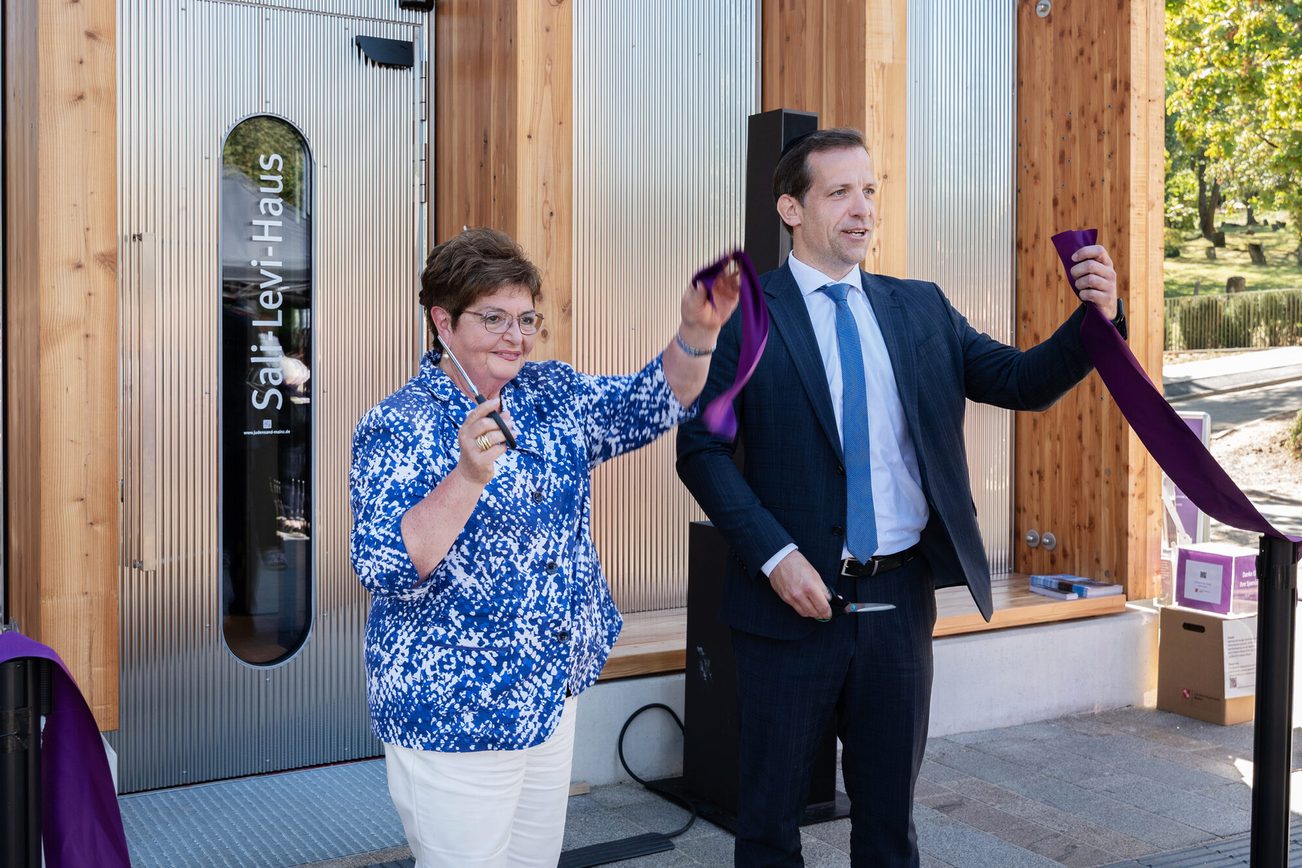
Opening of the Visitor Center
The visitor center was officially opened on Sunday, September 6, 2026, with a grand ceremony and a small community celebration on Mombacher Straße. Starting at 1:00 p.m., more than 2,400 Mainz residents and visitors gathered here to celebrate together and take advantage of guided tours through the exhibition and around the cemetery.
The opening week that followed, from September 7 through 11, featured a thoughtfully curated program of additional guided tours, readings, and special activities for school groups.
From now on, the visitor center and the Old Jewish Cemetery are open to the public.
Hours, Directions, and Visiting
You can find the current hours of operation and additional information about your visit and the exhibition at judensand-mainz.de (opens in a new tab).
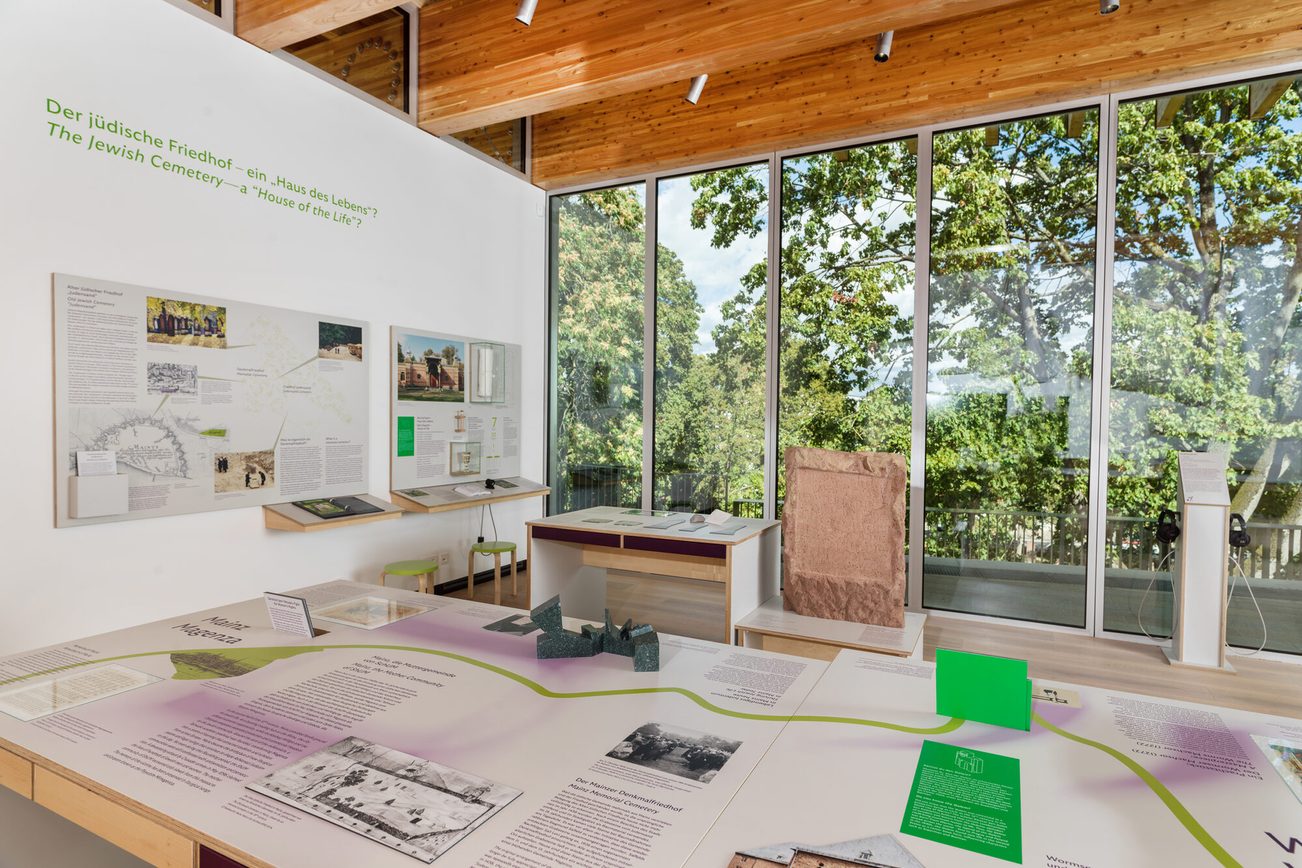
UNESCO Visitor Center: Sali-Levi House
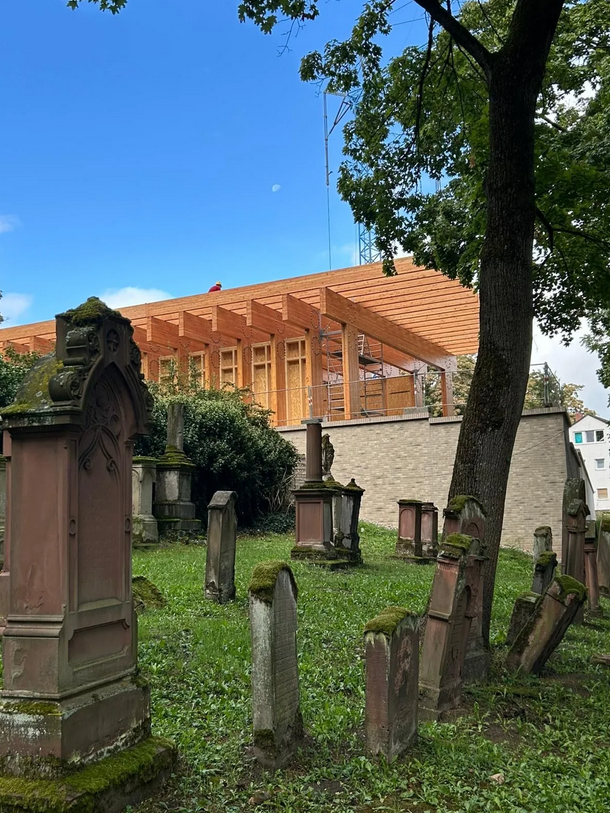
Planning for the new visitor center began as early as 2021, following a design competition launched in 2019. The contract to build the center was awarded to the firm Holzer/Kobler Architekturen, while the landscaping will be handled by Sinai Landschaftsarchitekten.
A Unique Site of World-Class
Significance The Old Jewish Cemetery on Judensand, where members of the Jewish community were buried from the 11th century through the 19th century, not only houses the oldest gravestones in Central Europe but also commemorates outstanding Jewish scholars such as Gerschom ben Jehuda. Their work and scholarship have had a lasting impact on Jewish life in Central Europe, extending to the present day.
Opening of the Visitor Center in September 2026
The new visitor center opened in 2026, the anniversary year of the historic cemetery. Visitors from around the world can learn about the rich history of the SchUM sites there; at the same time, the center enables careful tourist development that respects the rules of Halacha.
The city of Mainz has committed to managing the cemetery in accordance with Jewish traditions and preserving it for future generations. In particular, the preservation of the gravestones is a top priority.
Special attention is being paid to the stability of the gravestones, which is to be ensured for 75 graves by the end of the year. The gravestones, some of which date back to the 11th century, tell the stories of Jewish scholars and martyrs who were of great significance to Jewish culture and the intellectual heritage of Central Europe. In the future, these stories will be made accessible worldwide through digital documentation.
The surveying and digital documentation of all 1,700 gravestones will enable precise management and long-term maintenance of the site. In addition, the international visibility of the SchUM sites is to be further increased through free guided tours and fundraising campaigns.
The redesign of the sidewalk along Mombacher Straße has created a plaza-like space in front of the entrance, which serves as a focal point in the cityscape and draws the attention of passersby and cyclists to the cemetery. An architecturally appealing canopy at the entrance, seating areas with a view of the cemetery, and informational signs about the cemetery create a welcoming atmosphere.
Interventions within the cemetery itself were kept to a minimum. Only the path surface was subtly redesigned, and some architectural fragments from the former main synagogue—which was destroyed in 1938—were carefully relocated. A central element of the project is the so-called “speaking shell”—a continuous yew hedge approximately 550 meters long that surrounds the cemetery like a protective casket. Together with an anthracite-colored slatted fence and strategically placed viewing windows, this creates an aesthetic enclosure that underscores the dignity and significance of the site.
A Special Place with a Unique View
The new visitor center was built on a raised platform that offers a fascinating view of the cemetery and its old trees. The balcony-like layout not only gives visitors a unique perspective on the gravestones but also creates a meeting place and a spot to linger, inviting them to pause and reflect.
Sustainable Landscaping
The area surrounding the visitor center was planted with additional trees, while the existing green spaces were preserved as much as possible. The renovated pedestrian path connecting Mombacher Straße and Paul-Denis-Straße, as well as a turning area for tour buses, were also integrated into the plans. High-quality natural stone was used for the paving to preserve the site’s historic character.
Access to the memorial cemetery is reserved for the faithful, but a loop trail offers all visitors fascinating views of the valuable gravestones.
Further information
- UNESCO World Heritage Site: Visualization of the visitor pavilion of the visitor center (as of 2024)PDF-File3,49 MB
- Press Release: Construction Begins on the Visitor Center at the UNESCO World Heritage Site “SchUM: Old Jewish Cemetery” (September 10, 2024)
- UNESCO World Heritage Site: SchUM
- www.schumstaedte.de (opens in a new tab)