Lebanon cedar
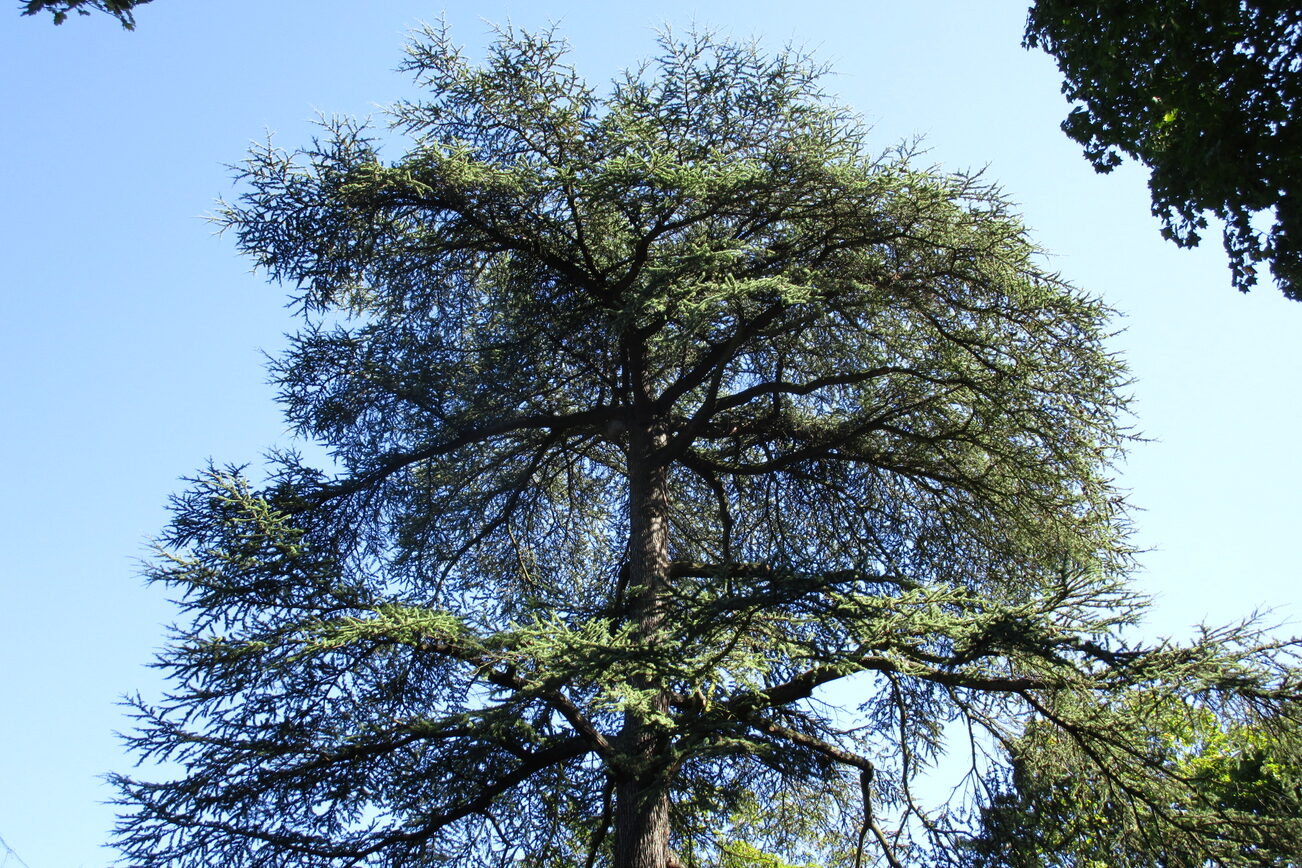
The Lebanese cedar is mainly found in the countries bordering the northeastern Mediterranean. Larger populations exist in Turkey, Syria, and Lebanon. In the Taurus Mountains, even altitudes of over 2,000 meters are no obstacle for the cedar. It is a popular tree in parks and gardens.
- Origin: Turkey, Lebanon, Syria
- Growth height: 25–40 meters
- Needles: dark green; up to 4 cm long; reminiscent of larch, as numerous needles grow together in clusters on short shoots
- Flower: 3–5 cm long male flower cones, yellowish, from June on 4–5-year-old short shoots; female flowers bluish-green, 1 cm, from September
- Fruit: cones; upright, barrel-shaped, flattened at the top, slightly dented; 8–10 cm long
- Soil/location: moderately dry to fresh, nutrient-rich, well-drained soils; sunny; high heat requirement, yet extremely frost-hardy
- Special features: The Lebanon cedar needs even more regular rainfall in winter than other conifers, as the evaporation rate remains very high even in the cold season due to the needles remaining on the tree. Most people are familiar with Cedrus libani because of its presence on the Lebanese national flag.