
Pedunculate oak
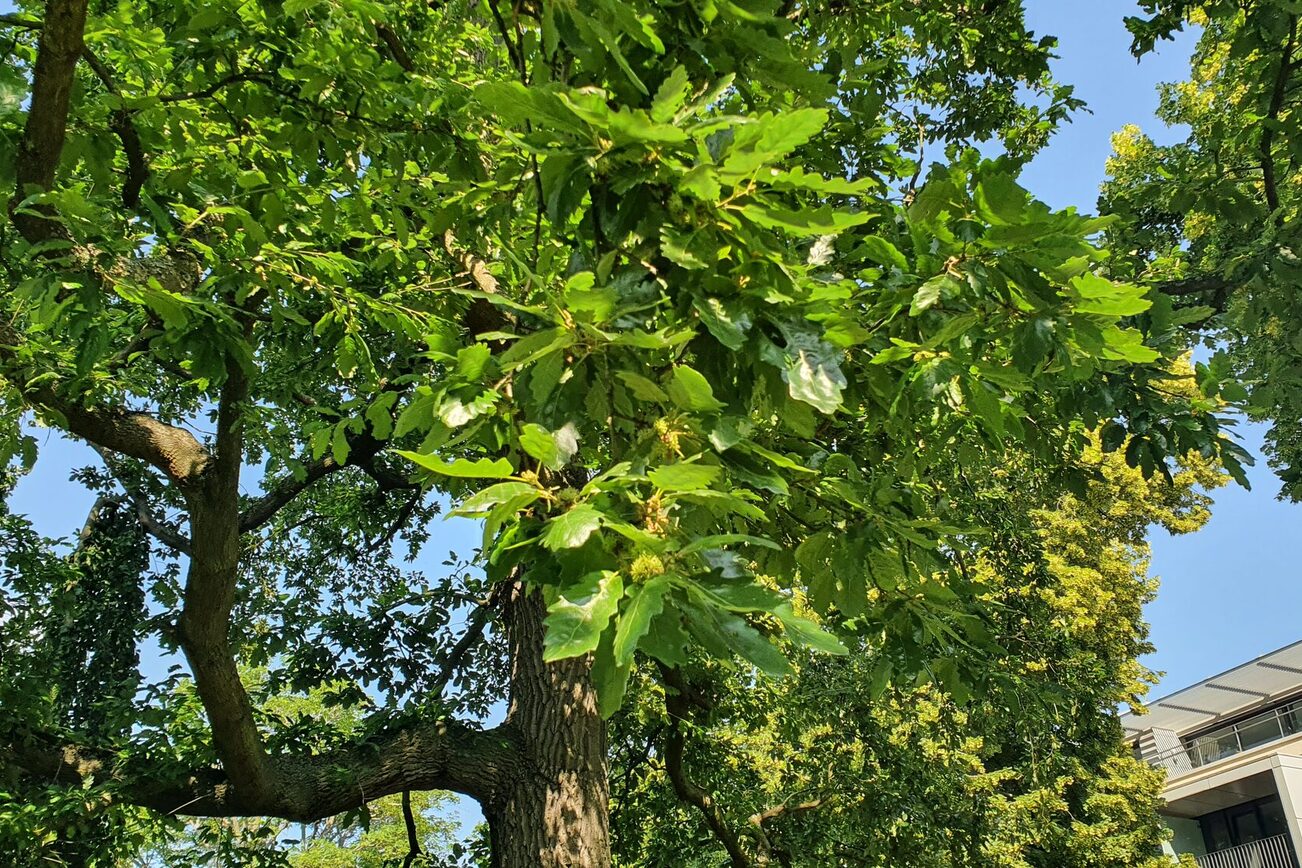
The English oak, also known as the summer oak or German oak, belongs to the beech family (Fagaceae) and can live up to 800 years. It is moderately sensitive to early or late frost and needs warmth in summer. In addition, the English oak is a light-demanding tree species, meaning it needs a high level of light to thrive. Incidentally, due to its tolerance of waterlogging, the English oak is often found in floodplains or wetlands. The English oak is an important source of food for many animals, including squirrels, wild boars, deer, birds, and insects. Squirrels, wild boars, insects, and birds feed on the acorns, which are rich in nutrients. Deer eat the leaves and shoots of the English oak. However, the English oak can be dangerous as a food source for some animals, especially horses, cattle, and sheep. This is mainly due to the tannins contained in the leaves, acorns, and bark of the English oak, which can cause gastrointestinal problems and even poisoning.
- Origin: Europe
- Height: up to 40 m
- Leaves: alternate, leathery, with very short petioles, 10–15 cm long, smooth-edged and lobed into 5 to 6 bays
- Flower: April to May, green-yellowish
- Fruit: nut
- Soil/location: Nutrient-rich, deep, well-drained, moist, loamy and clay soils
Special feature
Unlike the sessile oak, whose acorns grow in clusters on the branch, the English oak bears three to five maturing acorns on a stem up to 4 cm long, which is very short and slightly thicker in the sessile oak. In addition, the leaves of the English oak are longer and larger than those of the sessile oak.