Building breeders welcome!
Building breeders" are animals that live in buildings. They are cultural successors or have found substitute habitats in buildings that are no longer sufficiently available in the wild. All building breeders are specially or strictly protected under the Federal Nature Conservation Act
What are building breeders?

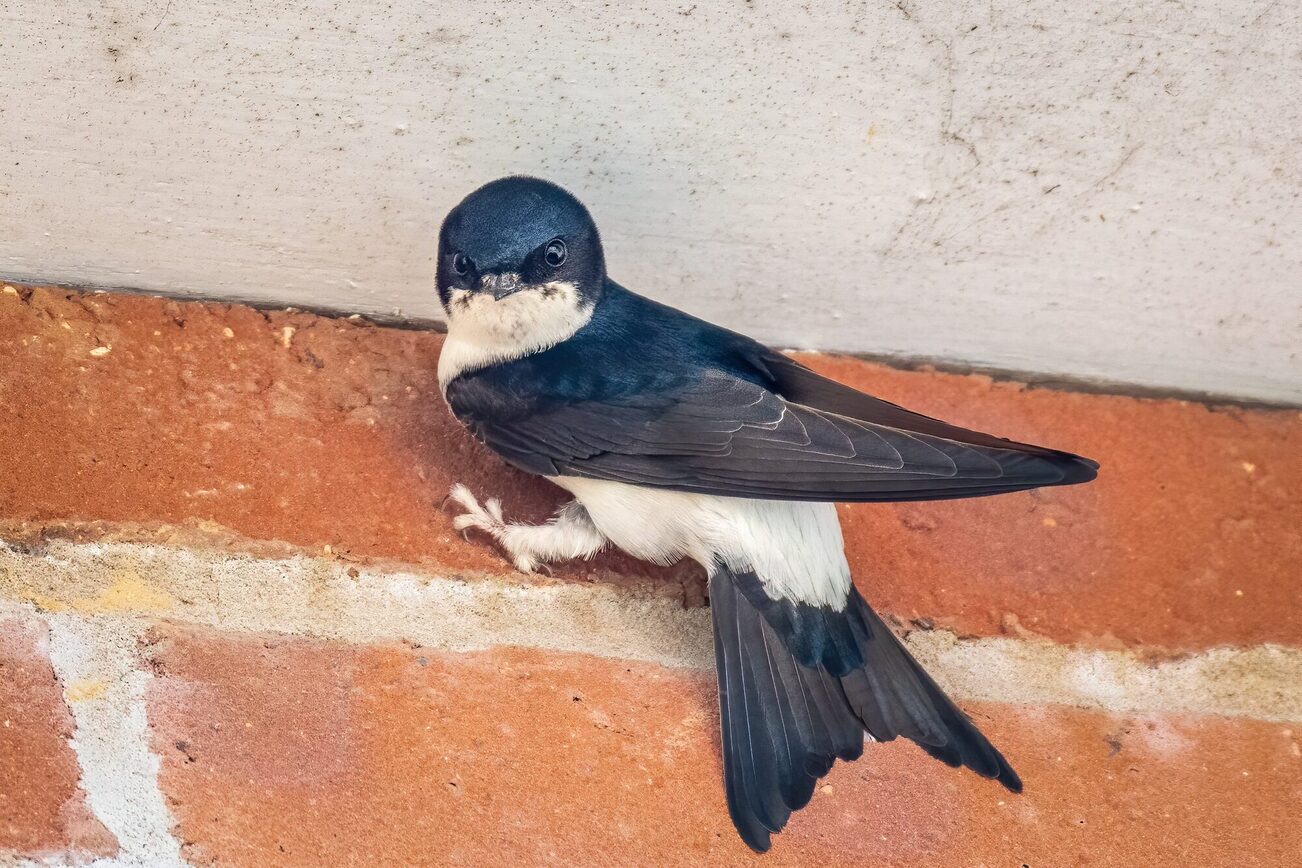
Animals that live on buildings are referred to as "building breeders." In our region, these are mainly birds and bats, as well as garden dormice and wild bees. They are synanthropic species or have found alternative habitats in the crevices and corners of buildings, which are no longer sufficiently available in the wild. All types of buildings can be colonized (single-family homes, old buildings, apartment blocks, high-rise buildings, bridges, etc.). Even small niches, cavities, and protrusions serve as shelters and breeding grounds.
Building breeders enliven the city, contribute to pollination and the spread of plants, and destroy pests. Skilled flyers such as swifts, swallows, and bats prey on large numbers of mosquitoes, for example, which is particularly important for Mainz. Sparrows are skilled foragers that prevent large numbers of rats and pigeons from settling in the area. The animals are extremely loyal to their location and return to the same roost for many years. If they lose their roost, they do not simply move to alternatives, which are few and far between anyway, but wander around unsuccessfully. Breeding is not possible. Some of the animals only spend a very short time on the building and are therefore hardly noticeable.
Building breeders are currently threatened primarily by careless renovation practices that can lead to the loss of nesting sites. It is illegal to remove, destroy, or block existing nesting sites. If necessary, additional nesting sites must be created, for example, during energy-efficient renovations if the natural nests cannot be preserved. There are now a variety of artificial nesting aids that can be fitted precisely into thermal insulation. All building breeders are subject to special species protection law in accordance with § 44 of the Federal Nature Conservation Act (opens in a new tab) (BNatSchG). It is prohibited to interfere with the animals, their eggs and nests, as well as their breeding and resting places without official permission (disturbing, catching, injuring, killing, removing, damaging, destroying). This applies throughout the year and even in the absence of the animals. Blocking the entrance is also prohibited (exception: feral domestic pigeons, but a smaller entrance hole must be left for other birds).
Violations of species protection law constitute administrative offenses punishable by fines of up to €50,000 and, in certain cases, criminal offenses.
Refurbishment, renovations and other construction activities
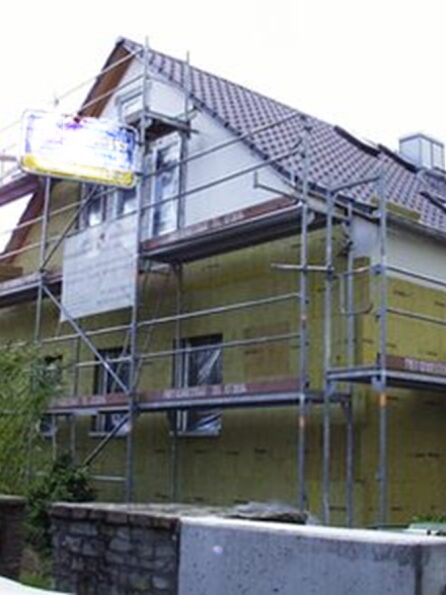
During construction work, the nesting sites of birds that breed in buildings must be preserved or replaced in accordance with Section 44 (1) of the Federal Nature Conservation Act (BNatSchG), which is technically easy and inexpensive to do. If, for example, renovation work is planned, builders must have a faunistic expert check whether there are any building-nesting birds or their nesting sites in or on their building, in accordance with § 24 (3) of the State Nature Conservation Act (LNatSchG). The right season should be chosen for this, as an inspection is often only possible when the animals are present (swifts, for example, from May to July). Sufficient lead time before construction work begins is therefore necessary. The nesting sites are protected all year round, i.e., even when the animals are absent. A list of experts is available from the Parks and Environment Department.
If nesting and resting places cannot be preserved, an application for exemption must be submitted to the higher nature conservation authority. It is not permitted to destroy the nests and roosts without replacement, which is why the exemption is usually granted with conditions for replacement or avoidance measures. Replacement can be easily achieved by means of artificial nesting boxes or by craft solutions (e.g., entrance openings in eaves boxes or verge boards) (see also the chapter "What can be done?").
Violations of species protection law constitute administrative offenses punishable by fines of up to €50,000 and, in certain cases, criminal offenses.
More info
Who can you find on buildings?

Typical building breeders include birds such as swifts, house martins, barn swallows, jackdaws, black redstarts, and house sparrows. Larger birds, such as white storks, kestrels, and various species of owls, also use buildings as breeding sites.
Various species of bats (there are 21 species in Germany) also use buildings as their home. Some of them move to different roosts during their annual cycle (summer and winter roosts). Examples include the greater mouse-eared bat, the largest native species, the broad-winged bat, the gray long-eared bat, and the two-colored bat. The most common species is the common pipistrelle, which often strays into homes in late fall in search of suitable roosts.
Building breeders will settle in even small niches and cavities, for example on facades, in gables, under roof tiles, in eaves, roof boxes, and soffits. However, roosts can also be found behind rainwater pipes or shutters, behind facade panels and stucco ornaments. Swallow nests are particularly difficult to spot, as the nests are inconspicuous and can usually only be identified by the parent birds flying to and from them, which also spend most of their time in the air and are often only in the country from around the beginning of May to mid-July.
Wild bees lay their brood in small tubes in suitable plaster or wooden components, which they block with suitable material. Unlike certain wasps, wild bees do not form colonies, and their stings cannot penetrate human skin. They have no interest in human food and are peaceful, which makes coexistence unproblematic. Birds and bats are harmless to humans and do not cause any diseases.
What can you do?

Installing nesting aids or providing suitable bat roosts is not difficult and can be done easily on almost all buildings. Artificial nesting aids can be purchased commercially or made yourself. They must be installed in accordance with the species. There are also options for integrating nesting roosts into thermal insulation.
One example of this is so-called built-in blocks. These can be installed in the facade in such a way that only the entrance is visible. The nesting boxes for building breeders are maintenance-free, can be painted with breathable facade paint in a matching color, and do not cause any dirt. A starling barrier helps against "spilling" starlings.
For swallows, a droppings board can be installed at least 40 cm below the nests. The dried droppings cone can be knocked down in the fall. Swifts are particularly unproblematic: the adult birds transport droppings balls out of the nest and keep the nest and the surrounding area clean.
Report building breeders
In order to implement legal protection and comply with protection regulations, the nesting sites of building breeders must be known. That is why we rely on the help of our fellow citizens. If you know of any nesting sites or nesting places of building breeders, please report them to us. The reporting form can be downloaded here.
Downloads
Contact us
Address
Environmental planning
Grün- und Umweltamt, Haus D
Geschwister-Scholl-Straße 4
55131 Mainz
Postal address
55028 Mainz