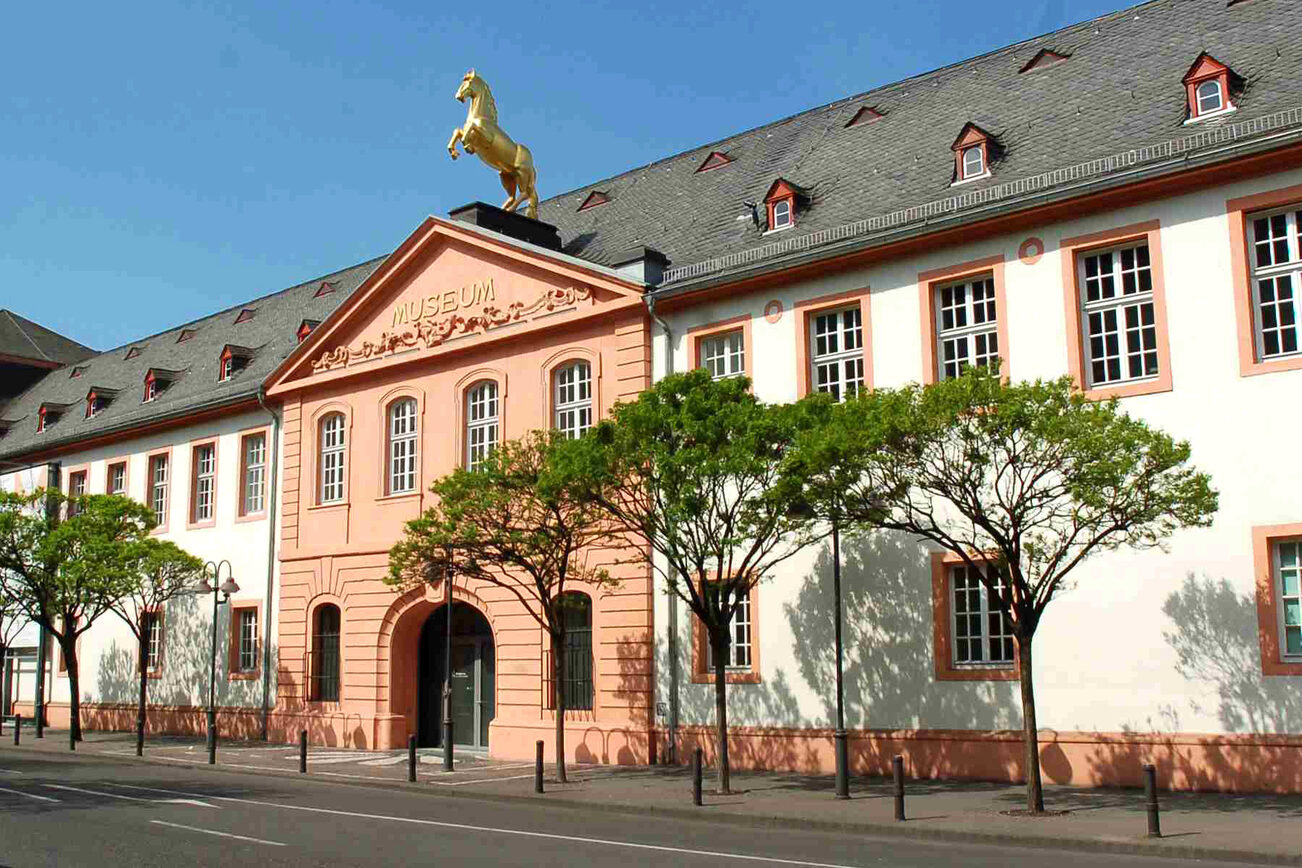
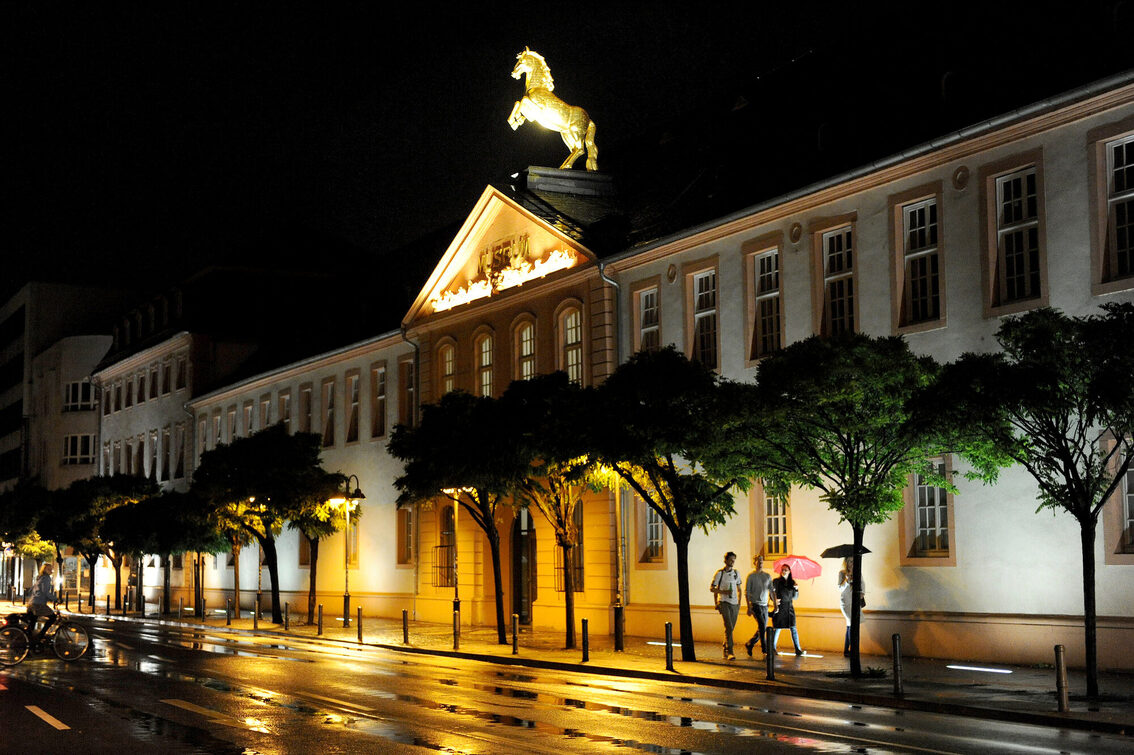
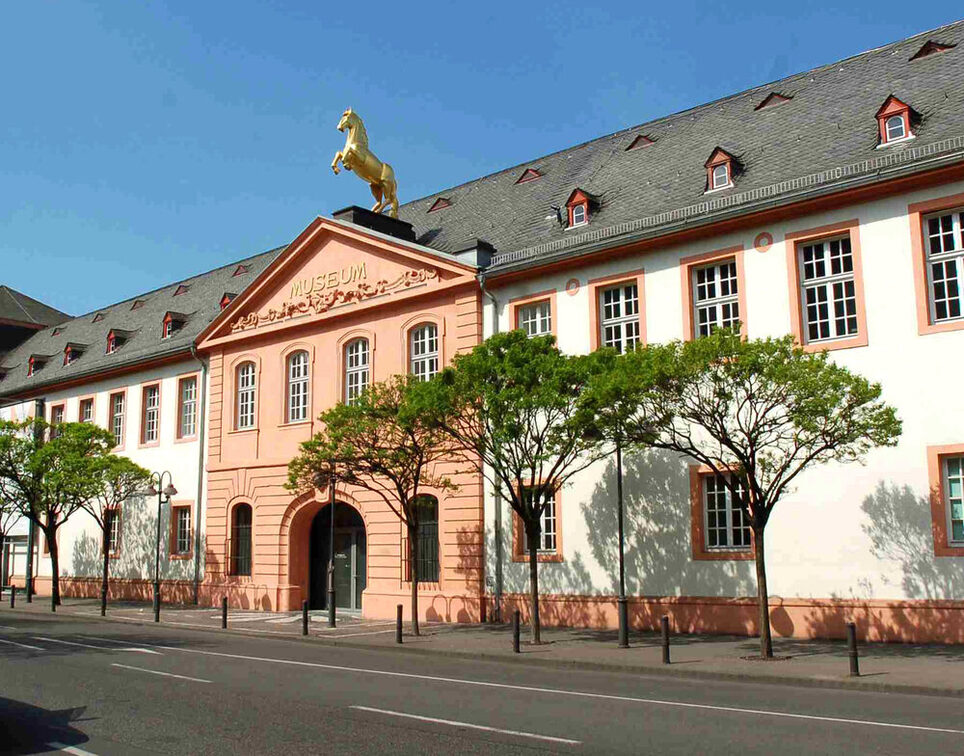
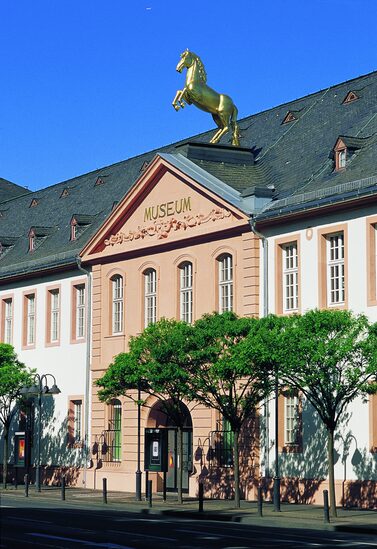
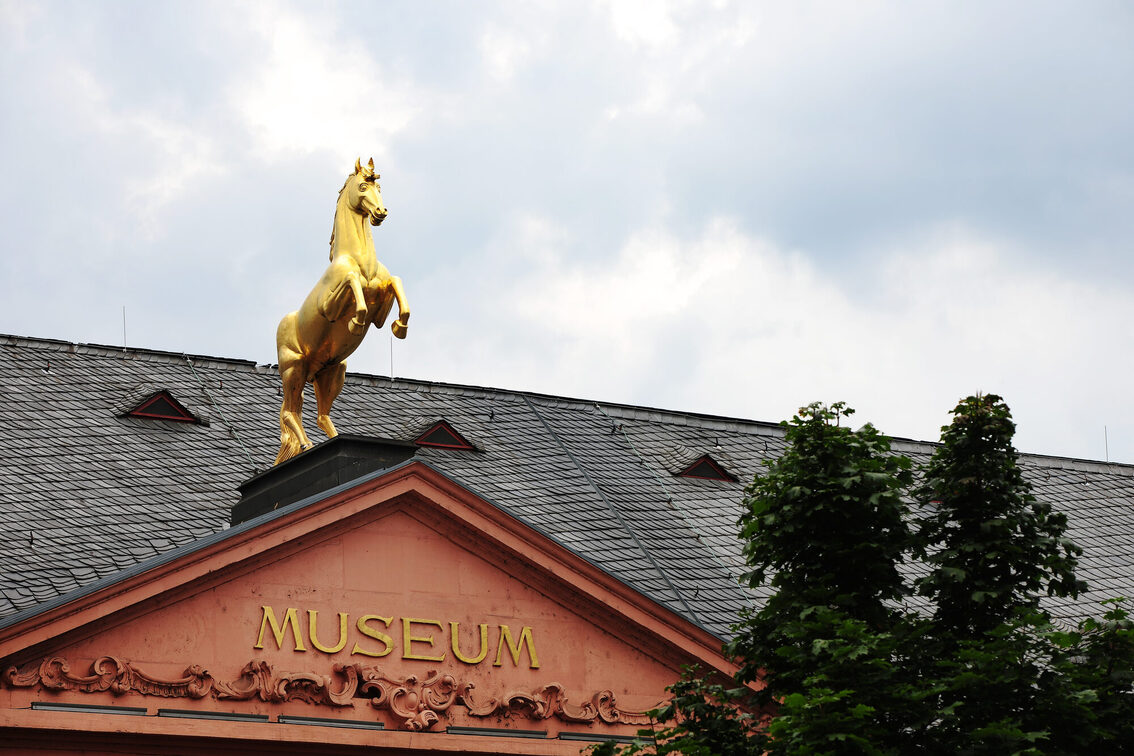
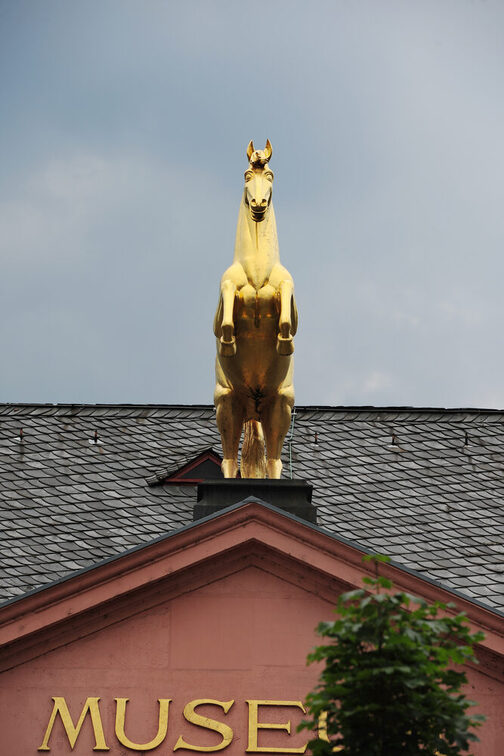
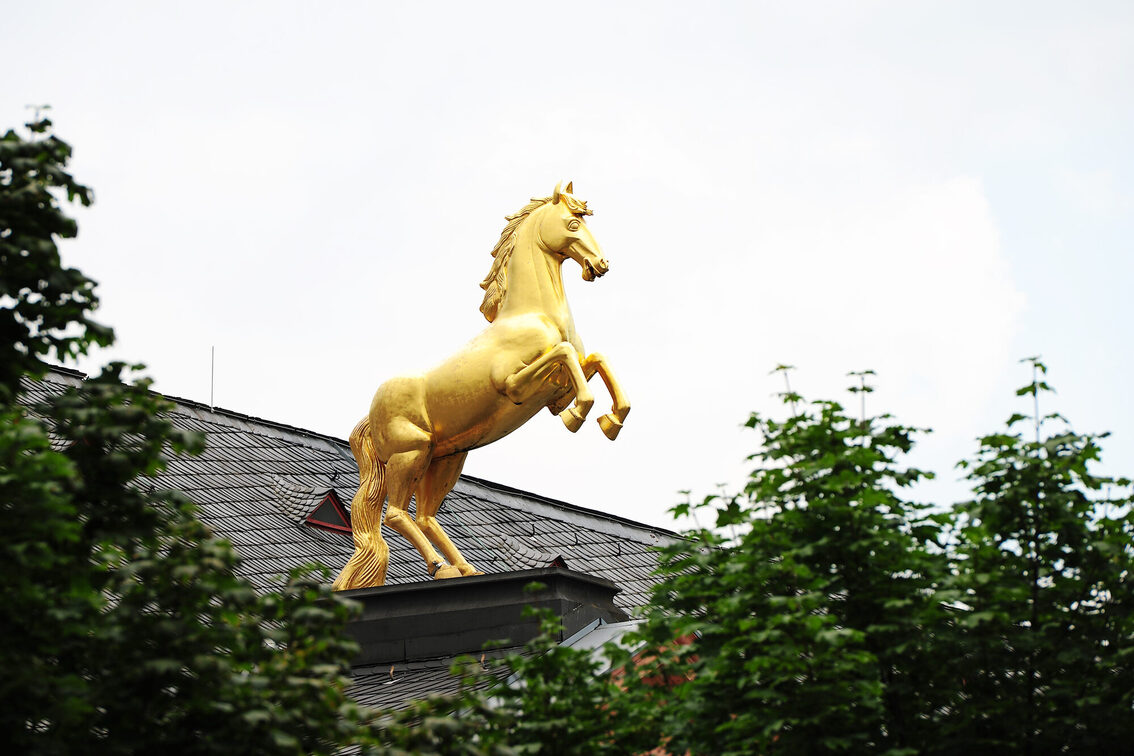
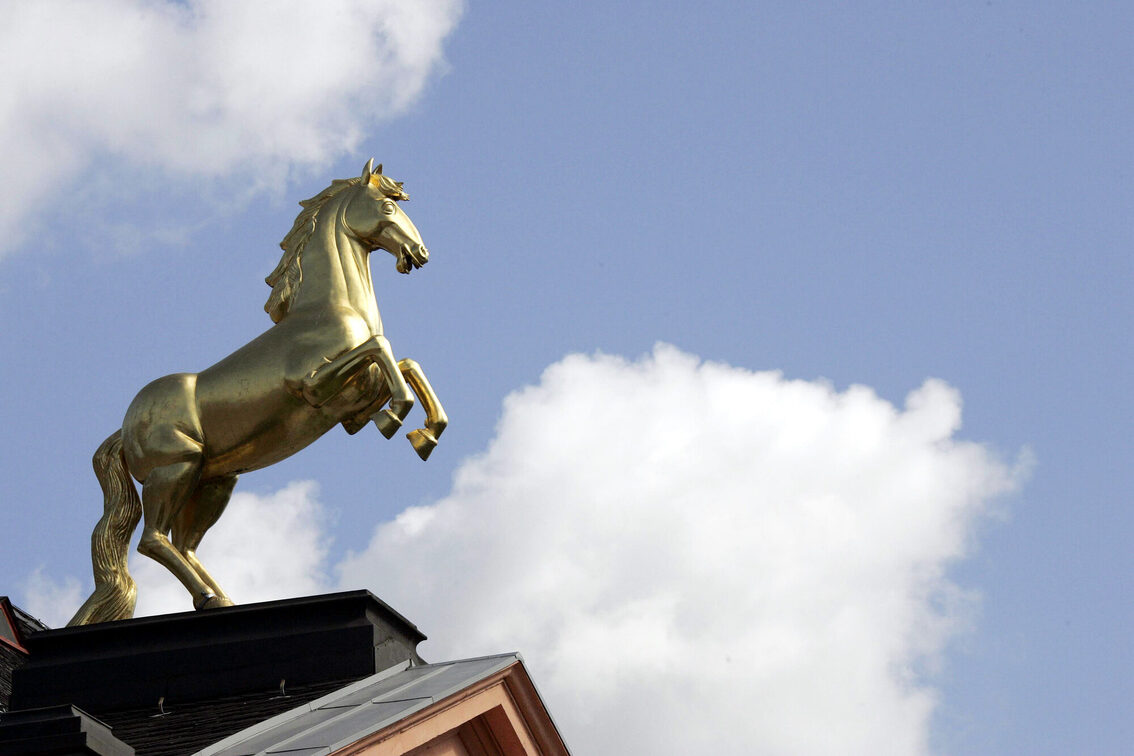
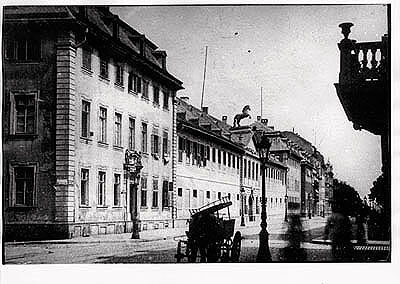
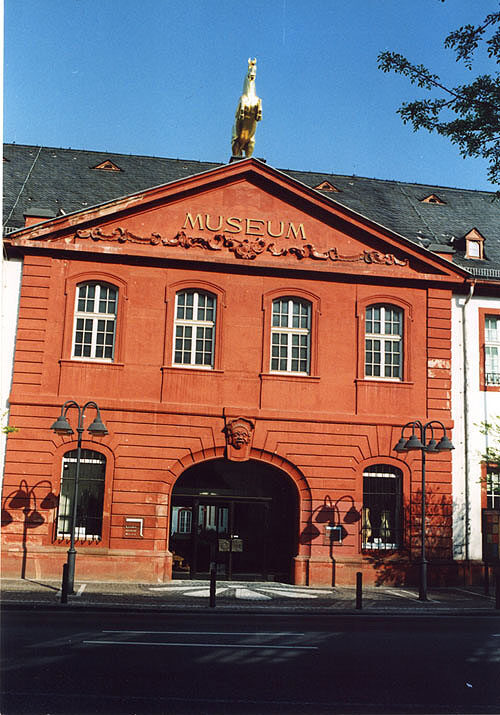
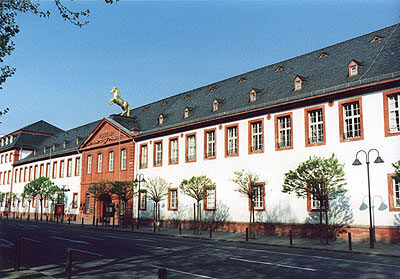
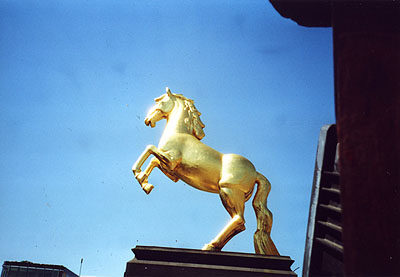
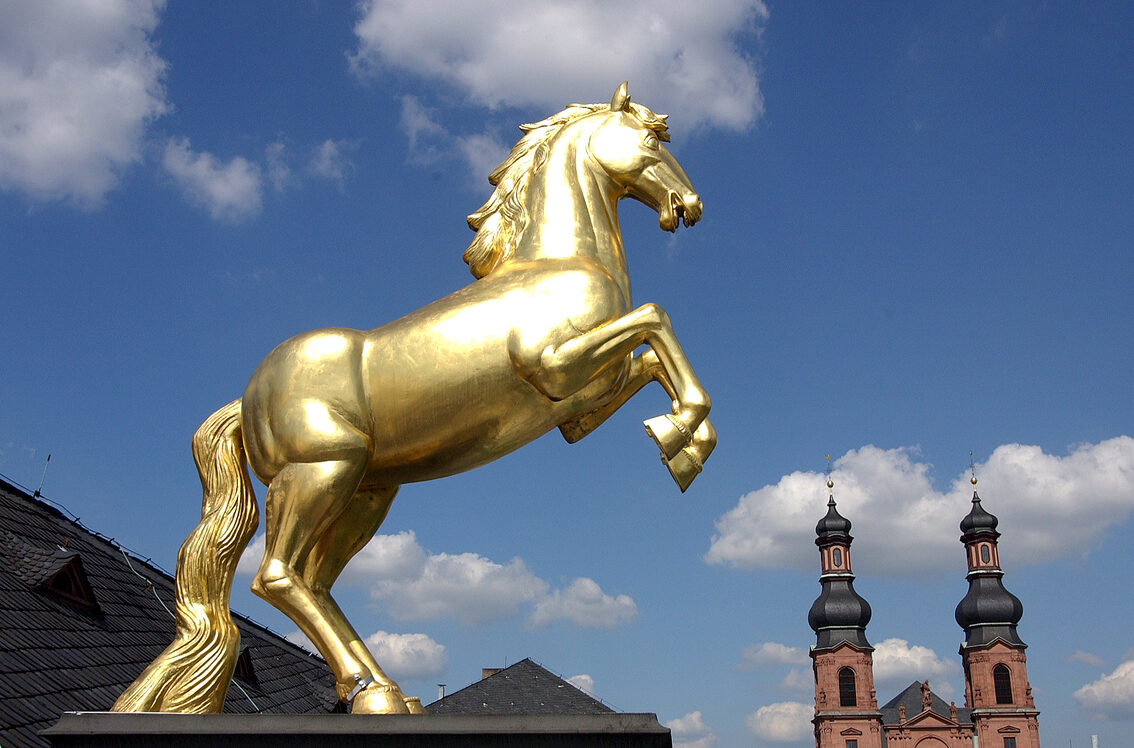
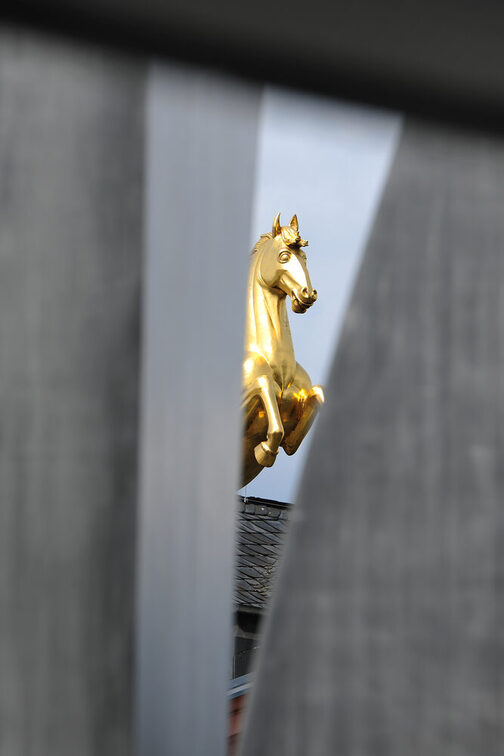
The two-story building under the Ross served as the electoral stables. Together with the residential building on Schießgartenstraße and a courtyard wing, it was built in 1766/67 according to plans by the director of construction Jakob Josef Schneider. The residential building at Bauhofstraße 1 was built before 1750. The house of the chief equerry served as the electoral chamber administration.
After the construction of the stables, this residential building housed influential figures of the 18th and 19th centuries, such as the companion of the Elector of Erthal, Sophie von Coudenhoven (1747-1825), and the French Foreign Minister Talleyrand. He lived here during Napoleon's stay in Mainz in 1806.
By 1770, a riding hall had been built on Mittlere Bleiche. In keeping with absolutist prestige, Elector Emmerich Joseph Breidbach-Bürresheim had the approximately 15 x 19 meter hall furnished with two magnificent galleries. However, from 1793 to 1797 and again between 1805 and 1833, it served as a theater. Between 1815 and 1930, the complex was used as quarters for various cavalry regiments.
Change of use: from the barracks to the Haus der Kunst
In 1937, a landmark decision was made for the Golden Ross Barracks, transforming it permanently from a barracks into a house of art: the municipal museum of antiquities was housed in the Marstall. In the mid-19th century, the municipal art gallery had already found a temporary home nearby, in the Rhine wing of the Electoral Palace. Both collections were later to be brought together completely, albeit out of necessity.
Second World War and reconstruction
The aftermath of World War II made it necessary to find a new location for the largely relocated collections of both museums. From 1950 onwards, the French military government supported the reconstruction of the wing located in the inner courtyard of the barracks as a storage facility for both museums. Once the front of the building on Große Bleiche had been rebuilt, the newly established Golden-Ross-Kaserne museum complex was opened to the public in 1962.
In 1967, the city's Museum of Antiquities and Picture Gallery became the Mittelrheinisches Landesmuseum (Middle Rhine Regional Museum) under the auspices of the state of Rhineland-Palatinate. After the wing on Schießgartenstraße had also been restored and an exhibition pavilion had been built in the inner courtyard, the museum was reopened in 1979.
In 1986, the museum was renamed the "Landesmuseum Mainz" in recognition of its supraregional significance. In 2003, it celebrated its 200th anniversary.