Blog Weingut Espenhof: The perfect harmony of winery, eating estate, sleeping estate
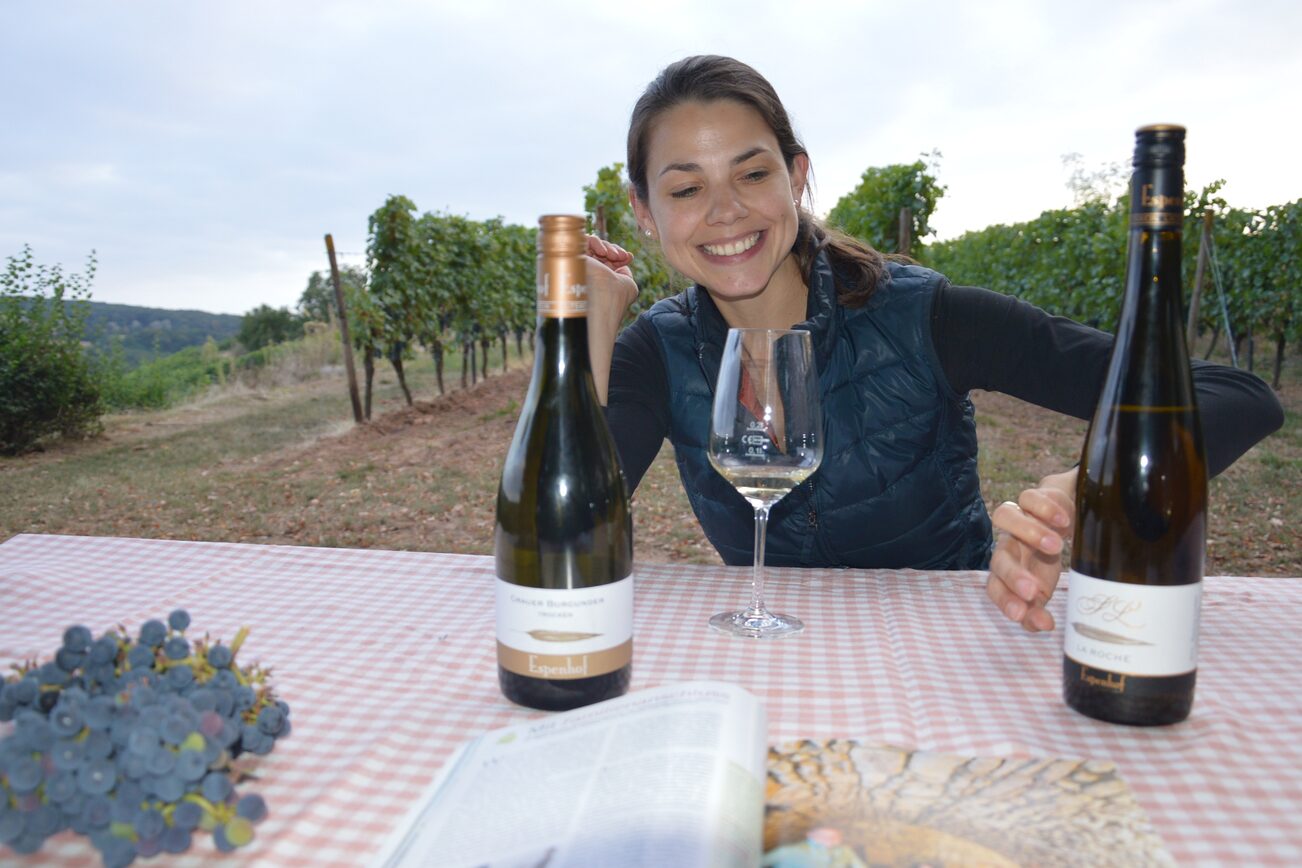
This is where Rheinhessen is at its most beautiful: steep hills covered with vineyards and crowned with wind turbines, small villages nestled in valleys, overlooked by imposing churches. "The Cabernet isn't quite ripe yet," says Lena Appelmann critically, picking a bunch of plump red berries from the vineyard right next to our picnic table. The grapes taste wonderful, but that's not enough: the wine experience here has to be perfect, and for perfect service with bed, food, and wine exploration, the Espenhof won the Great Wine Capitals' Best of Wine Tourism Award in 2016.
"Good wine, good food, good sleep" is the Espenschied family's slogan, and "good" here means both excellence and estate. It was in 2001 when Wilfried Espenschied and his family decided that making wine alone was not enough. After extensive wine tastings, guests simply wanted more: food, a bed. And there was the Alte Post right across the street, a typical Rheinhessen estate with brick walls and an enchanted little courtyard...
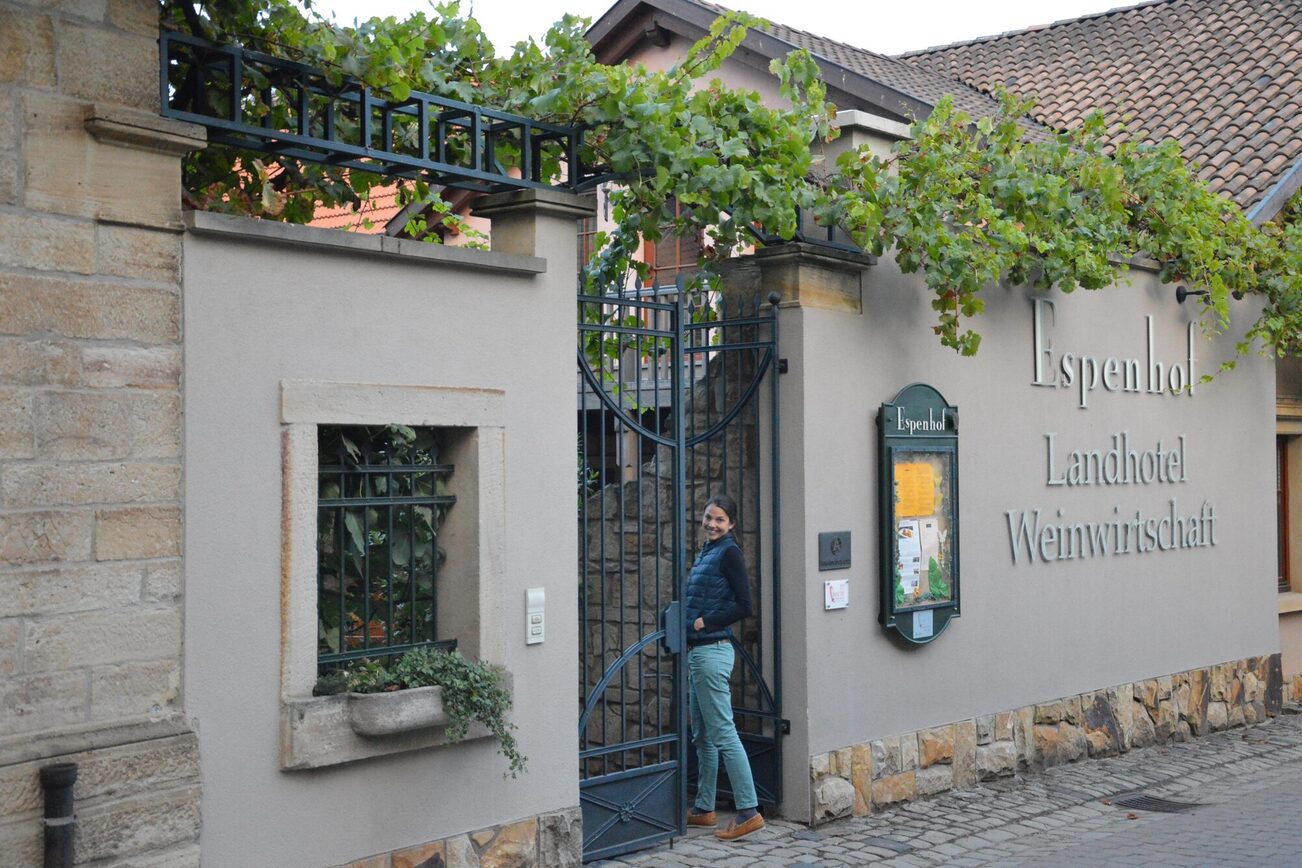
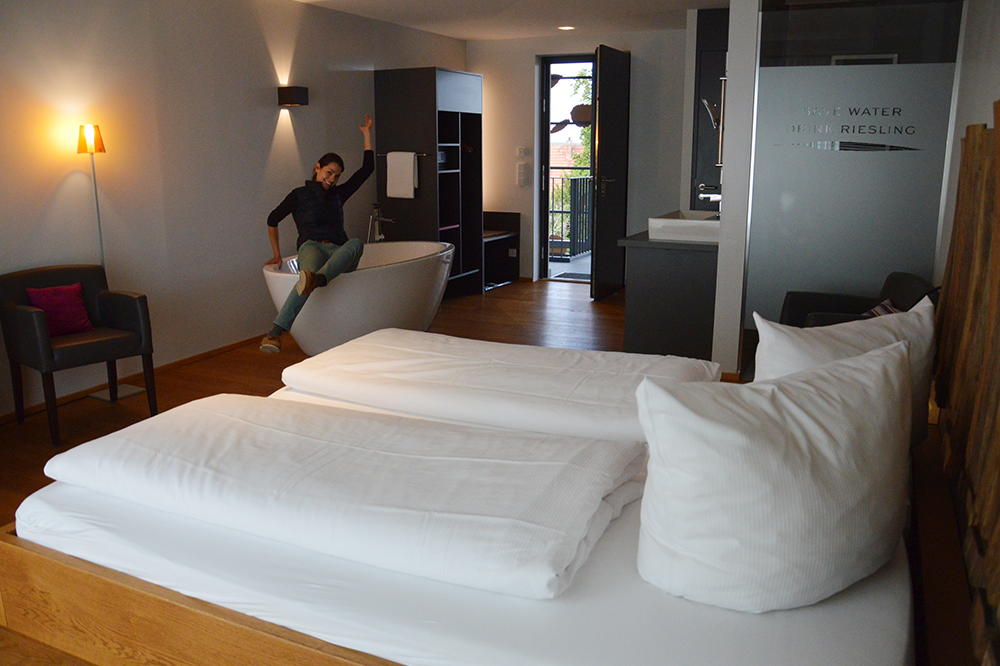
Today, the Espenhof is one of the top restaurants and hotels in Rheinhessen, showered with awards. Two years ago, a new building increased the number of rooms to 20, and the ultra-modern façade facing the street is decorated with bronze-colored vine leaves. The interior is an organic and ecological tribute to wine: the headboards of the beds are made of old barrel staves, the floor is a dream of wood, on which the white bathtub seems to float in the middle of the entrance. "Save water, drink Riesling" recommends the glass partition to the shower.
"You have to try the Riesling," says my host Lena, the Espenschieds' daughter. Her brother Nick, master of the cellar since 2009, prefers to call himself a wine caretaker rather than a winemaker, while Lena takes care of the restaurant, hotel, and everyone's well-being. If necessary, she also drives up the hill above the winery five times a day to deliver gourmet picnics to the picnic table next to the Cabernet. Behind us lies an ancient Jewish cemetery, and at our feet grows the famous LaRoche Riesling.
"The Count de la Roche once owned this land," Lena tells us. Two hundred years ago, the French came to the Rhine with Napoleon and left a deep mark on Rheinhessen. "My grandparents still used French words like chaussee, vis-à-vis, and chaise longue every day," says Lena.
Perhaps that's why they love fine gourmet food so much here, in contrast to the much more rustic Palatinate cuisine of their neighbors to the south. At the Espenhof, they serve a carpaccio of Black Tiger prawns with mango chutney or pink roasted beef paillard on olive gnocchi. "Good wines are honored by good food," says Lena—that's the principle here. "We want to achieve the greatest possible harmony."
And that's exactly what they do: as soon as you park your car in the small, hidden parking lot behind the restaurant, you are taken care of. The rooms are directly across the courtyard or just across the street, and the walls in the restaurant glow softly in the colors of Rheinhessen, painted according to the ideas of Friedrich von Garnier, who revolutionized the facades of industrial buildings with color. E-bikes await in the courtyard for exploring the hilly landscape, and postcards of the vineyards are waiting to be sent in the rooms. The picnic beckons.
The view from the picnic table sweeps over white trulli, those pointed vineyard cottages that were once built in the 18th century by Apulian workers from the Flonheim quarries. The soil of the vineyards consists of the same red clay as the famous Rote Hang (Red Slope) of Nierstein. Here, in the backyard of Rheinhessen, the wines are just as full of noble fruit and minerality as on the Rhine front, even if the vineyards are not registered as Grand Crus. Lena just shrugs her shoulders; the people here are stubborn, down-to-earth, innovative. "The Rheinhessen would never follow a guru," she says, "we do our own thing, that makes us happy." Tu felix Rheinhessen!
About the blogger
Journalist Gisela Kirschstein has lived in Mainz since 1990 and, among other things, is constantly on the lookout for exciting topics from Mainz and Rheinhessen for her website Mainz&. In 2015, she won the Great Wine Capitals' international bloggers' contest.