
Yellow pavia
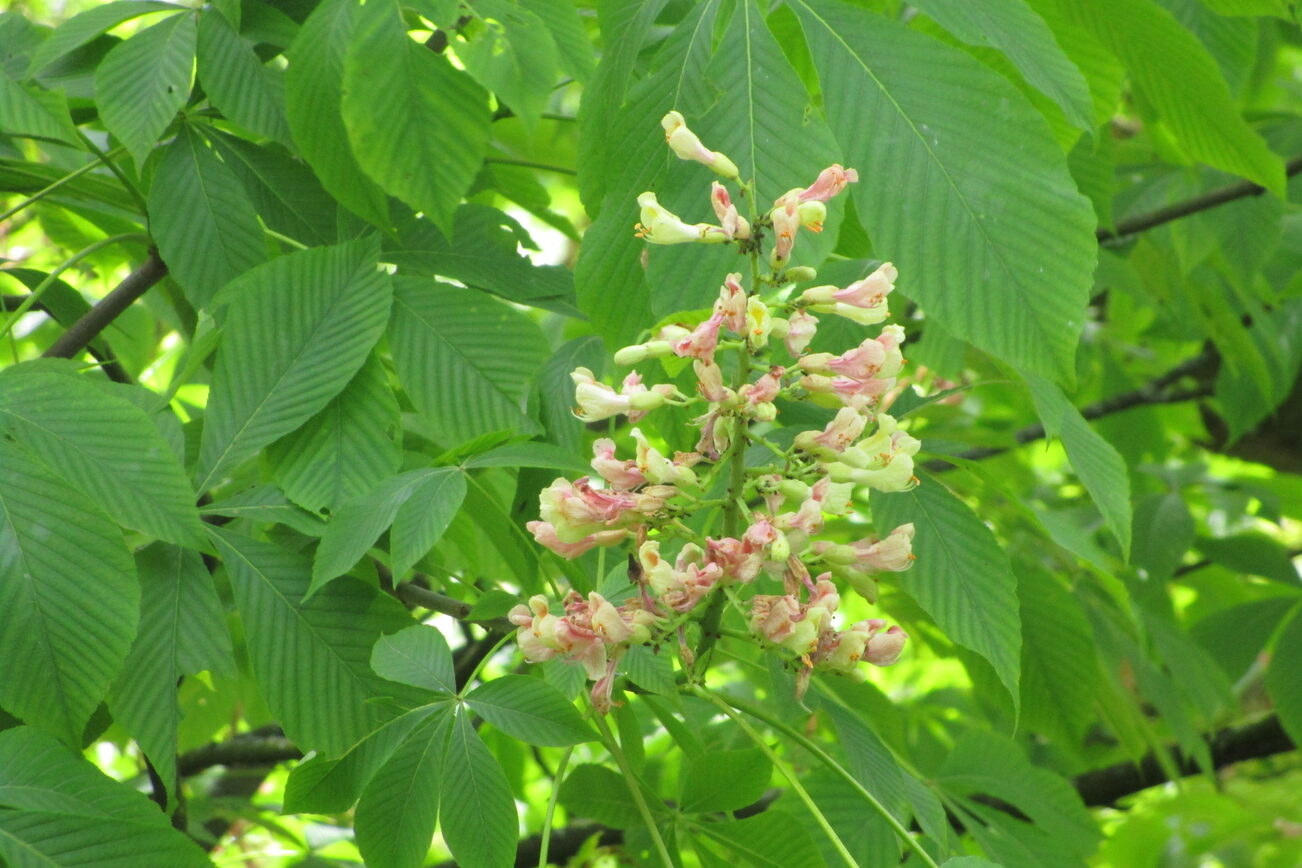
At first glance, a mature pavie could be mistaken for a horse chestnut tree that is still growing. However, on closer inspection, the habit and leaves of Aesculus flava differ significantly from those of Aesculus hippocastanum, which is much more common in our latitudes.
There is no danger of confusing the two species, at least not when they are in bloom. At this time, the yellow horse chestnut captivates with its numerous light yellow candles, clearly distinguishing it from the much larger horse chestnut with its white flowers. Unfortunately, the yellow horse chestnut is very rarely seen. It is most commonly used in parks.
- Origin: Eastern North America
- Height: 12–15 m, up to 20 m in its region of origin
- Leaves: usually five-fingered; dark green; slightly hairy underneath; deep yellow autumn color; unfortunately affected by chestnut leaf miner moths
- Flowers: bright yellow, purple-spotted; upright panicles
- Fruit: round capsule fruits without spines
- Soil/location: very wide range of locations; but preferably nutrient-rich, deep soils; lime-tolerant; frost-hardy
- Special features: Very few people are actually familiar with the yellow pavie. Even the alternative name, yellow horse chestnut, will not help many people. If you are unsure or want to be on the safe side, you can find it in Mainz City Park. Here, there is a beautiful specimen of this rarely planted tree right next to the Flamingo Pond. Unfortunately, like the horse chestnut, the pavie is increasingly suffering from the influence of the chestnut leaf miner moth. As a result, it unfortunately exudes a hint of early autumn even in the summer months.