
No fear of replacing the heating
The amended Building Energy Act (GEG) briefly explained
Fossil energy is obtained from fuels that were formed in geological prehistory around 600 million years ago from the decomposition products of dead plants and animals. In a very short period of time, namely from the 18th century to the present day, we have been burning fossil fuels, mainly coal, oil, and gas. The combustion gases produced in the process are considered to be the main cause of changes in the atmosphere that have a negative impact on our climate.
The amended Building Energy Act (GEG) – also known as the Renewable Heating Act – will come into force on January 1, 2024, and has two objectives: Firstly, the heat transition in Germany is to be accelerated, as around three-quarters of heating systems are still powered by fossil gas or oil. Second, Germany is to be "climate neutral" by 2045. In terms of heating, this means that the climate will no longer be affected by our heating activities. This requires a balance between carbon emissions and the absorption of carbon from the atmosphere into carbon sinks (e.g., oceans, forests). Germany should therefore become independent of fossil fuels, which are consumed in particular for heating.
From January 2024, only heating systems based on 65 percent renewable energies may be installed in new buildings within new development areas. Longer transition periods are planned for existing buildings and new buildings constructed on vacant lots. This should allow for better coordination of investment decisions with local heating plans. By mid-2028 at the latest, the use of at least 65 percent renewable energy will be mandatory for all new heating systems.
Installing a new heating system is not only a financial investment, but also a decision for the next 20 to 30 years. In order to make a sustainable decision, it is advisable to address the issue of heating replacement in good time. This will also prevent you from being caught out when an older heating system suddenly breaks down and repair is no longer feasible.
Anyone who wants to replace their heating system now or in the future and switch to 65 percent renewable energy may be eligible for a government subsidy.
What alternative heating options are there?
The GEG provides for so-called technological openness in this transition. This means that when installing or replacing a heating system, homeowners are free to choose between different solutions:
Connection to a heating network
If a climate-friendly, municipal heat supply (district heating) is available or in planning, your private household will be connected to it via pipelines and transfer stations. Such a heat supply can use a wide range of climate-neutral heat sources for heating that cannot be used as efficiently or at all on a decentralized basis. The latter applies, for example, to the direct use of heat from deep geothermal energy and the integration of waste heat from data centers or industry. Various renewable heat sources and technologies such as solar thermal energy, biomass, heat from wastewater, and large heat pumps can be combined in heating networks to replace fossil fuel-fired power plants.
Electric heat pump
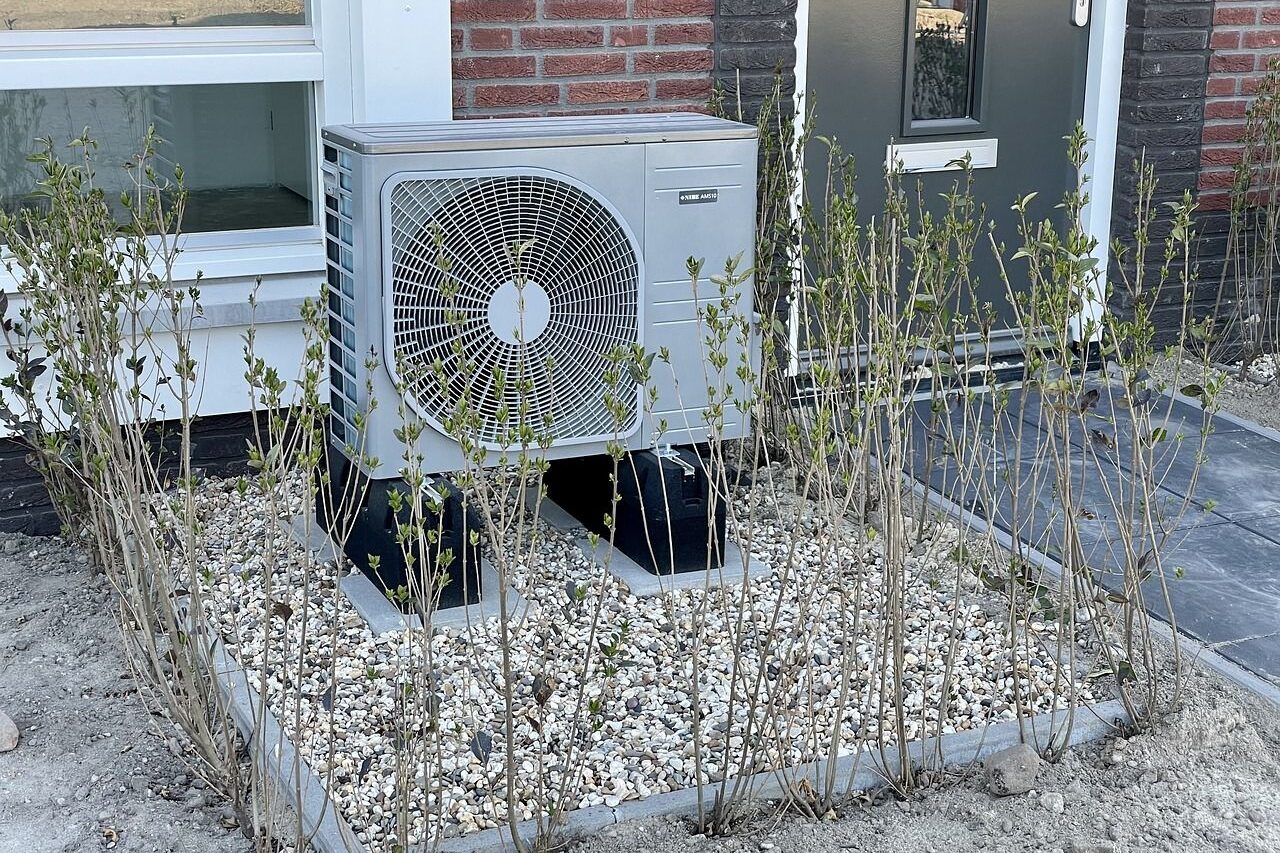
Heat pumps extract heat from the ambient air, groundwater, or the ground. A refrigerant in a pipe system serves as a means of transport and is compressed. When the heat is released into the living spaces, the refrigerant is expanded again. An electric heat pump requires electricity for compression. For the heat pump to run efficiently, it must extract as much heat as possible with as little electricity as possible. The more electricity from wind, solar, and other renewable energies flows into the general electricity mix in the future, the more climate-friendly each heat pump will become.
Direct electric heating
Direct electric heating draws its heat directly from electricity, without the use of intermediate carriers such as water or gas. The heater converts the electricity into heat and then releases it directly into the room to be heated. It was developed as an energy-saving alternative to existing night storage heaters. Examples include radiant heaters, wall heaters, and infrared heaters. Here, too, the electricity required should come from renewable energies.
Hybrid heating
Hybrid heating combines an existing heating system—often fossil fuel-based—with renewable energies. It is therefore suitable for older buildings. It is also possible to have three or more components in the heating system, in which case it is referred to as multivalent heating. The basic idea behind hybrid heating is that each heating component always operates in its optimal range, i.e., exactly when heat can be generated most efficiently. For example, heat pumps or solar thermal systems take over during the warmer months, while gas heating kicks in on cold winter days.
Heating based on solar thermal energy
Solar thermal energy converts solar energy into heat. A pipe circuit is connected to the solar collectors on the roof, through which the heated fluid flows to the heat storage tank. Cold water from the pipe system enters the interior of the storage tank, where it is heated by the thermal fluid. The cooled thermal fluid then flows back to the collectors to be reheated. This heat exchange is one of the most important steps in solar thermal energy. Only in this way can the stored heat be used to heat drinking and bathing water or to support the heating system.
"H2-ready" gas heating systems
According to GEG, H2-ready heaters are gas heaters that can be converted to run on 100 percent hydrogen. Hydrogen is considered one of the heating fuels of the future because
- the colorless and odorless gas (H2) is available in almost unlimited quantities,
- hydrogen can be produced with very low emissions using renewable energies via electrolysis,
- hydrogen is easy to store and transport, for example in existing gas networks,
- hydrogen burns without climate-damaging emissions.
Currently, however, there are only H2-ready heating systems that can handle a hydrogen volume fraction of up to 20%. It remains to be seen whether hydrogen will remain a niche application for heating purposes because it is only available on a regional basis.
Further options are planned for existing buildings: biomass heating, gas heating that demonstrably uses renewable gases – at least 65 percent biomethane, biogenic liquefied petroleum gas, or hydrogen.
Who can help me through the heating jungle?
The German government's new Building Energy Act also includes a heating guide to help you decide which heating system to switch to. The Rhineland-Palatinate Consumer Advice Center is currently promoting the "Heating with a Future" campaign. Here, alternative heating systems for your building are suggested in a direct comparison with all the total costs. Energy consultants will determine the specific purchase and operating costs of different heating systems for you and show you how quickly a new purchase will pay for itself. You can also seek advice from energy efficiency experts on replacing your heating system and taking advantage of federal subsidy programs. Before looking for individual solutions, it makes sense to find out what the municipal heating plan is in your place of residence. Mainz already has a heating master plan. All relevant links can be found at the end of the article under Further information.
Further information
Contact us
Address
Environmental store
Mainzer Umweltladen
Steingasse 3
55116 Mainz