Funeral: environmentally conscious and dignified
Environmental tip from the Mainzer Umweltladen
Changing funeral culture
To this day, cemeteries and funeral culture are subject to constant change. With the spread of Christianity, churches were built in many places. Enclosed burial grounds, known as churchyards, were created around them. This was a way of seeking closeness to God beyond death. From the Middle Ages onwards, cemeteries were moved outside residential areas out of fear of the plague and later for reasons of space. With the reformation of the funeral industry in the 18th century, large, park-like cemeteries such as the Mainz Main Cemetery were created, and cemetery culture became secularized.
A bourgeois culture of mourning developed, which found expression in the individualization of death. Death and mourning were celebrated in 19th-century bourgeois society in a mixture of Christian traditions, private emotionality, and social prestige. The classic places of mourning (viewing rooms, churches, and graves) as well as mourning decorations and symbols (floral decorations, mourning ribbons, candlesticks, and much more) date back to this period. The final farewell traditionally took place at the graveside with the lowering of the coffin, as did the eulogies. Many of these traditions have survived into the 21st century.
Current trends in the funeral industry
The individualization of the two forms of burial permitted in Germany, burial and cremation, has progressed further. This is evident in the wide range of different burial sites and types of graves from which one can choose one's final resting place. Based on the experience of the Mainz business, the social trend in cemeteries is towards low-maintenance graves such as lawn graves, columbaria, tree graves, or forest graves.
In addition, an industry has developed with manufacturers, services, and products related to funerals. The number of deaths is rising due to demographic developments, resulting in a greater number of funerals. According to Statista 2022, sales in the funeral industry in Germany have risen steadily in recent years, reaching almost €2.3 billion in 2020.
The nationwide consumer initiative Bestattungskultur, Aeternitas e.V. (Funeral Culture) considers ecology and sustainability to be among the top issues that service providers and producers in the field of death, mourning, and funerals will have to address in the future. What does this mean? It means critically examining forms of burial, the origin and processing of gravestones, the quality of coffins and urns, as well as the services provided by funeral homes and grave design and maintenance. Sustainable management, environmentally friendly products, and social aspects should become quality criteria for consumers. According to Aeternitas, Germany is only at the beginning of this development.
Tips for an environmentally friendly funeral
Urns and coffins: In Germany, both cremation and burial are permitted. Biodegradable urns made from compressed corn starch, natural fibers, or papier-mâché are used in forest graves. Coffins for cremation are simple, unfinished wooden coffins. No harmful gases may be produced by varnishes during cremation. You are free to choose any coffin for burial, provided that it complies with the regulations of the respective cemetery statutes and the applicable state burial law. The coffin should be sealed and biodegradable and should not contain any harmful adhesives or varnishes. Sustainably produced coffins are made from local woods. Materials such as sheep's wool or hemp are used for the interior.
Clothing: Natural materials such as cotton, cellulose, hemp, or wool are recommended for clothing the deceased. Viscose, modal, and lyocell are also made from 100% cellulose and are suitable as they are biodegradable.
Funeral service: A funeral service is very individual. When planning, you have many options for acting in a resource-saving and environmentally conscious manner. Ask your funeral home for advice on:
- Use of media and communication tools for announcements, mourning cards, acknowledgments, and selection of speakers and music
- travel, accommodation, and catering for mourners,
- Avoiding plastic, single-use, and disposable products for coffin and grave decorations.
Graves and grave maintenance: When choosing a gravestone, pay attention to the origin of the stone and give preference to local stones. Old gravestones from disbanded graves are recycled and used in road construction. Ask specifically for stonemasonry companies that recondition old gravestones. Sponsored graves are a special feature of Mainz Main Cemetery. Purchase a sponsorship to preserve and use a grave that is worthy of protection or listed as a historical monument. The choice of soil, planting, and watering are crucial for sustainable grave maintenance. We provide valuable tips on this in our brochure "Natural Grave Design."
Funeral homes: If you value an environmentally conscious funeral, ask during your initial consultation what aspects the funeral home takes into account.
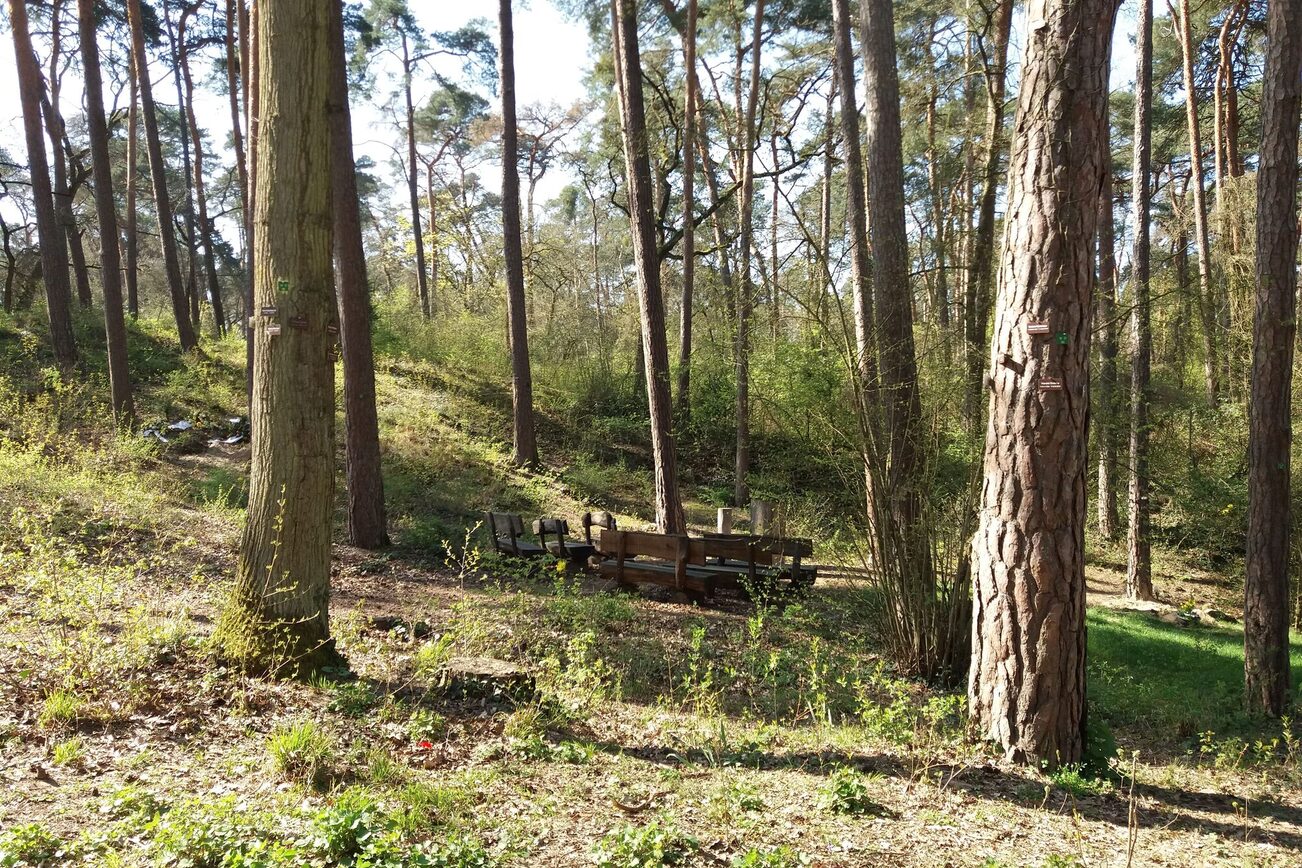
Natural burial: The best-known form of natural burial is probably forest burial. Here, the ashes of the deceased are buried in a biodegradable urn in the root area of a tree. In Mainz, forest burial is possible at the Mombach Forest Cemetery. Tree burial can also be a sustainable form of burial. This type of grave can be found in almost all cemeteries in Mainz.
Further suggestions, information, and personal advice on this topic can be found in the Mainz Economic Enterprise exhibition "Burial in Transition at Mainz Cemeteries," which will be on display at the Mainz Environmental Store from September 1 to October 31, 2022.
Further information:
Contact us
Address
Environmental store
Mainzer Umweltladen
Steingasse 3
55116 Mainz