
Accessibility in public spaces
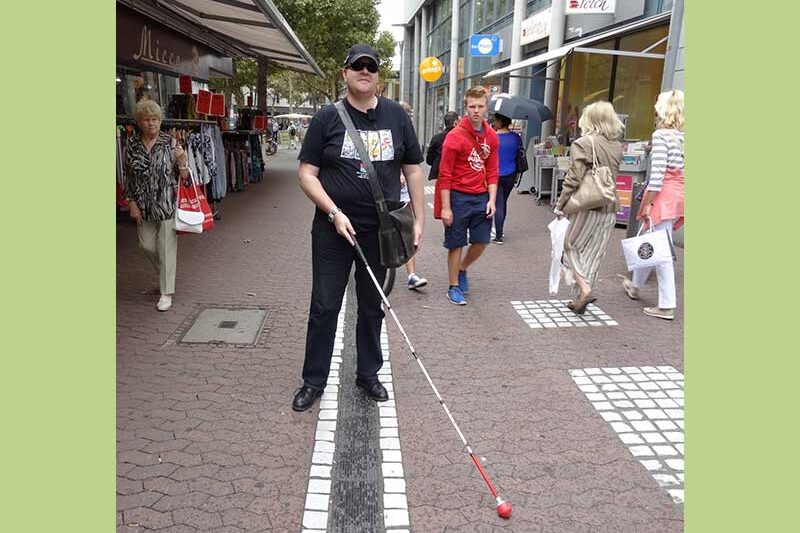
The urgency of barrier-free design in public spaces has increased in recent years, partly due to legal requirements, e.g., in the Passenger Transportation Act. Since the last update of the data sheets on accessibility in public spaces in Mainz in 2013, a great deal of practical experience has been gained, with many of the design elements proving to be robust, while others have been found to require further explanation. As a rule, accessibility is a prerequisite for funding for new buildings and renovations. Since the last update of the data sheets, various DIN standards have been slightly adjusted and further guidelines (e.g., from the State Mobility Agency) have been published. It was therefore essential to carefully adapt the data sheets in order to keep them up to date with the latest technology and make them easier for everyone to use.
This second update of the 2023 data sheets is strongly based on nationwide regulations, taking into account the specific conditions in Mainz.
The present data sheets continue to be based on nationwide regulations, taking into account the conditions in Mainz. This includes, for example, the design of individual elements (e.g., at bus stops), but also consideration of the character of the existing urban structure and design of Mainz. Compared to 2013, statements on visual contrast have been made more specific, the system sketches of public spaces have been made even clearer, and additional chapters have been included, e.g., on sidewalk widths and slopes. For the first time, the individual sheets are supplemented by corresponding practical examples in the appendix.