Rethinking neighborhoods of the future - new perspectives for the Citymeile
How can inner city districts be used in the future? What makes places lively, attractive and identity-creating?
With the "Rethinking districts of the future" project, the city of Mainz is developing new ideas for the further development of the city center together with partners from the district, university and administration.
Rethinking neighborhoods of the future - new perspectives for the Citymeile
How can downtown neighborhoods be utilized in the future? What makes places vibrant, attractive, and distinctive? Through the project “Rethinking Neighborhoods of the Future,” the City of Mainz’s Economic Development Agency is collaborating with partners from the community, academia, and government to develop new ideas for the further development of the downtown area.
The focus is on the Citymeile as a pilot neighborhood. Here, new approaches will be developed and tested on a pilot basis between 2026 and 2027.
The project is designed as a so-called “real-world laboratory”: ideas are not only conceived but—where possible—also tested in the urban environment. This allows for insights into which approaches can contribute to the sustainable development of downtown neighborhoods.
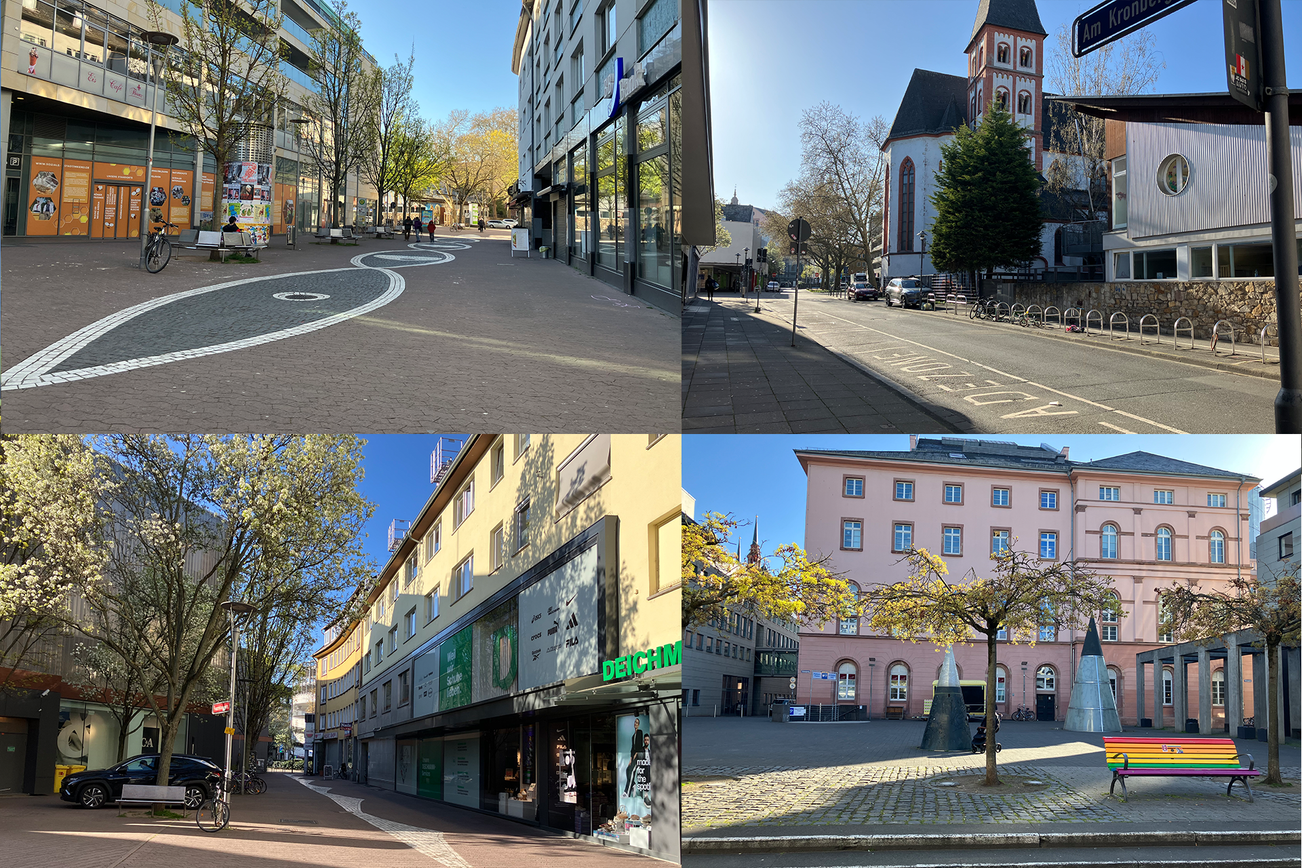
Pilot quarter Citymeile
The Citymeile is centrally located in downtown Mainz between Dominikanerstraße, Große Bleiche, Flachsmarktstraße, and Große Langgasse.
The neighborhood connects key areas of the city center and is characterized by retail, services, restaurants, and residential uses. At the same time, the Citymeile—like many inner-city locations—is undergoing a process of change.
The project examines the potential opportunities for the neighborhood’s future development and identifies initiatives that can enhance the quality of life, promote mixed-use development, and strengthen the neighborhood’s identity.
Public testing in the neighborhood
One component of the project is not only to develop selected ideas conceptually, but also to test them in the urban environment. The plan is to temporarily implement individual measures in the neighborhood and make them accessible to the public through various events.
This may also include a neighborhood forum where ideas can be presented, tested, and discussed together.
Such formats make it possible to
· test new uses of urban space
· incorporate feedback from the urban community
· draw attention to the neighborhood
· connect stakeholders
The specific details will be developed as the project progresses.
Current project status
The first phase of public engagement has been completed. In April 2026, residents were able to share their perspectives and ideas on the Citymeile through an online survey. This was supplemented by workshops with residents, business owners, and other stakeholders from the neighborhood.
Currently, students at Mainz University of Applied Sciences are developing concrete ideas for the neighborhood’s future as part of an interdisciplinary project. The designs are being created in close collaboration with local stakeholders and will be incorporated into the project’s further development.
In the next step, the ideas will be evaluated, refined, and prepared for potential implementation.
Approach in the project
The project is based on a so-called placemaking approach. It focuses on the question of how places can be designed and used in such a way that they are embraced by diverse user groups and create a positive environment for people to spend time in.
In addition to design aspects, the potential uses, perception, and identity of a place also play a role.
The goal is to bring together different perspectives and derive approaches for the further development of the neighborhood from them.
The measures developed in the project are intentionally designed to be temporary at first, in order to test new ideas and gather experience.
Cooperation in the project
The project is being implemented in collaboration with various partners:
Mainz Economic Development
Agency Coordinates the project and oversees the implementation of the pilot measures
Mainz University of Applied
Sciences: Students from the interior design and time-based media programs will develop ideas and designs in an interdisciplinary course during the summer semester of 2026.
City Administration Departments
Contribute technical perspectives, e.g., on urban planning, open space design, and framework conditions.
Neighborhood stakeholders
: Contribute practical experience and provide important insights into the neighborhood’s use.
Process support by KOKONSULT:
Facilitation, support, and evaluation of the multi-phase participation and implementation process.
Contact us
Address
Woman Katharina Bahne
Creative industries | Start-ups and young companies
Sachgebiet Wirtschaftsförderung
Stadthaus Große Bleiche
Große Bleiche 46
55116 Mainz
Postal address
55028 Mainz
Telephone, fax and e-mail address
- +49 6131 12 ext. 3697
- +49 6131 12 ext. 2363
- katharina.bahnestadt.mainzde
- gruenderleitstellestadt.mainzde