Blog Restaurant Eppard
The cornucopia in the 100 guilder mill
Top chef Eva Eppard creates regional gourmet cuisine in the heart of Rheinhessen with a unique approach to sustainability
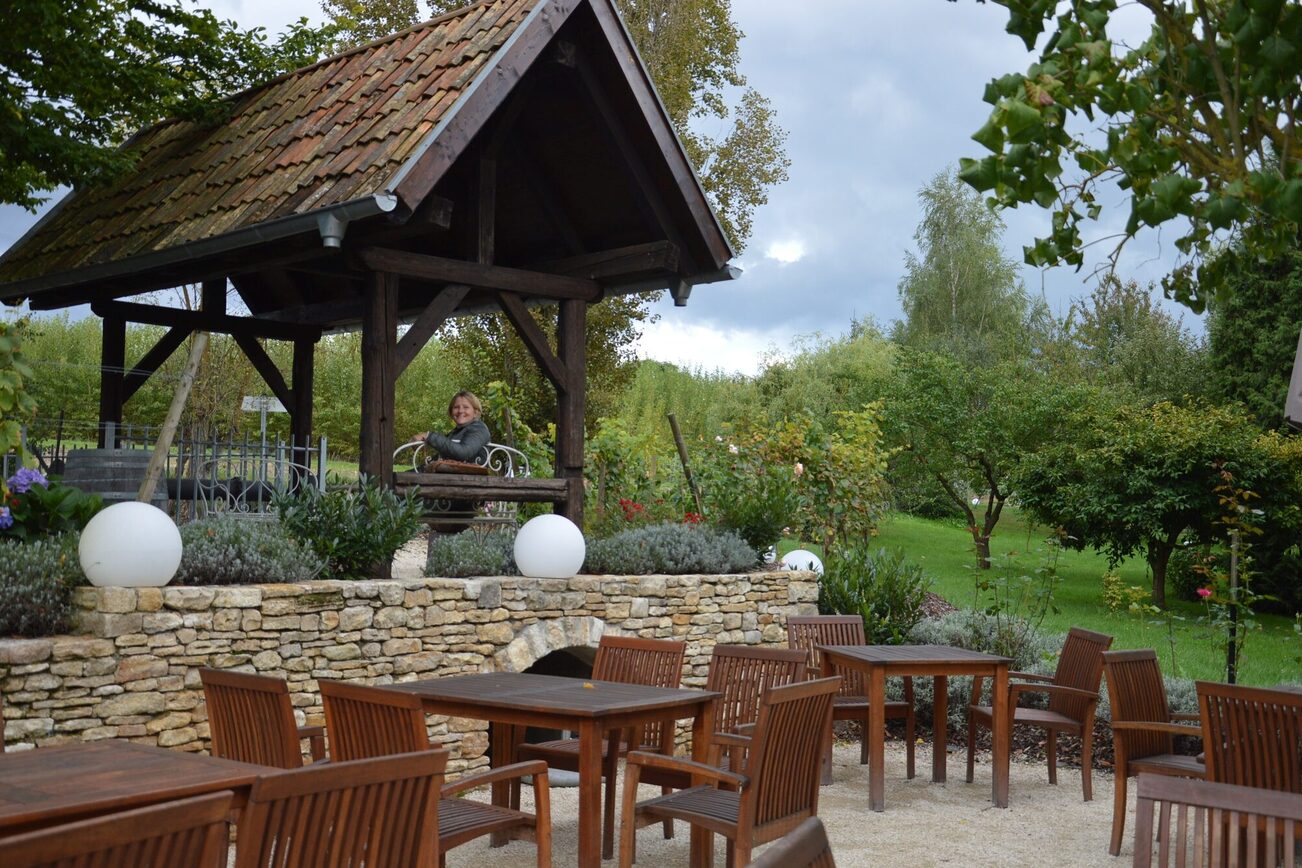
Guests are welcomed at the mill weir. A bench, chairs, and flowers are lovingly arranged under the small roof—this is where the mill stream once flowed to the mill wheel. A path winds its way from here to the entrance of the old grain mill, where a small wooden door inside allows a glimpse of the old grinding mechanism. "It wouldn't be that difficult to make the mill operational again," says Eva Eppard.
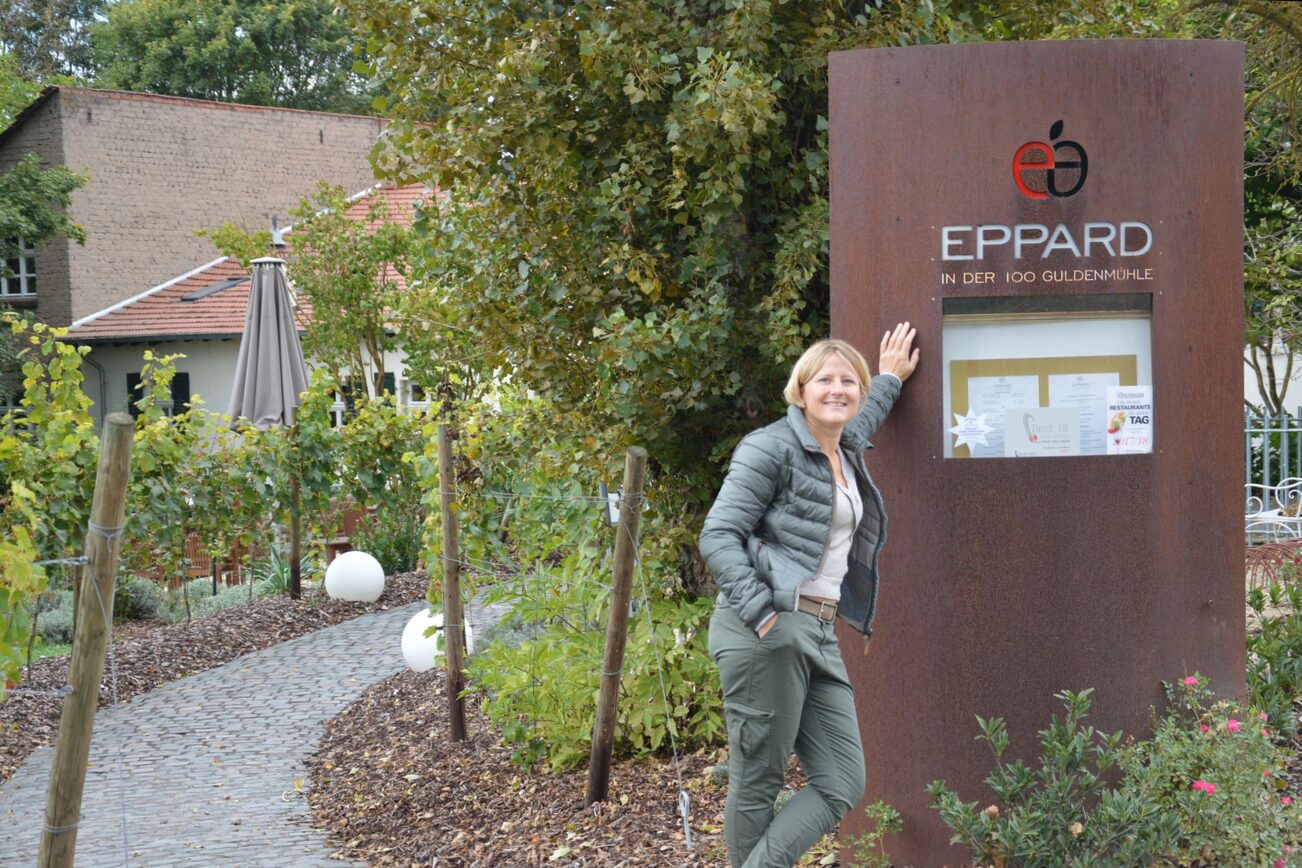
The young woman runs one of the best restaurants in the region: "Eppard in der 100 Guldennmühle" sets unique standards in terms of regional cuisine and sustainability, and that is precisely what earned her the Great Wine Capitals' Best of Wine Tourism Award 2017. "I'm proud of that, it proves me right in my efforts to support the region," says Eppard: "We live in a cornucopia of our own producers, we have to slowly realize that."
Eppard did that a long time ago: she ran the restaurant on the Kupferberg in Mainz for five years and was previously head chef of the gourmet kitchen at the Atrium Hotel in Mainz-Finthen, where she established her cuisine based on regional products. "All my food except fish and risotto rice comes from within a 150-kilometer radius," she says, "and I don't mean the wholesale market."
Pumpkins and potatoes come from right next door in Appenheim, herbs from a garden market in Mainz, asparagus, apples, and raspberries from farmers in Mainz-Finthen. "I only serve food that I myself enjoy," says Eppard, "it's a return to my roots."
The small village of Appenheim is one of those seemingly sleepy little places in the middle of the Rhine-Hesse hill country. "We are in the center of good wine here," says Eppard, Appenheim is full of excellent wineries. "There is concentrated wine power here, which makes it easy for me," says the chef, "it's a matter of honor that 95 percent of my wine list consists of Appenheim wines."
The view wanders from the terrace in front of the mill to the vineyards. This is the "Hundertgulden," a famous Grand Cru vineyard that was purchased in the 12th century by the nun Hildegard von Bingen for her new monastery on the Rupertsberg. According to legend, the saint bought the vineyard for 100 guilders, and the name has remained to this day, also sticking to the neighboring mill.
"Hildegard von Bingen was a wise woman," says Eppard, "she knew that wine was important for the region, the monastery, and the people." Hildegard von Bingen is still famous today for her herbal medicine and herbal cuisine. Eva Eppard grew up right next to the Hundertgulden; her parents' house is almost directly adjacent to the 200-year-old mill. "I know every stalk here," she says.
A restaurant in her hometown, "that was my dream even as a child," says Eppard: "A restaurant for everyone, where hikers are just as welcome as couples enjoying a candlelit dinner." Then one day, a friend of her brother's called and said, "Evi, I can buy the mill at auction, but I'll only do it if you open a restaurant there." Eppard didn't hesitate for a moment. "I said right away that I'd do it," she recalls.
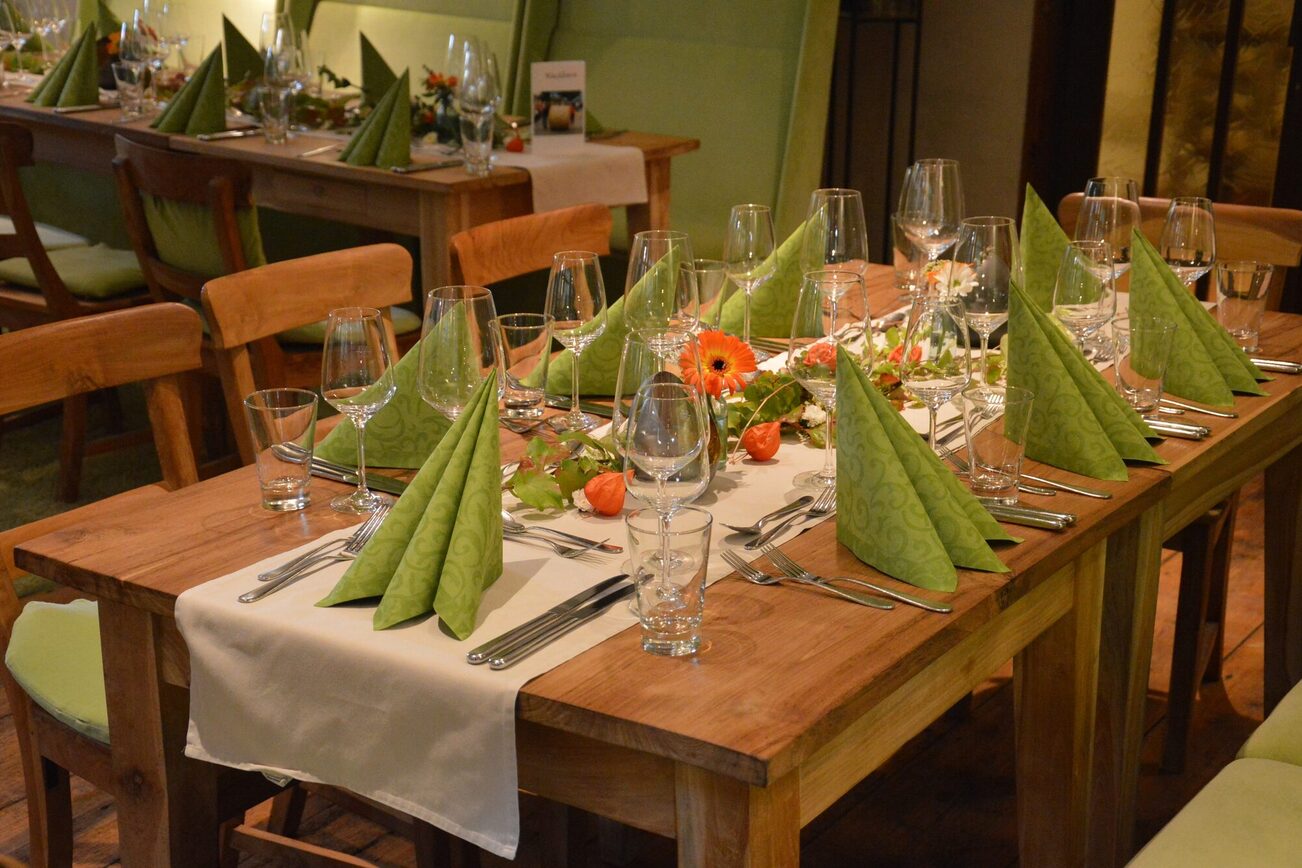
They spent nine months cleaning and renovating the mill, transforming the small rooms with wooden beams and beautiful wooden floors into a cozy yet stylish restaurant. Once a month, Eppard also hosts a radio show for amateur chefs, offering tips on what to do when the goulash goes wrong. "I like that," says the woman who has cooked for Richard Gere, Bill Clinton, and all the other big names at the World Economic Forum in Davos.
"One of the best restaurants in Germany" is written at the entrance to the mill, a label awarded by Feinschmecker magazine, which is enough for the chef. "I don't want a Michelin star," says Eppard decisively. A restaurant for everyday enjoyment with guests in jeans and without pretensions is exactly what she wants. With that, she disappears into the kitchen to prepare the evening's meal: Rhine-Hessian potato soup with roasted quail breast, followed by duck breast with duck praline, pumpkin purée, and rosemary jus. Heaven can truly wait.
About the blogger
Journalist Gisela Kirschstein has lived in Mainz since 1990 and, among other things, is constantly on the lookout for exciting topics from Mainz and Rheinhessen for her website Mainz&. In 2015, she won the Great Wine Capitals' international bloggers' contest.