Blog Rheinhessenvinothek
The true home of Great Capital wines
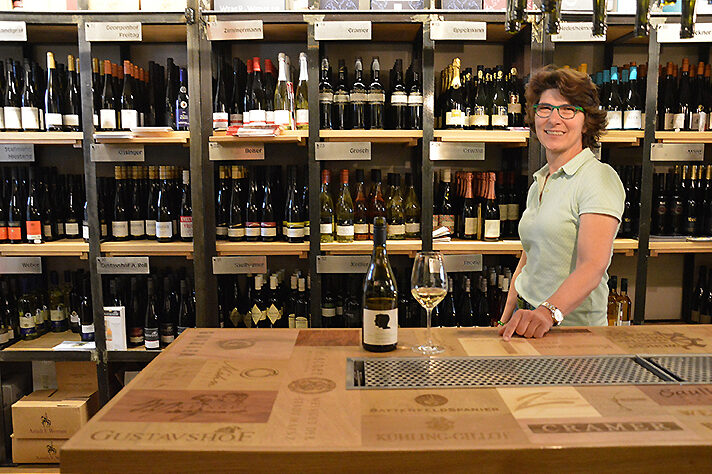
The plaque shows them all: Gunderloch, Gehring, Schätzel—they are all here. Right in front of me, on the table – the best German winemakers in the Rheinhessen region, engraved on a beautiful plaque made of different woods, with a cooling rail in the middle. How fitting: the wine bottles are literally standing on what this is all about: winemakers, diversity, natural foundations.
Along the walls: wine bottles upon wine bottles crowd the shelves in this room with its high ceilings. "We have wines from about 150 winemakers from Rheinhessen here," says Sigrid Hahn, "three wines per winery." That may sound like a lot, but it's only a small selection: Rheinhessen is, after all, the largest wine-growing region in Germany, with hundreds of tiny wine villages, each with various wineries. "In some villages, we had to draw lots to decide who could be represented here," says Hahn. She was also once the managing director of the farmers' association, where she was responsible for rural youth, "all potential candidates for inclusion here," she says, glancing at the wine rack.
Thörle, Manz, Kühling-Gillot, Sigrid Hahn knows them all. The managing director of the Rheinhessenvinothek grew up on a winery herself, in Ober-Hilbersheim, one of those tiny wine villages with beautiful half-timbered houses in the hinterland of Mainz. "I actually wanted to be a veterinarian," Hahn says with a laugh, as the family owned five horses. The graduate agricultural engineer studied agriculture and married a winemaker. Today, her sons run the "Weinmanufaktur Brummund," which also owns an old smithy. Hahn herself went into the wine sales business—and discovered a talent.
"Something light, with barrique, or a heavyweight?" she asks as a customer strolls into the wine shop. The young woman is looking for a wine for Saturday dinner with friends, where Spanish quiche will be served. "There's so much choice here," she marvels. "You're definitely not buying a pig in a poke," Hahn reassures her, "all the wines here are excellent." In the end, the customer buys a light Pinot Noir from stainless steel and also takes a "Lässisch Rhoihessisch" with her – a light white wine cuvée from Mainz.
She could also have opted for a genuine Spanish wine, or a wine from South Africa, Chile, or Argentina. "We have at least two wines from every Great Wine Capital in the world," says Hahn proudly. Most wine shops showcase their own products or those from their region, but the Rheinhessenvinothek is different: it is the true home of the Great Wine Capitals in all their diversity. No wonder they won the Best Of Wine Tourism Award in the wine tourism category in 2017 – not only in Germany, but also internationally.
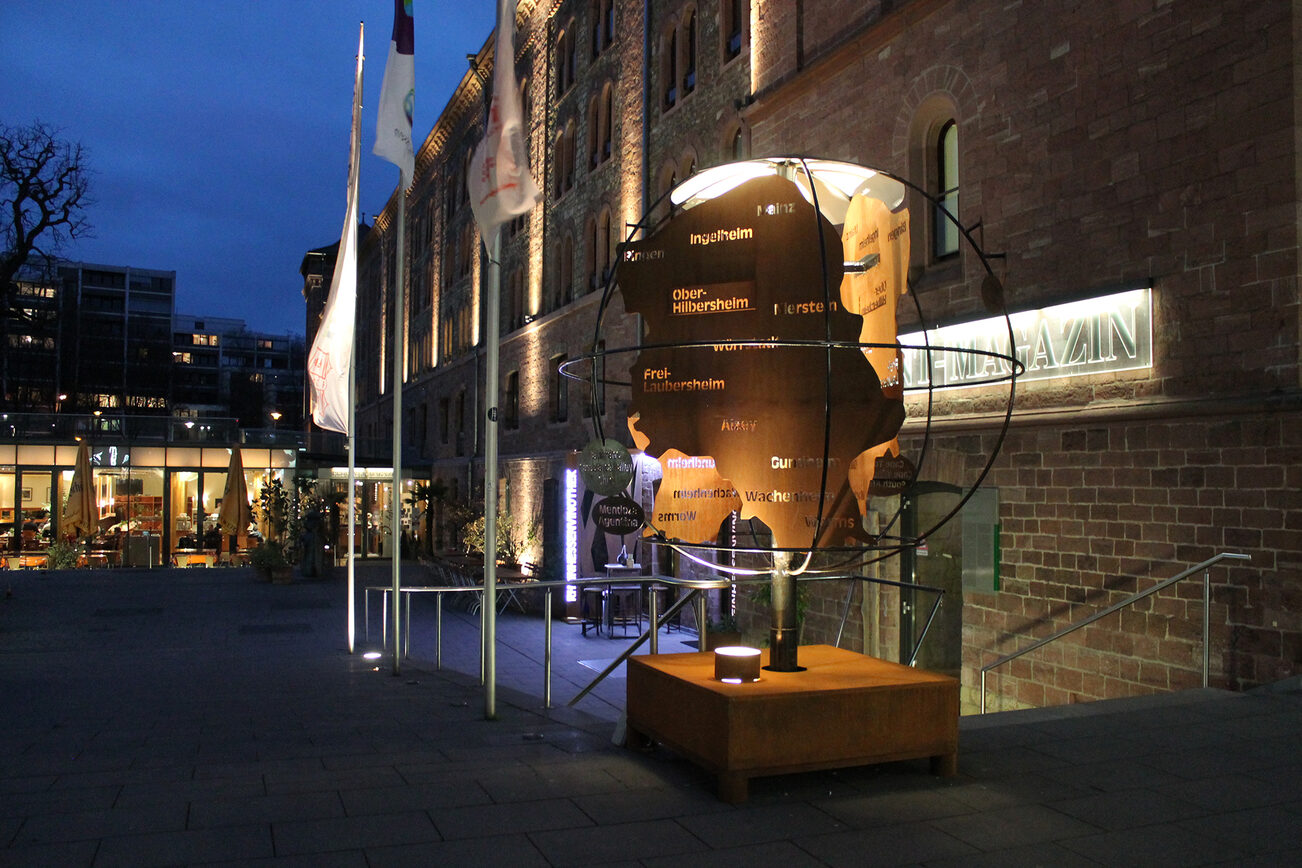
It was 2015 when the restaurant next door in the old Proviantamt got into trouble: the managing director died unexpectedly, and the restaurant itself suffered from its large rooms and slight train station atmosphere. "The city of Mainz always wanted a Rheinhessen wine shop," recalls Hahn, "and in my boss, they had someone who listened." Her boss is Karl Strack, a building contractor with a big heart for Rheinhessen and its delights.
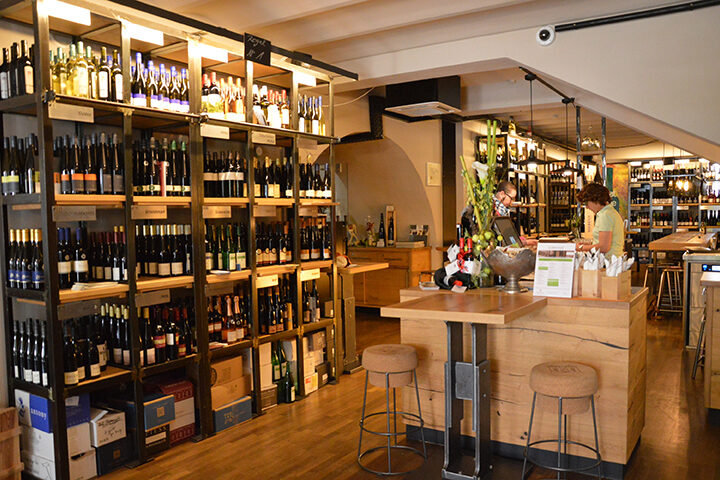
Strack not only listened, he took action: part of the huge restaurant halls was partitioned off and transformed into a wine shrine, where the lamps are made of hanging wine bottles and a large table right at the entrance invites guests to linger. "You can't buy happiness and joy, but you can buy a bottle of wine..." says a sign right next to it.
Riesling and Scheurebe, but also Bacchus, Würzer, and Accolon are available here, as well as Roter Muskateller, which was already being drunk in Martin Luther's day. "From Worms to Alzey and up to Bingen, you can taste Rheinhessen wines here," says Hahn, "and many people don't even know that there are good wineries in the outermost corners." And so it's not just tourists who come to the Rheinhessen wine shop, but also locals, as the wines are sold at the same prices as at the wineries.
There are also readings and wine tastings, and Hahn reveals that an open-air play is even in the works: State Theater director Markus Müller has written a play especially for the wine shop. What will it be about? "Oh, everything," says Hahn: "Wine, culture, joie de vivre, relaxation, enjoyment—everything that makes Mainz what it is."
About the blogger
Journalist Gisela Kirschstein has lived in Mainz since 1990 and, among other things, is constantly on the lookout for exciting topics from Mainz and Rheinhessen for her website Mainz&. In 2015, she won the Great Wine Capitals' international bloggers' contest.