65 years of twinning between Mainz and Dijon
When the town twinning between Mainz and Dijon was ceremoniously proclaimed on June 21, 1958, Mainz Mayor Franz Stein and his counterpart Canon Félix Kir emphasized that this partnership should serve the cause of reconciliation. "We want to conclude this friendship agreement from the bottom of our hearts and provide mutual assistance," said the mayor of Dijon in a radio address. "Germany and France should live in unity, and today we are laying the foundation for this."
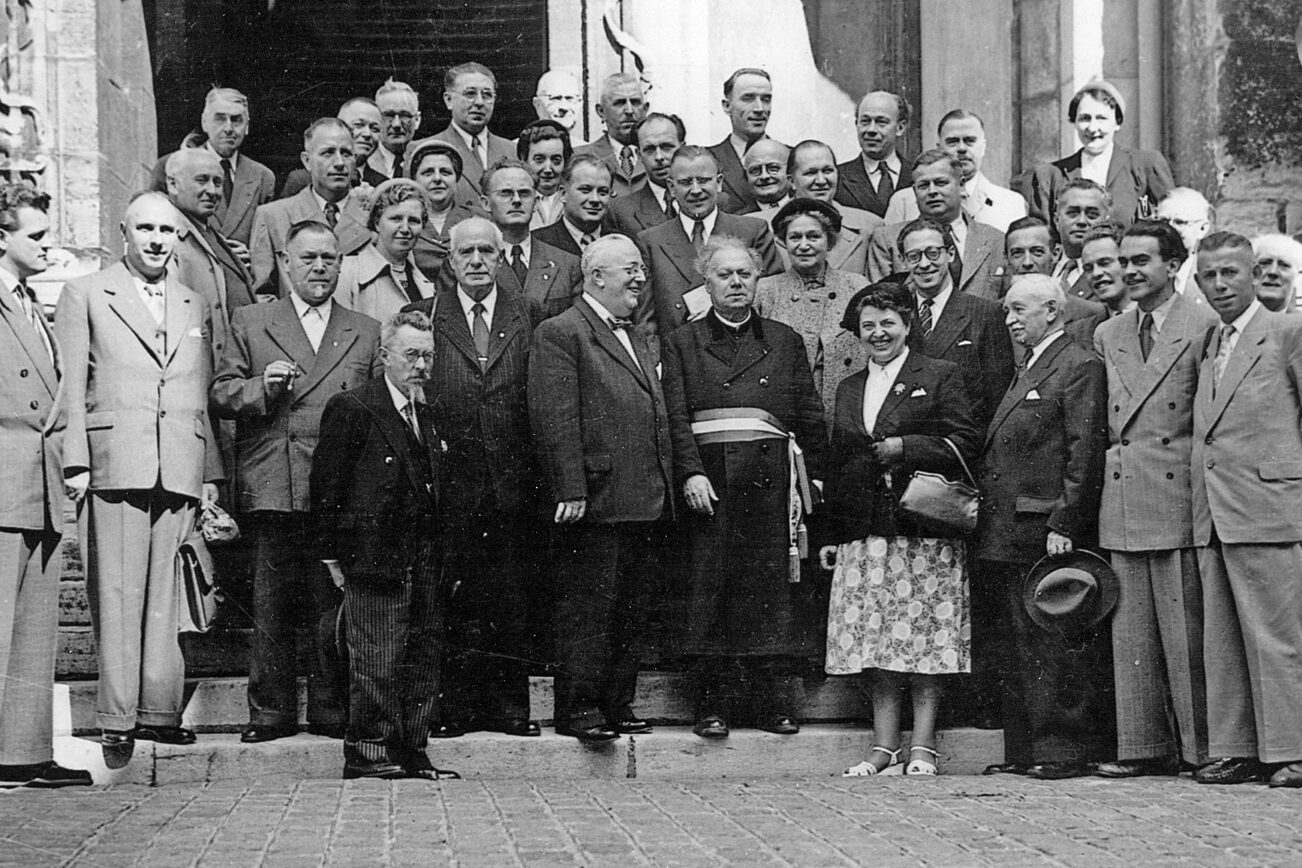
Just a few years earlier, Canon Kir, who had been seriously wounded as a resistance fighter against the German occupiers during World War II, had been rather skeptical about the idea of entering into a partnership with a German city. During the Mainz City Council's first visit to Dijon in September 1953, Kir therefore initially received the guests from Gutenberg's city with great reserve. The Mainz delegation's trip to France had been organized as a study tour for the City Council to examine issues of local government and, at the suggestion of the French Regional Commission in Mainz, had taken them to the capital of the French region of Burgundy.
Since the spring of 1953, the French occupation authorities responsible for Rhineland-Palatinate had been striving to establish partnership contacts between the still young federal state and the Burgundy region in order to promote Franco-German reconciliation. A possible partnership between the two cities of Mainz and Dijon, which were similar in size and structure, seemed suitable for supporting these efforts.
The first meeting between the city councils of Mainz and Dijon on September 13, 1953, was very promising despite the reticence of the mayor of Dijon. First, a city councilor from Dijon managed to significantly ease the somewhat tense atmosphere with his speech, and when Mayor Stein assured his French counterpart that the past should by no means be forgotten, but rather overcome and replaced "by the spirit of friendship," Kir's initial skepticism gradually gave way. However, at that time, there was still noticeable resentment among the population against a rapprochement with the Germans. The word "Boche," a French slur for Germans, had been written twice in the dust on the parked bus that had brought the Mainz delegation to Dijon.
Despite these initial difficulties, relations between Mainz and Dijon intensified in the following years. In addition to contacts between representatives of the two cities, the first exchange between professors from the two universities took place in 1954, and in July 1957, a group of students from Mainz visited Dijon for the first time.

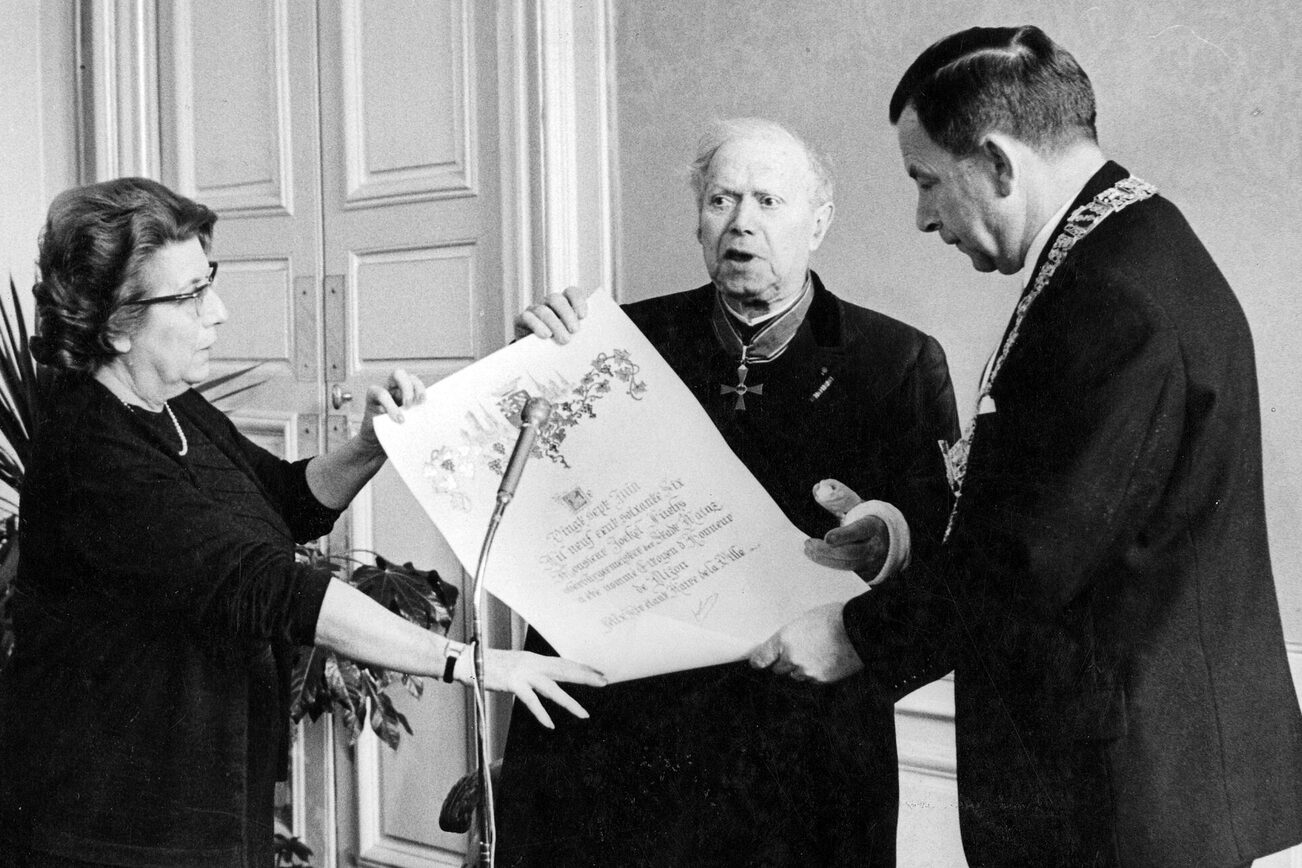
On May 5, 1958, the Dijon City Council finally decided to establish a town twinning with Mainz. The city of Mainz followed suit and officially announced the new town twinning on June 21, 1958, in a ceremony at the Electoral Palace. Canon Félix Kir, who had traveled to Mainz with a delegation from Dijon, was awarded the Grand Cross of Merit of the Federal Republic of Germany by Peter Altmeier, Minister President of Rhineland-Palatinate, on the occasion of this event. Six years later, Kir was made an honorary citizen of Mainz, and on February 13, 1967, Mainz's mayor Jockel Fuchs, Franz Stein's successor, was in turn made an honorary citizen of Dijon.
To this day, the Mainz-Dijon town twinning is kept alive by meetings between local politicians from both cities, but also by the partnership between the universities and, in particular, by the activities of many citizens from Mainz and Dijon.