The Mainz Jewish sand
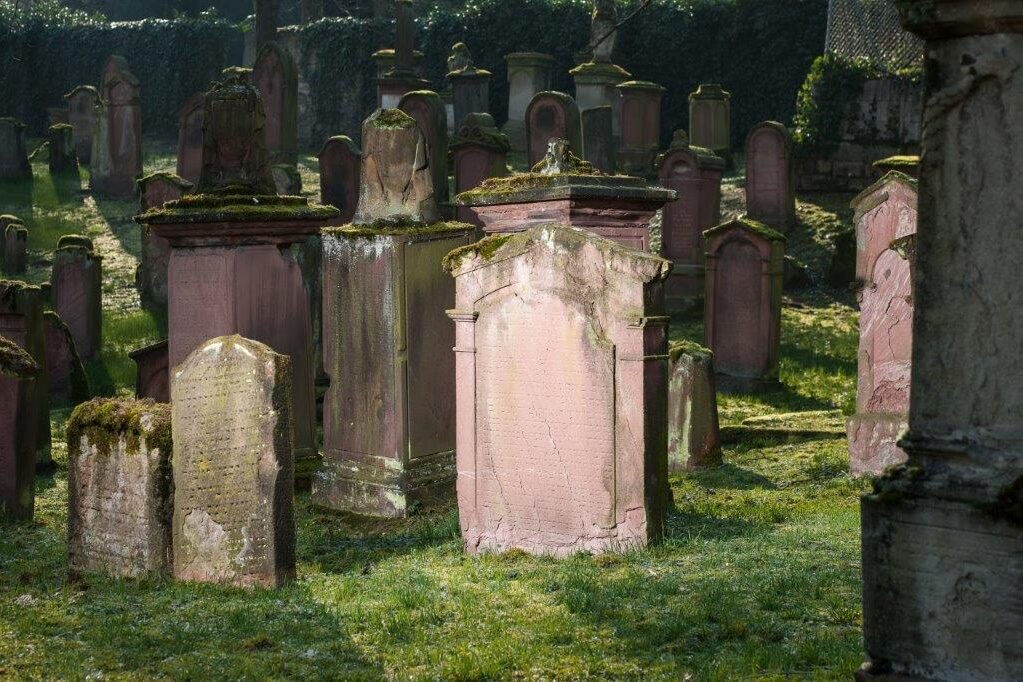
Here you will find information about the Judensand in Mainz, a component site of the UNESCO World Heritage Site “SchUM Sites.” It is one of the oldest Jewish cemeteries in Europe.
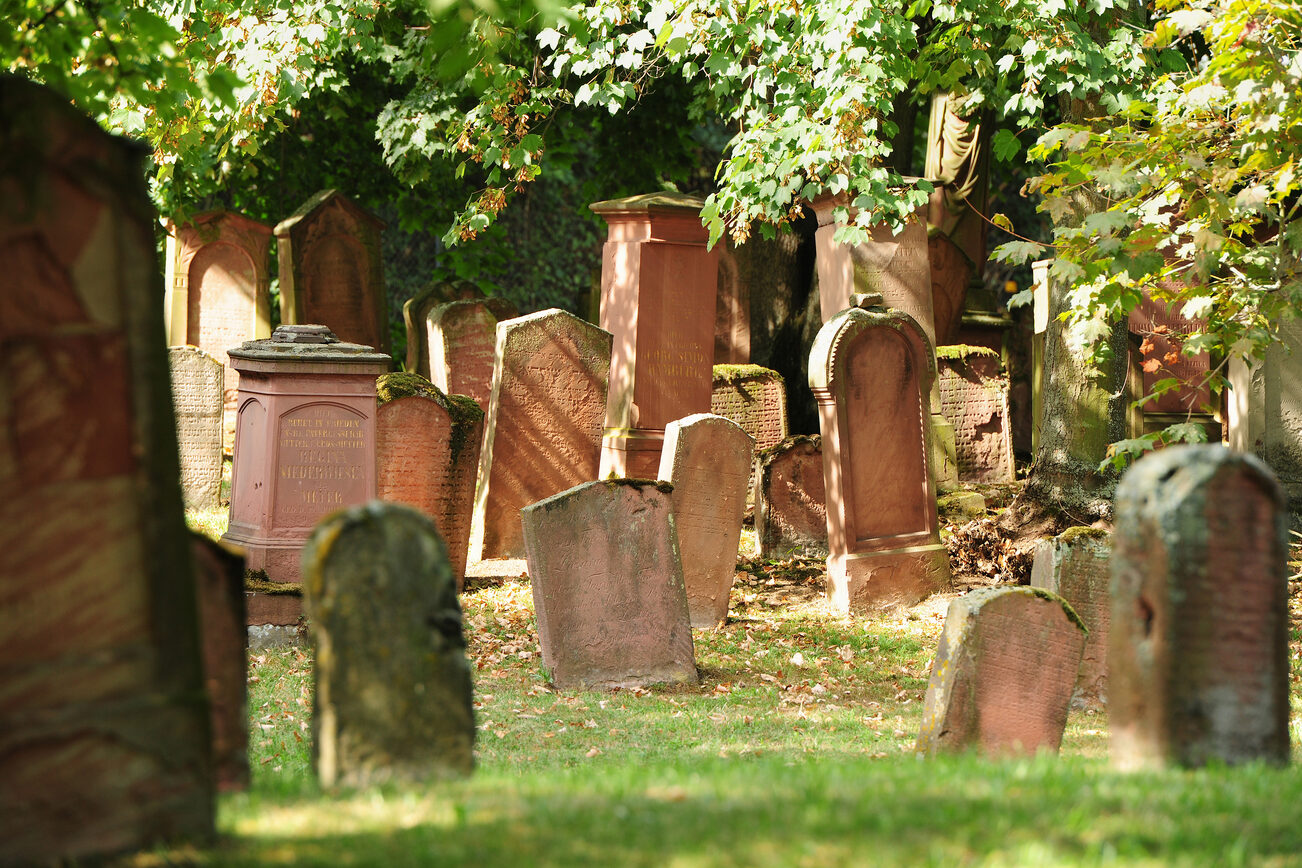
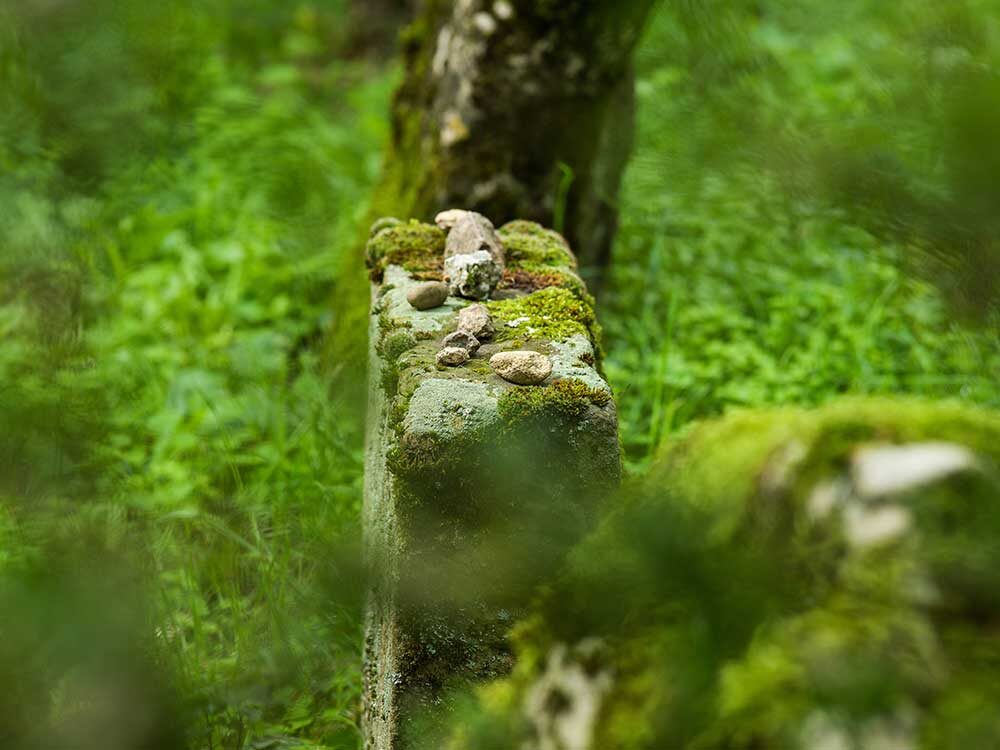
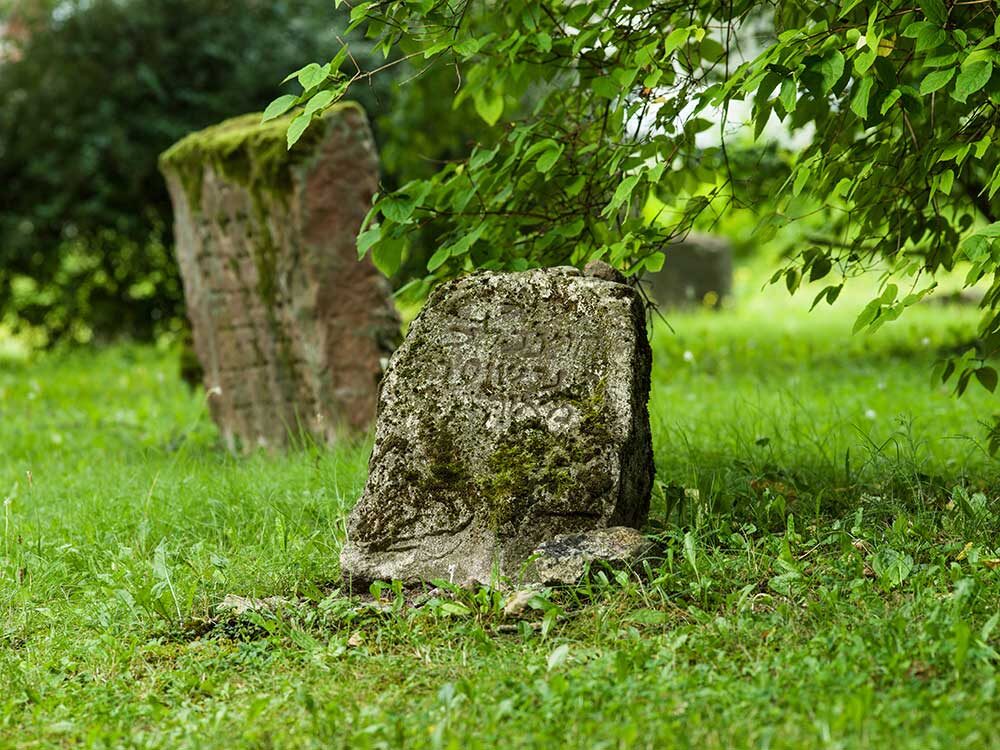
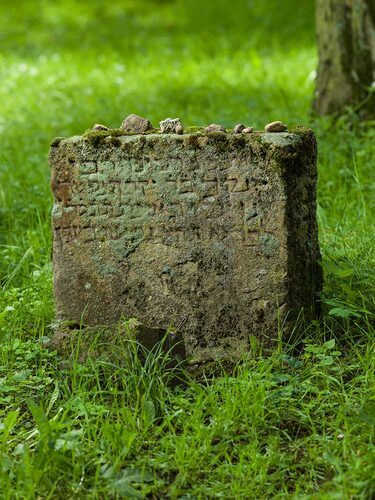
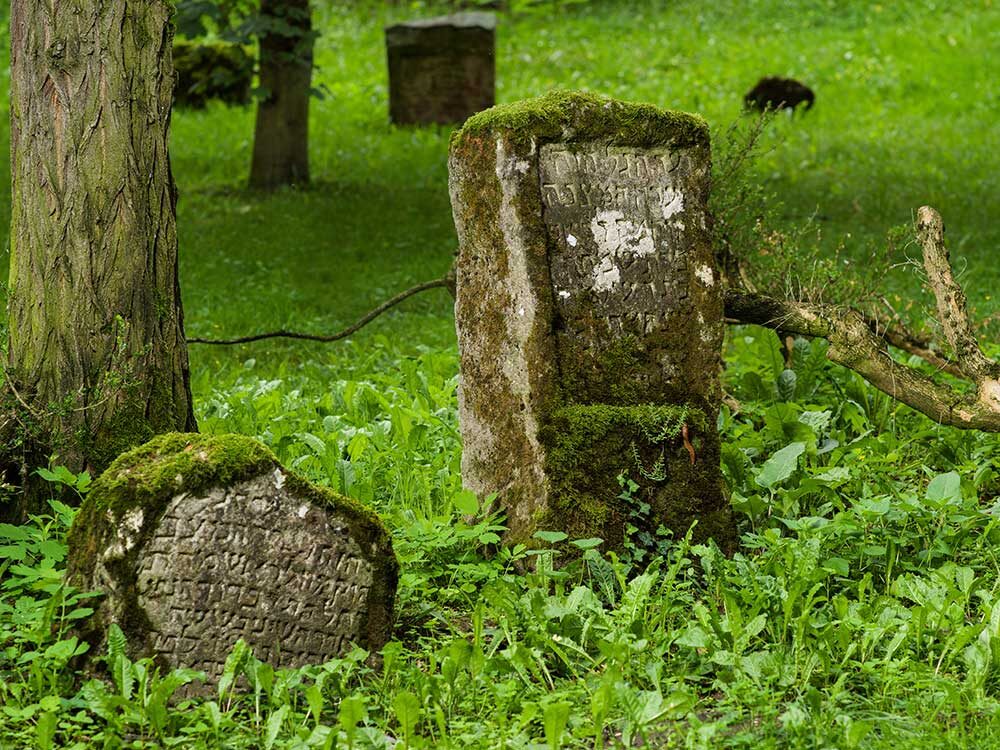
Jewish burial sites are the most important and significant testimonies to the history of Jews in Germany. In Mainz, the Old Jewish Cemetery "Judensand" with almost 1,700 historic gravestones is an important component of the serial World Heritage Site - together with the preserved sites in Speyer and Worms.
Many of the gravestones date back to the 11th century, making "Judensand" in Mainz, alongside "Heiliger Sand" in Worms, the oldest Jewish cemetery in Europe.

Gravestones from the 11th to 15th century
The cemetery area was originally located outside the medieval town and stretched along the former Roman arterial road, today's Mombacher Straße. It was the burial place for Jews from Mainz and the surrounding area.
After the Jewish community was dissolved in the 15th century, it slowly reestablished itself in the 17th century. Today, the remaining lower part of the "Judensand" contains gravestones from the period between 1700 and 1880, when the cemetery was finally closed. Only this lower part of the "Judensand" is accessible to visitors.

Monument cemetery
The eternal rest of the dead was disturbed several times. When the Jewish community was expelled in 1438, the citizens cleared away the medieval gravestones and used them as building material.
The cemetery grounds were leased by the city as a vineyard. It was not until the 19th century that many of these Jewish gravestones, which had been used as building material, were accidentally rediscovered in the city area near the Gautor gate or on the banks of the Rhine.
The Mainz rabbis Siegmund Salfeld and Sali Levi gathered the rediscovered gravestones in the upper, unused part of the cemetery to create a so-called memorial cemetery, which was inaugurated in 1926. The arrangement of the stones is rather arbitrary and not – as was originally customary at this site – oriented towards the east, towards Jerusalem.
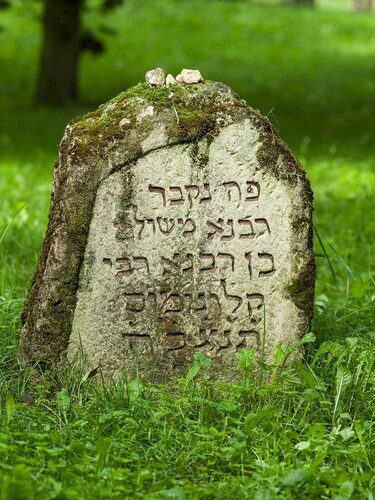
Many gravestones and memorial stones in the memorial cemetery, such as those of Meschullam ben Rabbana' Rabbi Kalonymos or Jakob ben Jakar from the early 11th century, are still relevant today for Jews from all over the world. The oldest Jewish gravestone in Central Europe, belonging to Jehuda ben Schneor – now in the National Museum – dates from 1049. Entry to the memorial cemetery is permitted for religious reasons only.

Gershom Ben Yehuda
Among the rediscovered medieval artifacts found within the city limits was the memorial stone of Gerschom ben Jehuda—known as the “Light of the Exile.” Active in Mainz around the turn of the millennium, he was one of the most influential scholars
in the Western world, whose legal rulings and decrees remained valid for centuries after his death.
Although the SchUM communities along the Rhine were repeatedly targets of violence and expulsions, the Jewish heritage in these cities has endured through the ages
as a unique testament to and a living part of Ashkenazi Judaism. Today, there is once again a vibrant Jewish community in Mainz with nearly 1,000 members.
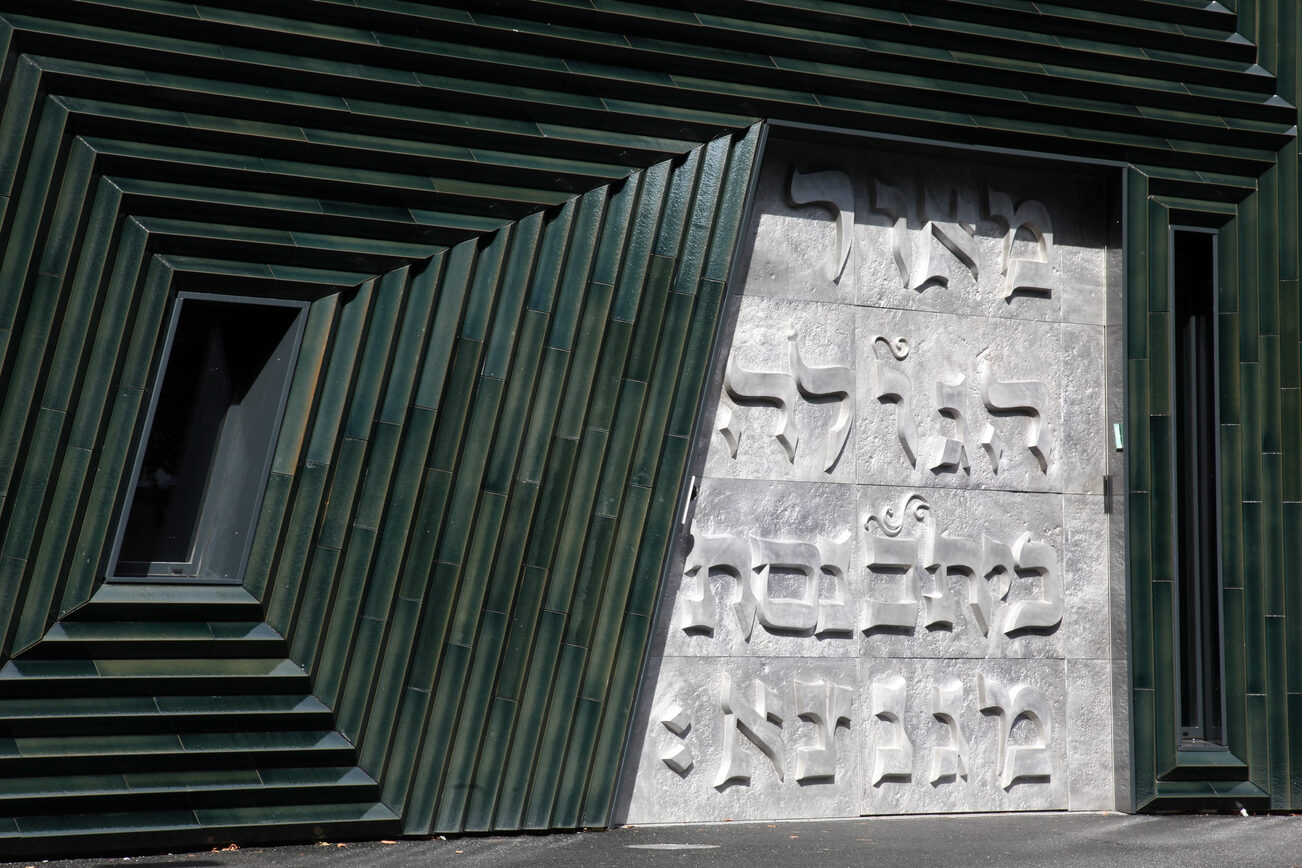
On the portal of the New Synagogue, built in 2010, the inscription "MEOR HA GOLA" ("Light of Exile") refers to the great personality of Gershom ben Jehuda. In this way, today's Jewish community is continuing the former significance of Magence 1,000 years ago.

Historical authenticity and integrity
The Old Jewish Cemetery “Judensand” in Mainz has been a UNESCO World Heritage Site since the summer of 2021, along with the “Heiliger Sand” Cemetery in Worms and the synagogues and mikvahs in Speyer and Worms. The decisive criteria for its selection as a World Heritage Site were the historical authenticity and integrity of the cultural sites.
“Judensand” is owned by the Jewish Community of Rheinhessen-Mainz and is managed in trust by the state capital of Mainz. To ensure the long-term preservation of this unique cemetery while also making it accessible to visitors, the City of Mainz is constructing a visitor center designed to ensure a sensitive, historically appropriate, and halachic—in accordance with Jewish law—management of the cemetery. As part of this project, the cemetery grounds will be equipped with a new fence and a new entrance.
Visit to the cemetery
In accordance with the rules for visiting Jewish sites and for security reasons, we ask for your understanding that visits to the cemetery are currently only possible with a guided tour. However, the cemetery grounds are easily visible due to their location. The cemetery is not accessible on Jewish holidays. Guided tour dates and app offers for self-guided tours can be found here:
- Old Jewish Cemetery - BEIT CHAIM - House of Life (opens in a new tab)
Guided tours by Geografie für Alle e.V.
- Rabbi Dr. Sali Levi shows you Jewish Mainz! (App) (opens in a new tab)
The tours start at the wooden tower, continue through the former Jewish quarter to the New Synagogue and from there to the "Judensand" World Heritage Site. Download the free app and off you go!
Dates: Further guided tours on the Judensand 2026
Public Tours by Geography for Everyone, Inc.
Sunday, March 15, 2026, at 2:30 p.m.
Sunday, April 19, 2026, at 2:30 p.m.
Sunday, June 14, 2026, at 2:30 p.m.
Sunday, August 16, 2026, at 2:30 p
.m. Sunday, September 6, 2026, at 2:30 p
.m. Sunday, January 24, 2027, at 2:30 p.m.
Contact and reservations:
Email: infogeographie-fuer-allede
Phone: 06131 3925 145
mainzplus
Sunday, February 22, 2026, at 2:00 p
.m. Sunday, March 29, 2026, at 2:00 p.m.
Sunday, April 19, 2026, at 2:00 p.m.
Sunday, May 10, 2026, at 2:00 p
.m. Sunday, June 14, 2026, at 2:00 p.m.
Sunday, July 12, 2026, at 2:00 p.m.
Sunday, August 23, 2026, at 2:00 p
.m. Sunday, September 6, 2026, at 2:00 p
.m. Sunday, October 11, 2026, at 2:00 p
.m. Sunday, November 15, 2026, at 2:00 p
.m. Sunday, December 13, 2026, at 2:00 p.m.
Contact and reservations:
Email: gaestefuehrung@mainzplus.com
Phone: 06131 242-827
The State Capital of Mainz in cooperation with the German Foundation for Monument Protection (Mainz Local Board of Trustees)
Sunday (UNESCO World Heritage Day), June 7, 2026, at 1:00 p.m. and 2:00 p.m.
Sunday (5th anniversary of the SchUM sites’ World Heritage designation), July 26, 2026, at 1:00 p.m. and 2:00 p.m
. Sunday (European Day of Jewish Culture), September 6, 2026: Guided tours available continuously from 1:00 p.m. to 4:00 p.m.
Contact and Information:
No registration is required. These tours are free of charge. Donations to the German Foundation for Monument Protection are appreciated.
Email: kulturamtstadt.mainzde
Phone: 06131 12-3643
UNESCO Visitor Center: Sali-Levi House
The Old Jewish Cemetery World Heritage Site is to be carefully redesigned for sustainable tourism use as part of the UNESCO World Heritage sites known as the SchUM Sites. To this end, a landscape architecture and architectural design competition was held, which produced a winning design. The goals of the competition are to design a visitor center and to improve the landscape design of the entire cemetery area, including its perimeter fencing.

The visitor center explains the history of the Old Jewish Cemetery and its significance as one of the oldest medieval Jewish cemeteries in Central Europe. The permanent exhibition also highlights the connection to the two SchUM cities of Worms and Speyer and emphasizes Mainz’s significance as one of the three intellectual and religious centers of Judaism in the Middle Ages.
Another section of the exhibition is dedicated to the intangible heritage of the SchUM cities for modern Judaism, as many of today’s religious customs have their origins in one of the three SchUM cities on the Rhine. Special attention is given to the durability and inscriptions on the tombstones. Some tombstones date back to the 11th century and tell the story.
Further information
- The Mainz Jewish sand (information flyer)PDF-File1,38 MB
- SchUM Sites: Germany's First Jewish UNESCO World Heritage Site
- Mainz - Magenza, a medieval center of Jewish culture
- Old Jewish cemetery - current status and planning (press release from 29.4.2021)
Europe-wide planning competition: Design of a visitor center and the landscape planning improvement of the external presentation of the entire cemetery area.