
Sweet chestnut
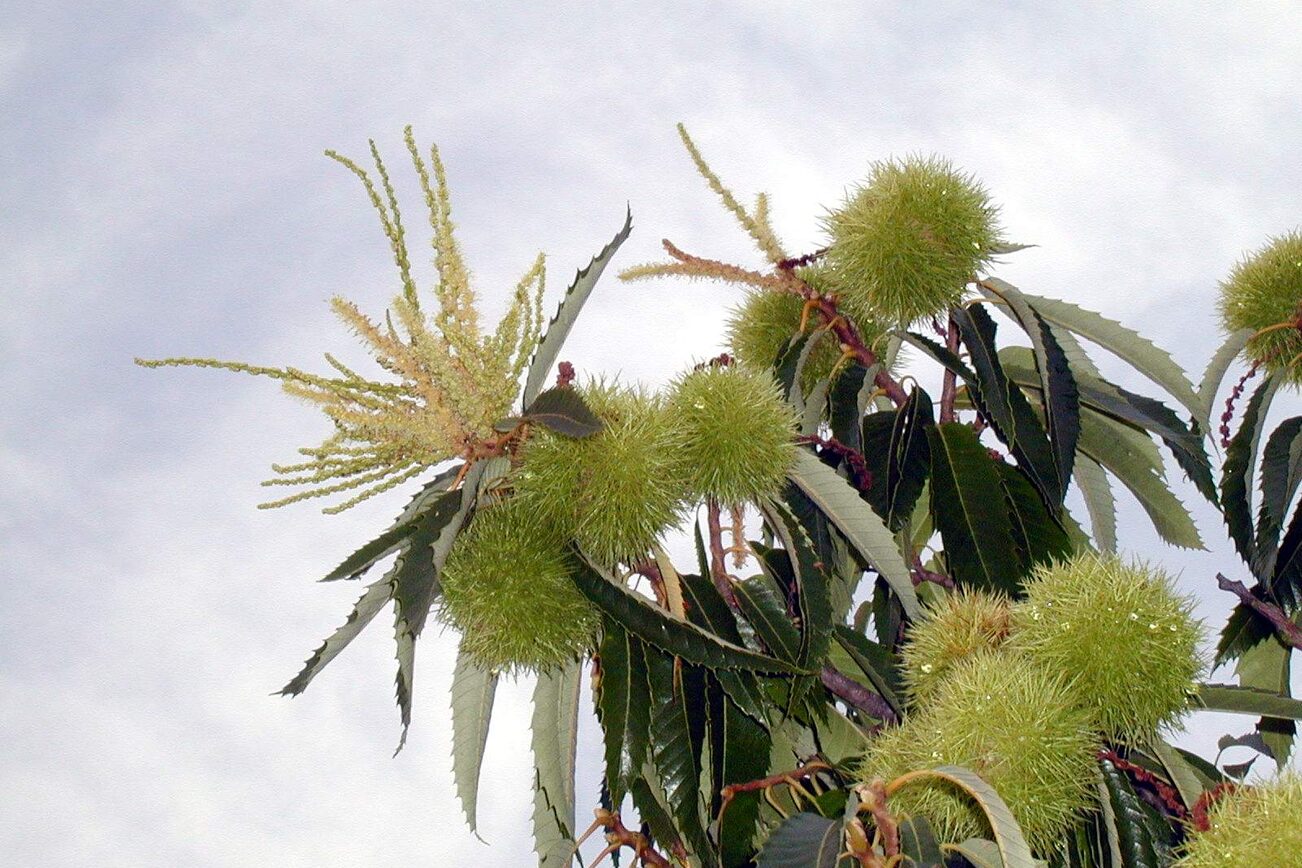
Castanea sativa, the sweet chestnut, is mainly found in southern Europe. However, it is also increasingly found in urban areas in southwestern Germany. When grown alone, it can develop into a magnificent large tree with a mighty, widely spreading crown. Its trunk often grows twisted, which can lead to an almost enchanted appearance as it ages.
- Origin: Southern Europe, Western Asia
- Height: 20–30 meters
- Leaves: up to 20 cm long; shiny, deep green; autumn color yellow to brown
- Flower: June - July; numerous sulfur-yellow male catkins; female flowers in groups at the base of the male catkins
- Fruit: September - October; spiny capsules with 1 - 3 seeds (chestnuts)
- Soil/location: mineral-rich soils; warmth; thrives in vineyard locations
- Special feature: In southern Europe, the chestnut is sometimes referred to as the bread tree. It is particularly important on the Mediterranean island of Corsica. For the original population, who retreated to the highlands of the central mountains during times of foreign occupation of the island, the fruits of the sweet chestnut were a staple food essential for survival. Growing grain was hardly possible in the rugged landscape. Later falling into obscurity, the chestnut is now making a comeback in Corsica. Regional breweries use chestnuts instead of grain to make beer. Chestnuts are also known as marrons and are particularly popular in the run-up to Christmas.