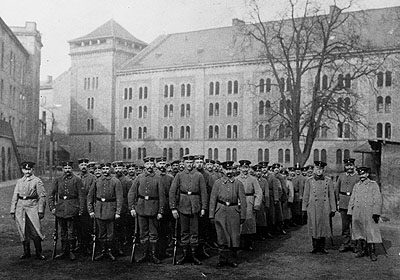
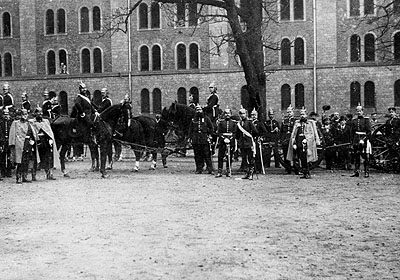
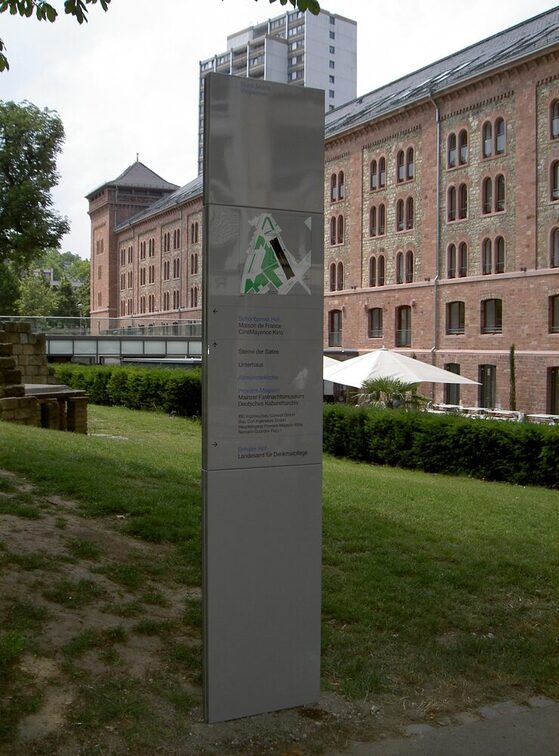
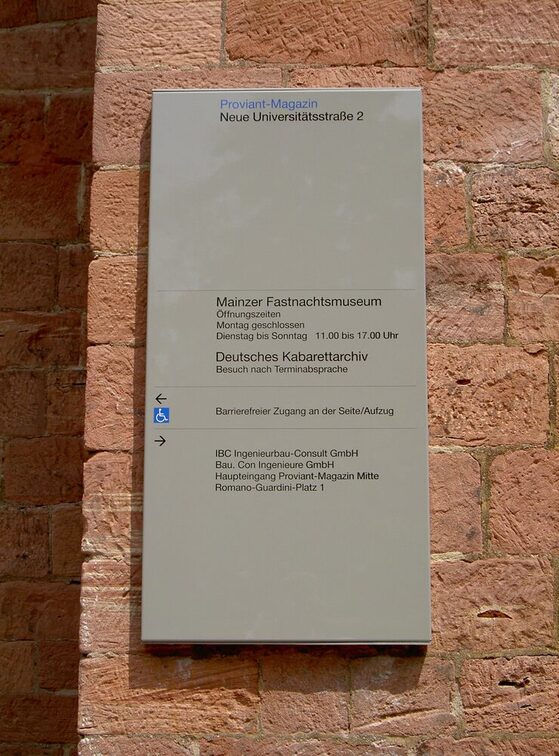
After the end of French occupation in 1814, Mainz was annexed to the Grand Duchy of Hesse-Darmstadt and placed under the authority of the German Confederation. During this period, from 1814 to 1918, Mainz was one of the most important fortified cities. It was of considerable importance as a western border fortification against France. The garrison that was now established consisted of Prussian and Austrian troops, the two leading powers of the German Confederation.
Intensive military construction work began to expand Mainz as the "bulwark of Germany." The Kreuzschanze and the fortifications on the Hartenberg were built. Later, the forts at Bingen, Gonsenheim, and Marienborn, the Reduit barracks in Kastel, and the provisions magazine followed.
The construction of the magazine was particularly important, as there was a lack of storage space for food for the stationed soldiers. Even in peacetime, 7,000 federal troops had to be supplied. In wartime, this number nearly tripled to 20,000.
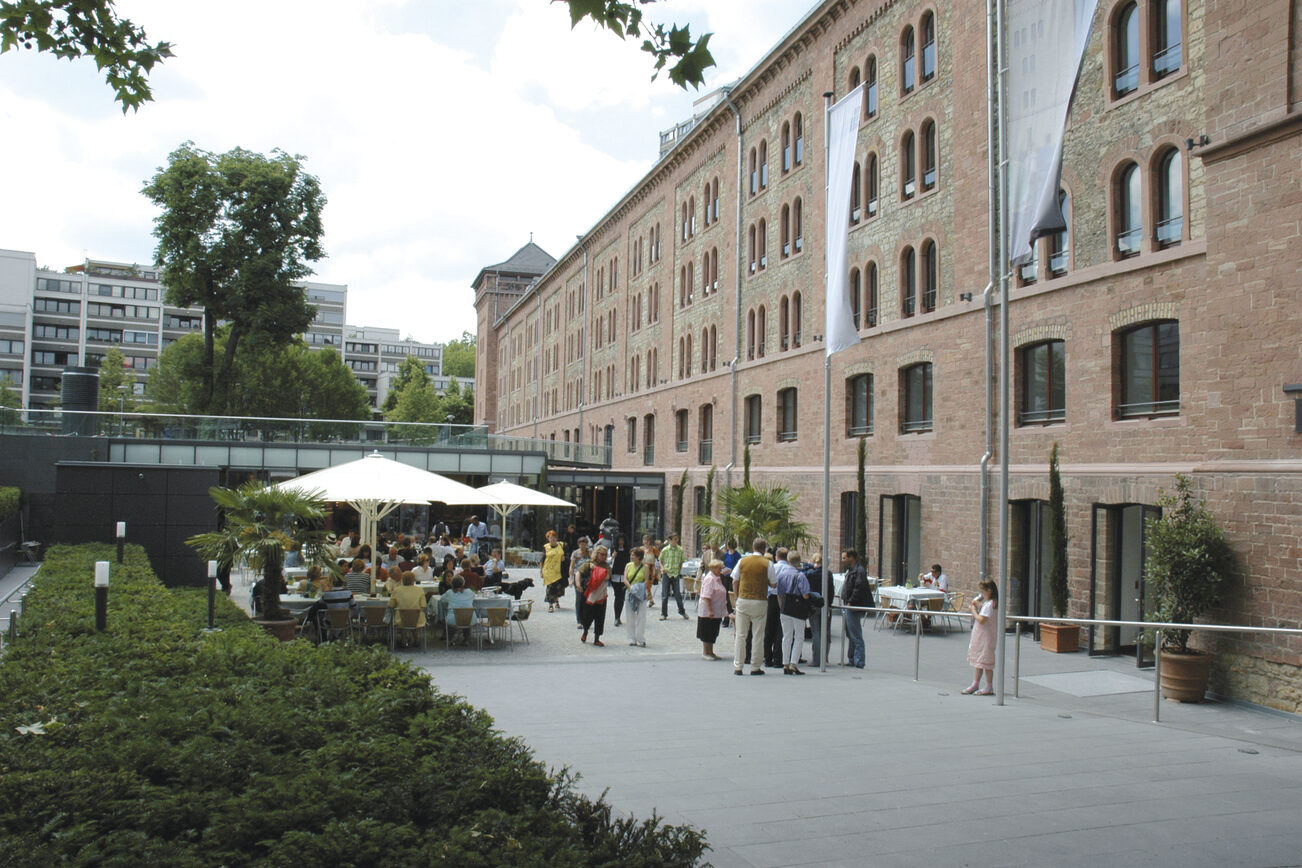
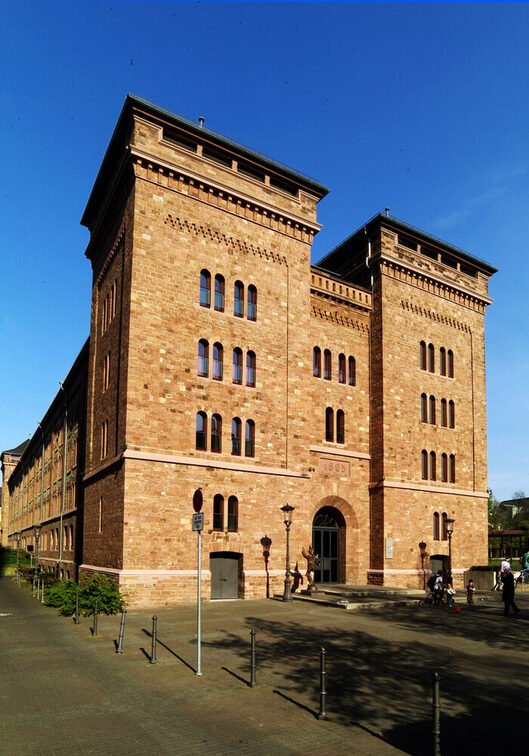
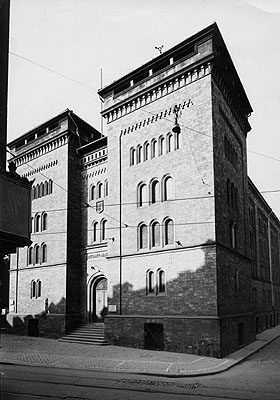
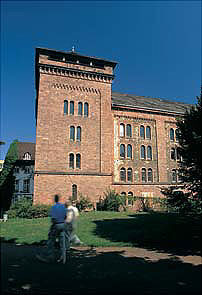
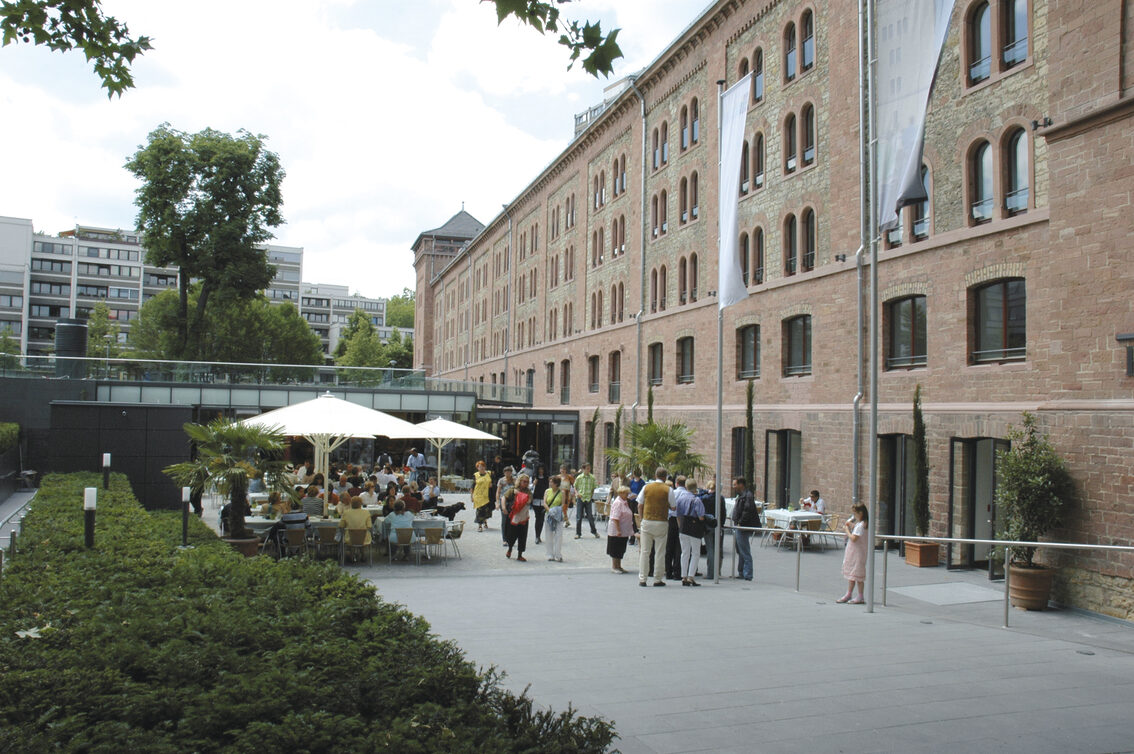
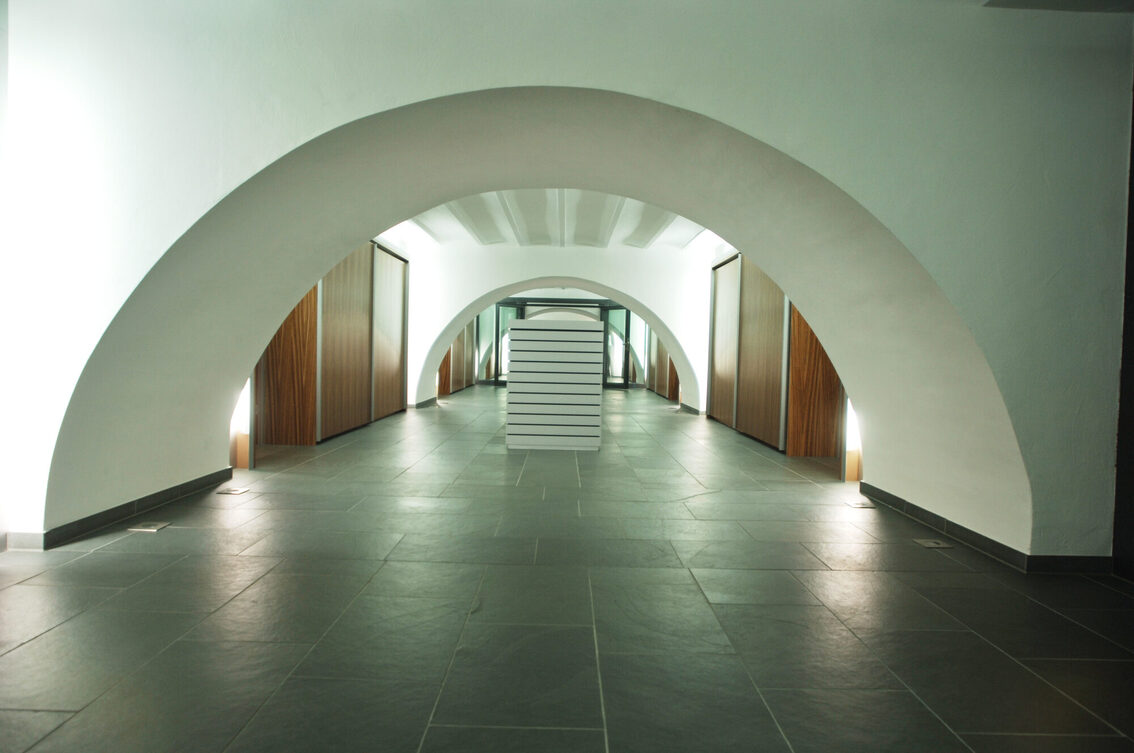
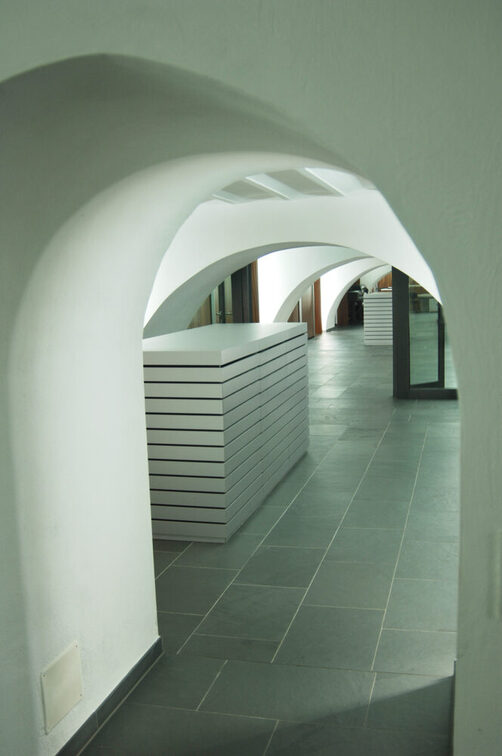
With the construction of the provisions magazine between 1863 and 1867, the German Confederation created almost 5,000 square meters of storage space for grain on seven floors. To ensure that the provisions magazine itself could withstand possible bombardment by cannons, the building was equipped with four sturdy corner towers made of red sandstone. The vaulted ceilings are also massive, measuring more than a meter thick at their thinnest point.
However, the worst-case scenario never materialized. Shortly before completion, Prussia defeated Austria in the Battle of Königgrätz in 1866 and returned to Mainz as the sole federal power. The city became a Prussian fortress for six years until it lost its character as a border town after the Franco-Prussian War of 1870 to 1871. At the time of the handover, the provisions magazine was not even finished. With this and the construction of the "New Provisions Office" on Rheinallee around 1900, the old provisions magazine lost its original significance.
Ideas for use
Since then, there have been various ideas about how to use the huge fortress building in the middle of the city. In the 1920s, there were plans to convert it into an indoor swimming pool or use it as a movie theater. None of these plans were implemented. In 1930, it was approved for demolition, but this did not happen in the following years.
Second World War
The wartime building, which never served in the war, let alone suffered damage during the world wars, thus stood empty for decades. In the meantime, it was used by the French occupying army.
In 1966, the provisions warehouse was renovated and given a new cornice and roof. The German Armed Forces stored uniforms and crispbread here until 1986. Another decision to demolish the building, this time by the city council on November 19, 1970, also came to nothing. The reason for this was considerable resistance, including from the Mainz Antiquarian Society.