Rheinhessen Roman Day in Mainz – Guided Tour with Experts on Sunday, April 26, 2026
On Sunday, April 26, 2026, “Roman Day” will take place in Rheinhessen, featuring guided tours and presentations at numerous monuments and museums. These events are part of the “Romans in Rheinhessen” theme year, which in 2026 will focus on the archaeology, history, and culture of the Romans in what is now Rheinhessen.
Mainz, the state capital, in particular, would like to participate in Rheinhessen’s Roman Day by showcasing its rich and unique heritage of Roman relics, and is therefore offering a free public guided tour led by experts through Roman Mainz on Sunday, April 26, at 3:00 p.m.
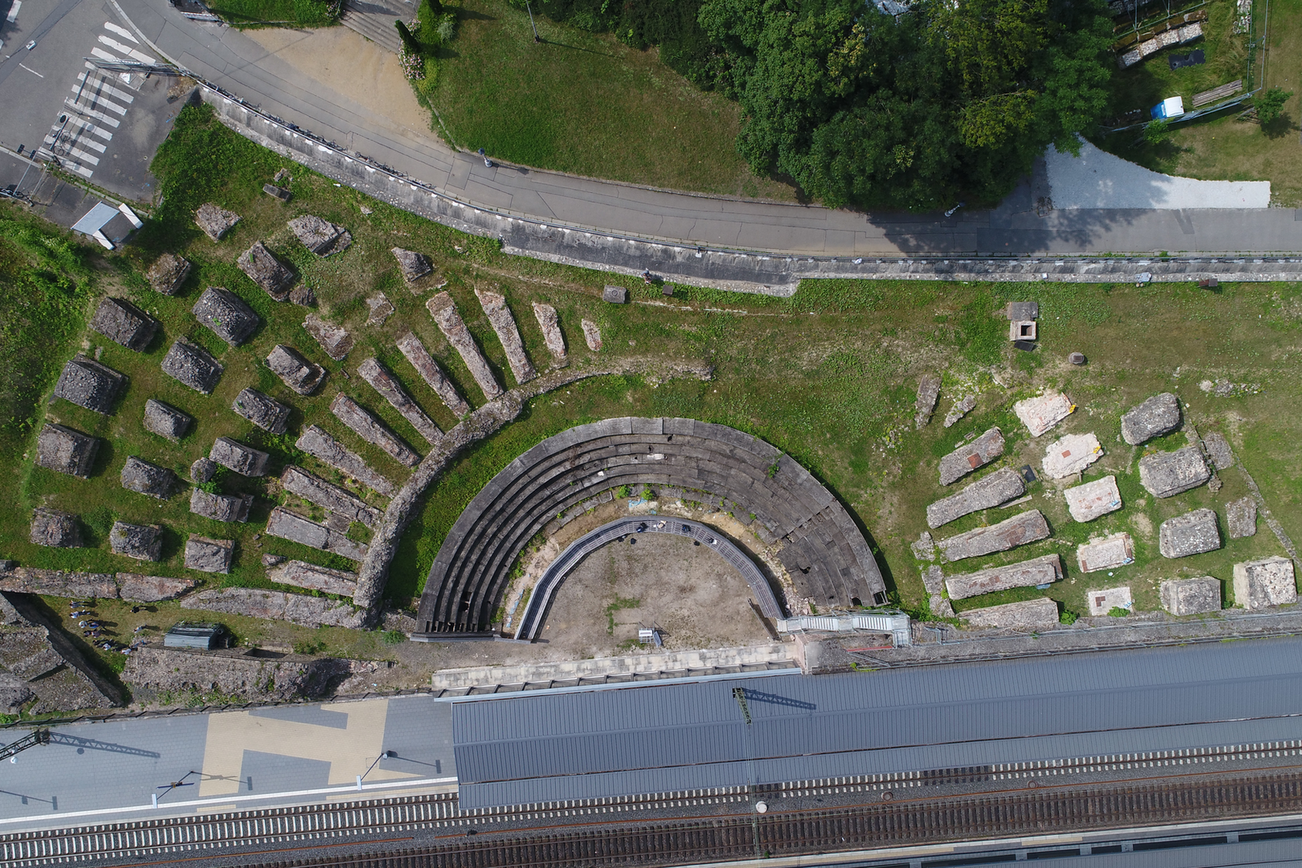
Ludwig Holle, Head of the Department of Construction, Monument Preservation, and Historical Heritage, extends this invitation and, together with interested residents, looks forward to participating in the tour, which will focus on the Roman Theater, the Drusus Stone, and the Roman city gate on the Kästrich.
The tour will be led by an archaeologist from the “Roman Heritage Project Management” team at Mainz Building Management, which is responsible for the city’s Roman monuments, offering participants the opportunity to ask the expert further questions. Restoration work is currently underway or has recently been completed at all three monuments. In addition, a new presentation of these Roman monuments is being prepared as part of the city’s “Comprehensive Concept for the Presentation of Roman Mainz.” In this effort, all archaeological institutions based in the state capital are collaborating with the relevant city agencies within the Roman Mainz Coordination Council.
The tour lasts two hours and begins on Sunday, April 26, 2026, at 3:00 p.m. at the Roman Theater. The meeting point is the steps of the Lutherkirche on Zitadellenweg, above the Roman Theater. From there, the tour proceeds via the Drusus Stone in the Citadel—also known as the Eichelstein—to the late-antique city gate on the Kästrich. During the tour, the significance of these Roman heritage sites, along with their architecture and history, will be described, and the completed and ongoing conservation measures at the monuments will be explained.