
Environmental tip: Light pollution - please turn off the lights!
Environmental tip from the Mainzer Umweltladen
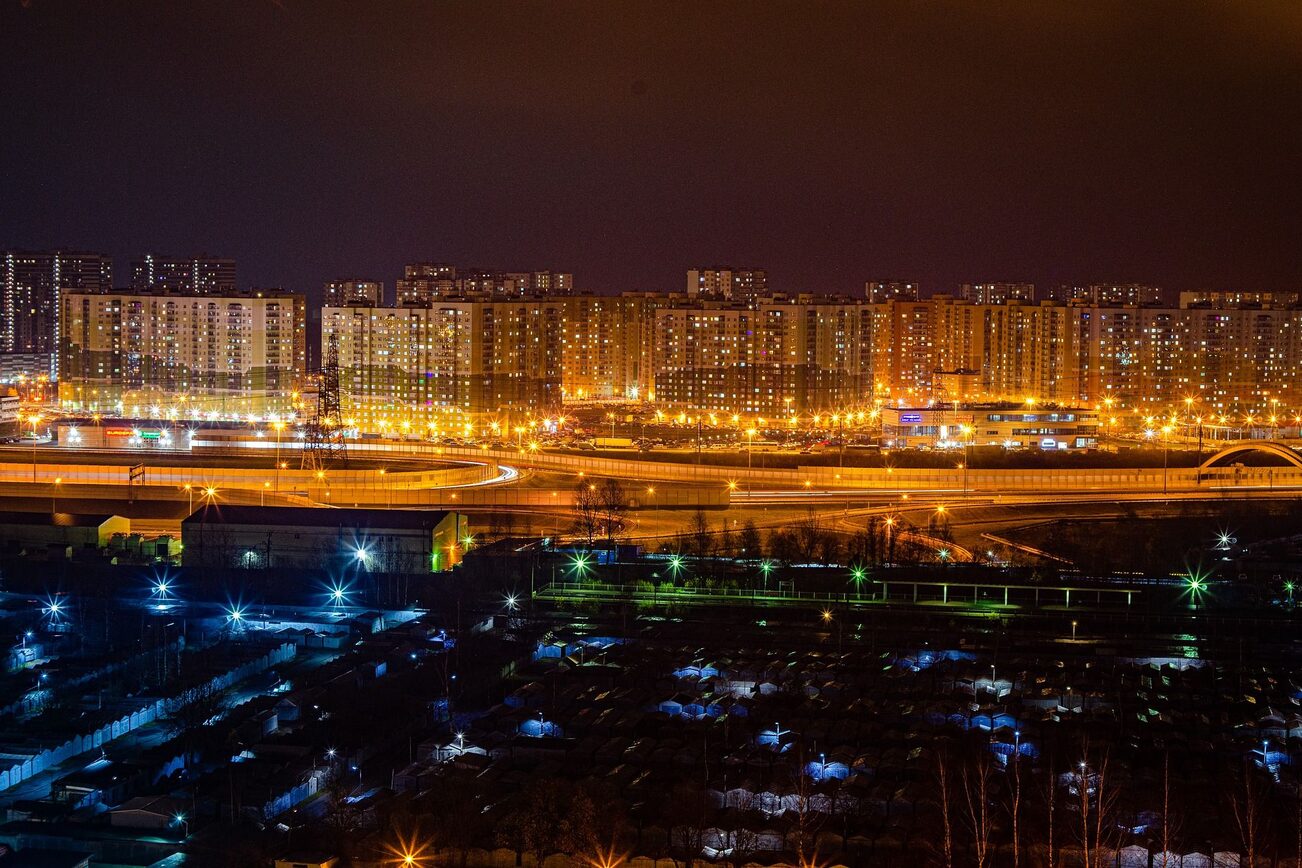
Save the night
Who doesn't remember hearing this phrase as a child: "Turn off the light!" It was our parents' way of telling us not to leave lights on unnecessarily in order to keep electricity costs down. In this age of energy-saving LED lighting, this statement has taken on new meaning, albeit in a different context.
The switch to LED lighting has had several consequences. Energy consumption has been greatly reduced since then. An LED lamp consumes around 85-90% less energy than an incandescent lamp while providing the same brightness. Existing light sources, including outdoor ones, have become much brighter due to light bulbs with high blue content. And because it costs next to nothing, additional light sources are being installed in home gardens, industrial areas, and public spaces, turning night into day.
Light pollution is particularly high in cities and their adjacent commercial areas: illuminated advertising, illuminated buildings, landmarks, and trees. In addition, nighttime lighting on streets or sidewalks and illuminated private properties give us a subjective feeling of security.
Due to the increasing consequences of this "light pollution"—i.e., the overlaying of natural darkness with artificial light—Germany's first night protection officer, Sabine Frank from the Rhön Star Park, appeals: "Save the night!"
Consequences of light pollution
Light pollution has consequences for humans, animals, and plants. It represents a previously underestimated intrusion into our biosphere. The day and night rhythms of humans and animals are disrupted. The hormone melatonin, which is responsible for nighttime rest and strengthening the immune system, can only be produced in the dark. Nighttime light with a high blue component (e.g., televisions, computers, or cell phones) has a particularly negative effect. It disrupts the rhythm and leads to sleep disorders.
Nocturnal animals and migratory birds, which depend on darkness, are misled by artificial light and do not survive their journey. Artificial light is partly responsible for insect mortality. Nocturnal insects are lured out of their natural habitats and perish in the light sources. As a result, these insects are missing from the food chain, e.g., of bats and small mammals. Once they are extinct, they can no longer pollinate plants such as lime and elderberry, whose flowers attract insects at dusk. Trees that are illuminated by artificial light lose their leaves later in the year. They are caught cold by the first frost because, stimulated by the light, they are still full of sap and do not store their metabolic products in time.
When was the last time you saw a starry sky? In the city, this is no longer possible. Artificial light sources shine for many kilometers around and illuminate the night sky. A light pollution map for Germany (see link list below) impressively shows how much areas with a still dark night sky have been reduced. The decline in nocturnal animals and their behavioral changes can be explained by the fact that they have lost their natural habitat.
Avoid light pollution
The harmful effects of artificial light can be avoided by using light correctly and installing considerate, glare-free lighting.
As a first step, check whether and where your outdoor lighting is absolutely necessary.
Targeted lighting: Only direct light where it is needed and avoid scattered light. This means only directing light from above downwards and onto your own usable areas. No light should be emitted upwards or to the side. Shielded lights help with this. Also keep the height of the outgoing light point as low as possible. Your neighbors will thank you for it.
Reduce the amount of light: First, determine the actual lighting requirements. Avoid large illuminated or spotlighted areas. In public spaces, there are recommendations of 3–15 lux illuminance depending on use and traffic volume.
Reduce color temperature: Use light sources with amber to warm white light colors and color temperatures between 1,800 and max. 3,000 Kelvin. So-called amber LED lights emit long-wave, amber-colored light and have proven to be very environmentally friendly.
Lighting based on demand: Reduce lighting after use or switch it off completely (timer). Set motion detectors so that they only come on when needed and adjust the sensitivity and range appropriately.
Final lighting tips
Avoid using ground spotlights and illuminating trees, bushes, ponds, and walls. Solar lights in the garden may be trendy, but they are mostly just for decoration. They cause additional stress for insects and small animals. Information and advice on the topic of "environmentally friendly outdoor lighting" is available from the team at the Mainz Environmental Store, Steingasse 3–9.
Further information:
Contact us
Address
Environmental store
Mainzer Umweltladen
Steingasse 3
55116 Mainz