Dijon

Brief information
Dijon, the capital of Burgundy, has around 158,000 inhabitants, approximately 30,000 students, and over 600 scientists. Thanks to the high-speed TGV train, which can reach Paris in one hour and 36 minutes, and the well-developed motorway network, the city has gained European significance as a transport hub. Dijon Airport offers regular domestic and international flights. The city is also a center for universities, commerce, and industry. The vineyards of Burgundy begin just outside the city gates.
History
Dijon has a rich historical past. The name was first mentioned in chronicles in the 6th century. However, the city is much older than that. It owes its foundation to one of the trade routes along which tin was transported from the British Isles to the Mediterranean during the Bronze Age.
Judging by the remains that have been discovered, Dijon was already a thriving city during the Roman Empire. Numerous, often magnificent tombs and the remains of spacious and beautifully decorated buildings with a total of around 120 inscriptions bear witness to this period.
Under the Merovingians, Dijon belonged to the great kingdom of Burgundy. In 1015, Robert I of Burgundy chose Dijon as the capital of his duchy. Gradually, Dijon developed into a prestigious capital of the dukes, which was considered an international center of art in the 14th and 15th centuries. In the 17th and 18th centuries, the palace and the surrounding patrician houses became the center of the city.
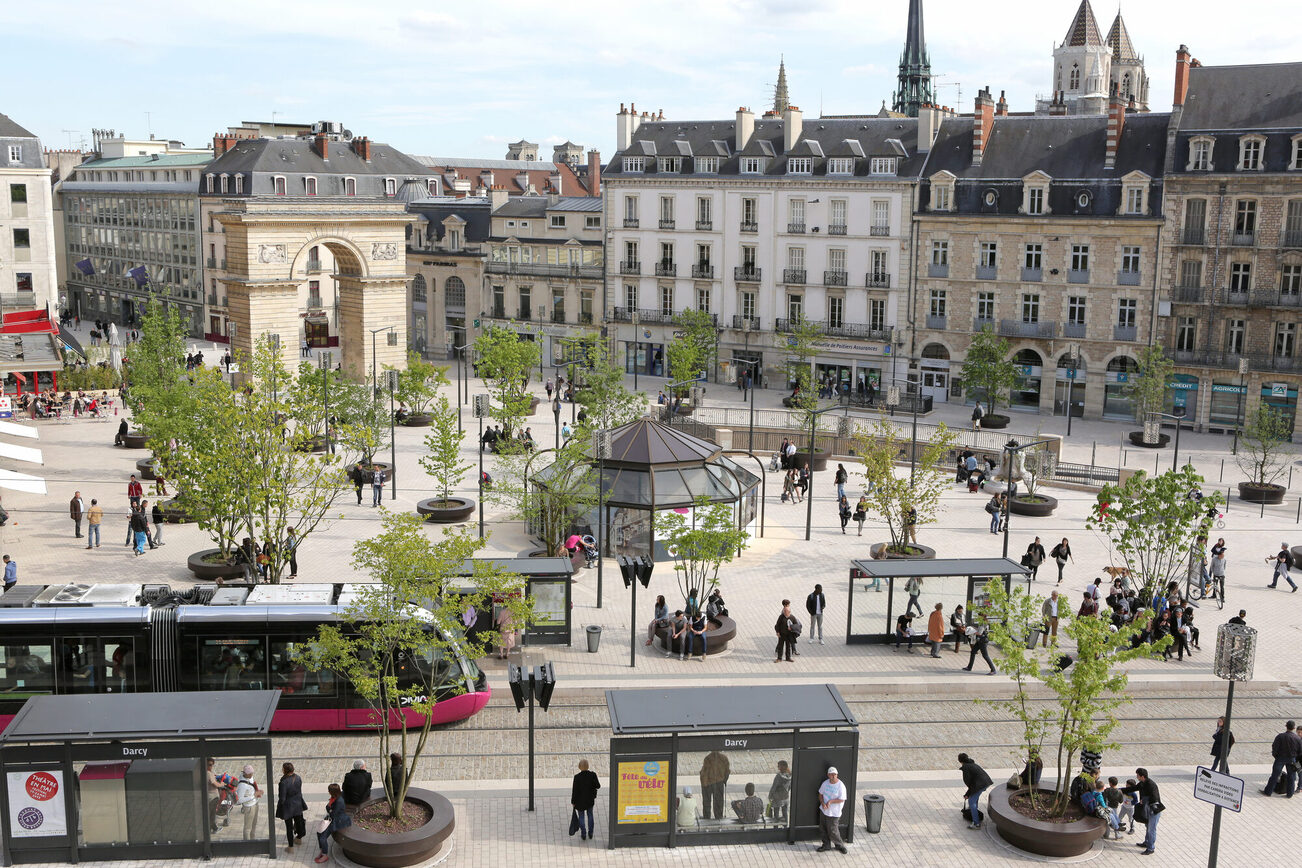
Thanks to the economic boom influenced by the engineers Darcy and Eiffel, Dijon has remained one of France's most important cities of art to this day.

Places of interest
Dijon is characterized by the diversity of historic buildings in the city center: half-timbered houses from the 15th and 16th centuries and stately homes from the 17th and 18th centuries, known as "hôtels" – with rich ornamentation and, in some cases, beautiful courtyards – contribute to the city's charm. The centerpiece of the city center is the Palace of the Dukes of Burgundy, whose oldest medieval parts were rebuilt in the 14th and 15th centuries. Its current form dates from the 17th century and was built according to plans by the architect Hardouin-Mansart. Today it houses the "Musée des Beaux-Arts," which has been open to the public since 1787. The central building of the ducal palace is dominated by the 52-meter-high Philippe Le Bon tower. Its viewing terrace offers a wonderful view over the city.
Among the many churches, the following are particularly worth seeing: Saint-Bénigne, a former monastery church from the 14th century with an impressive Romanesque crypt, the chapels of the Carmelite nuns in Sainte Anne and Nôtre-Dame, which, with their numerous sculptures, represent the height of Burgundian Gothic architecture. The Carthusian monastery of Champmol was founded in 1383 by Philip the Bold as a burial place for his dynasty. Only the 15th-century portal with its five beautiful statues by the sculptor Claus Sluter was spared from destruction in 1793. The Palace of Justice, once the seat of the Parliament of Burgundy, is also worth seeing, as is an extraordinary series of old city palaces.
Universities and schools
Dijon's schools had a good reputation from early on. A university was founded in 1722. However, as it only had one chair for law, a private initiative led to the establishment of an academy for natural sciences, art, and literature in 1725, which made a name for itself in 1751 when Jean-Jacques Rousseau won a competition with his "Discourse on Inequality Among Men" and became famous for his theses. The botanical garden
in Dijon also dates from this period.
Today, the university has around 30,000 students and comprises eleven departments and research areas. There is also a university of technology (university of applied sciences) and several "Grandes Ecoles" – France's elite schools – which have made Dijon a recognized center of higher education in France. Other important departments at the universities include business administration, nutritional sciences and food biology, agricultural sciences, energy research, advanced technology, law, music, drama and dance, fine arts, and teacher training.
There are now eight high schools in Dijon. The international Charles de Gaulle High School was opened in 1990 as a model school for European integration.
Economy
Dijon is a modern industrial and commercial city. Its main industries are electronics and electrical engineering, agriculture and food, mechanics and optics, chemicals, parachemicals and pharmaceuticals, and packaging. In addition to the existing industrial areas, a technology park and a "Parc d'Activité de I'Europe" have recently been established in Dijon.
In the past, Dijon had no major industrial settlements apart from a lively cloth trade and mustard production in the Middle Ages. Under the Ancien Régime, the city was a regional market center, a semi-rural town; there were many winegrowers, and wine presses from the 18th century can still be found today in the Amora mustard museum.
Above all, however, Dijon was an administrative capital with provincial administrations and two supreme courts, the parliament, and the court of auditors.
Recreation and leisure
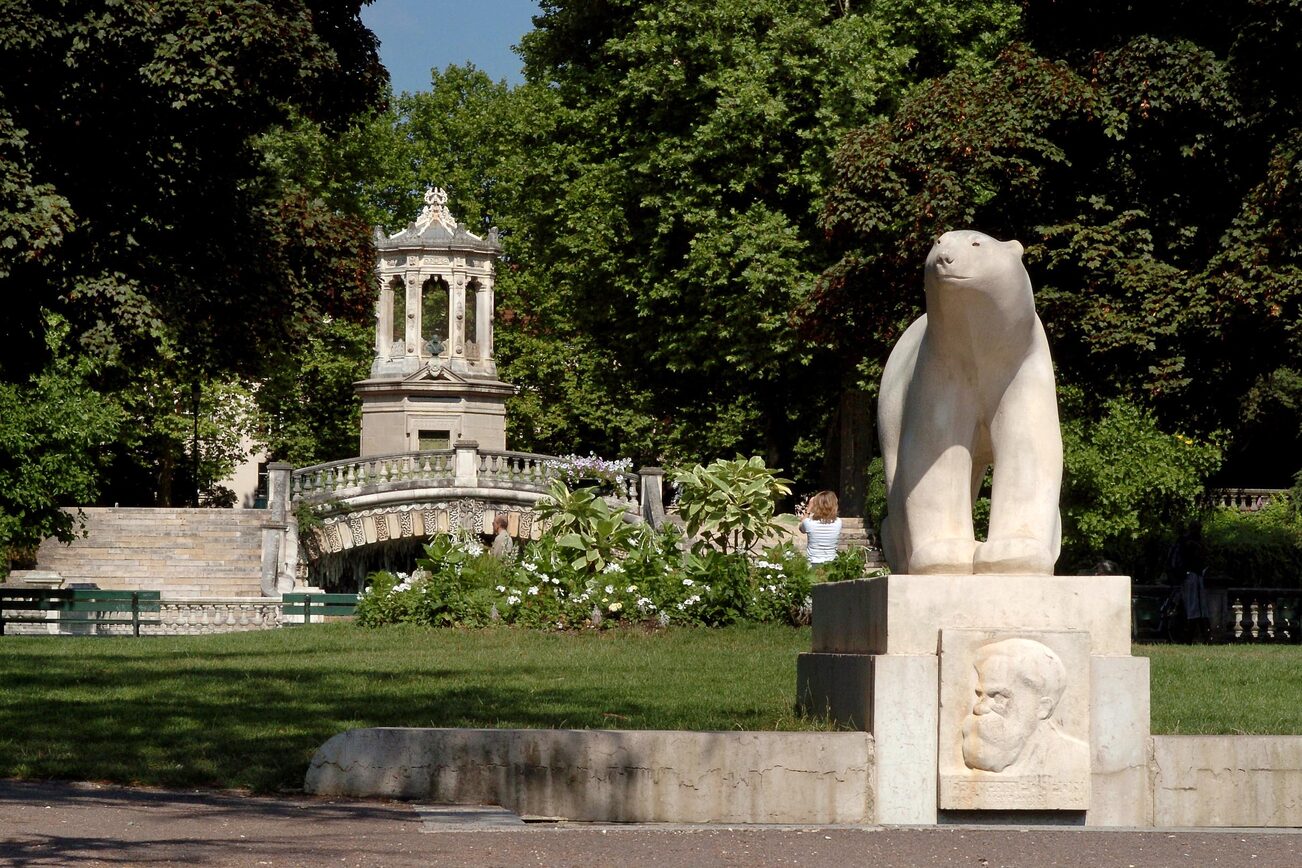
Dijon has beautiful old gardens, such as the 33-hectare Colombière Park, dating from the time of Louis XIV, and the L'Arquebuse and Darcy gardens. Much has also been done in recent years with regard to green spaces. Important urban green spaces, such as Lake Kir, which was created at the instigation of the former mayor of Dijon, Canon Kir, Carrières Bacquin Park, and large nature parks, such as La Combe à la Serpent with 360 hectares, have been created on the outskirts of the city and offer recreation for young and old alike.
Visitors to Dijon should not miss the opportunity to explore the beautiful surrounding area. Particularly enjoyable are trips along the Côte d'Or, one of France's best wine-growing regions, and up to the sources of the Seine. The route along the "wine coast" first leads to Beaune. In addition to the numerous wineries, it is worth visiting the venerable Hôtel de Dieu, which was built in the 15th century.
Interesting museums here also invite visitors to take a look into the past. Thanks to its commitment to greening, Dijon was awarded the "Grand Prix National de Fleurissement" in 1992 and the "Palme Verte" prize in 1993. Dijon
is also a city of sport. In 1993, it ranked third among French cities with the most extensive range of sports activities.
Events and culture
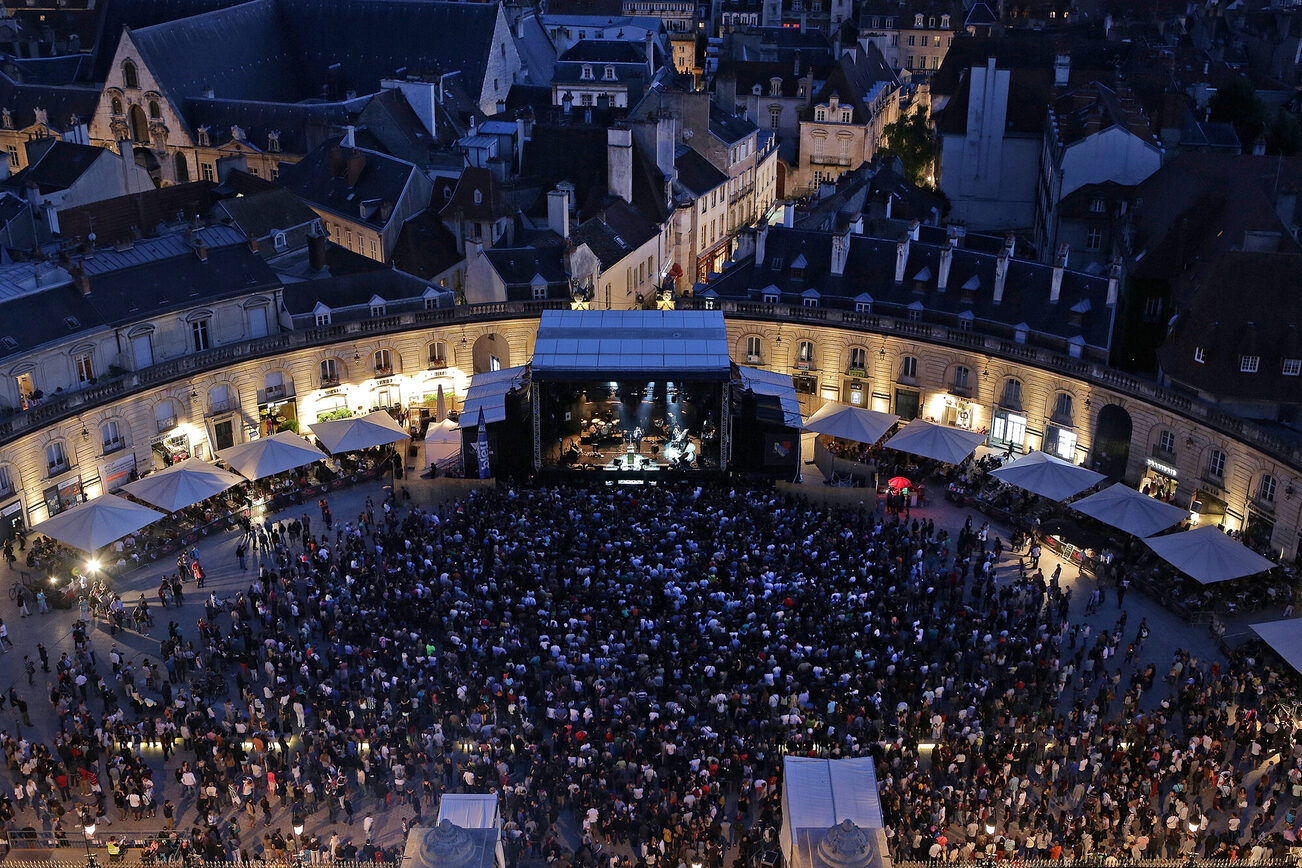
Dijon has traditionally been a venue for numerous trade fairs and festivals. Since 1946, the famous "Folkloriades Internationales et Fête de la Vigne," an international wine and folklore festival, has been held at the beginning of September. The following
regular events are also very popular: Jazz en Ville (Jazz in the City, May), Thêatre en Mai (Theater in May), L'Eté Musical (Music Summer, June), Estivades (theater, singing, and dancing in the squares and streets of Dijon, July), Ecrans de I'Aventure (adventure films, September), Open du Rock (rock festival, September), Festival Nouvelles Scènes (theater festival, fall).
Ten museums contribute to cultural life, including the Musée des Beaux-Arts, which is the second largest art museum in France after the Louvre. The famous tombs of the Dukes of Burgundy can be viewed there. Since 1976, there has also been a contemporary art section. Exhibitions of European significance are held here regularly. The François Rude Museum contains a large part of the works of this important sculptor. The Archaeological Museum, located in the former dormitory of a Dominican abbey, has a large number of prehistoric finds from the Gallo-Roman and medieval periods. Also
worth visiting are the Museum of Sacred Art (Musée d'Art Sacré), the Museum of Burgundian Life (Musée de la Vie Bourguignonne), the Natural History Museum and Botanical Garden, the Musée Amora, a private foundation that traces the history of mustard, and the Musée Grévin, a private wax museum.
Specialties
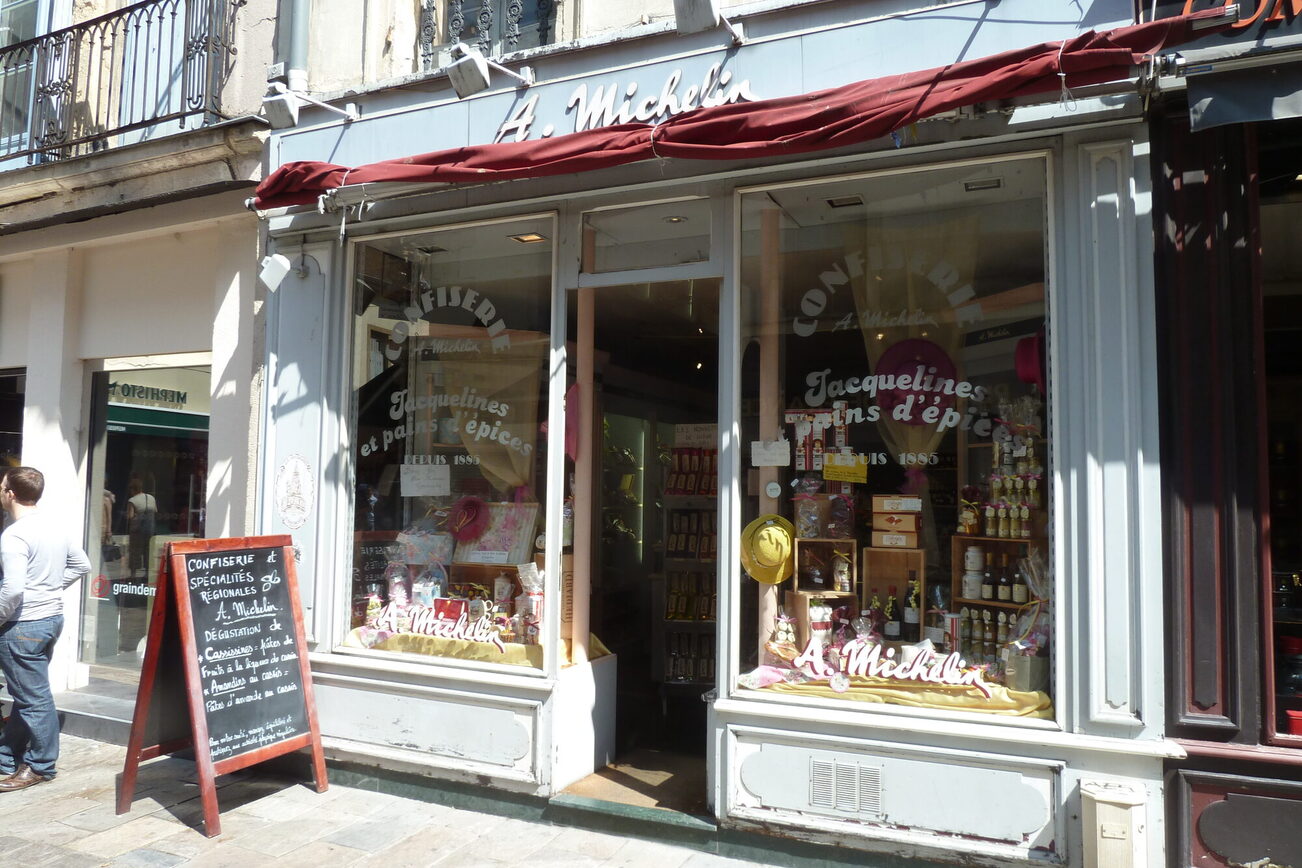
Spiced bread (pain d'épices) and mustard, both of which have very ancient origins, are the specialties that made Dijon famous. Cassis, a liqueur made from blackcurrants and another Burgundy flagship product, has been around for less than 150 years. The typical aperitif in Dijon is called Kir, a drink made from white wine and cassis – named after the former mayor, Canon Kir.
Well-known dishes include escargots bourguignons (chocolates), beef Burgundy style, and quail. These are just a few examples from the culinary paradise of Burgundy.
Every year, the International Gastronomy Fair held in October proclaims Dijon as the culinary center of France.
Development of the town twinning
The first contacts between Mainz and Dijon were established in 1953 during a local government information trip to France. Even at that time, when close ties between France and Germany were not yet a matter of course, a partnership with Dijon was in the making.
After all, Mainz and Dijon have always had various factors in common: comparable size and number of inhabitants, political function as state capitals, homogeneous composition of the population, similar economic and cultural aspects, such as historic city centers, old universities, and much more.
