
Heat professionals perennial beds
From the parking lot to the wild perennial bed

A new wildflower bed has been created on Bauhofstraße. Previously an unpaved area used as a parking lot, it now shines as a blooming haven of biodiversity.
A variety of young plants have been planted in a mixture of limestone gravel and sand, which provides them with a nutrient-poor, barren habitat—typical of Rheinhessen.
The many different plants provide insects with an abundant food source and offer residents a visual treat.
This redesign was a project carried out by the trainees at the Parks and Environment Department.
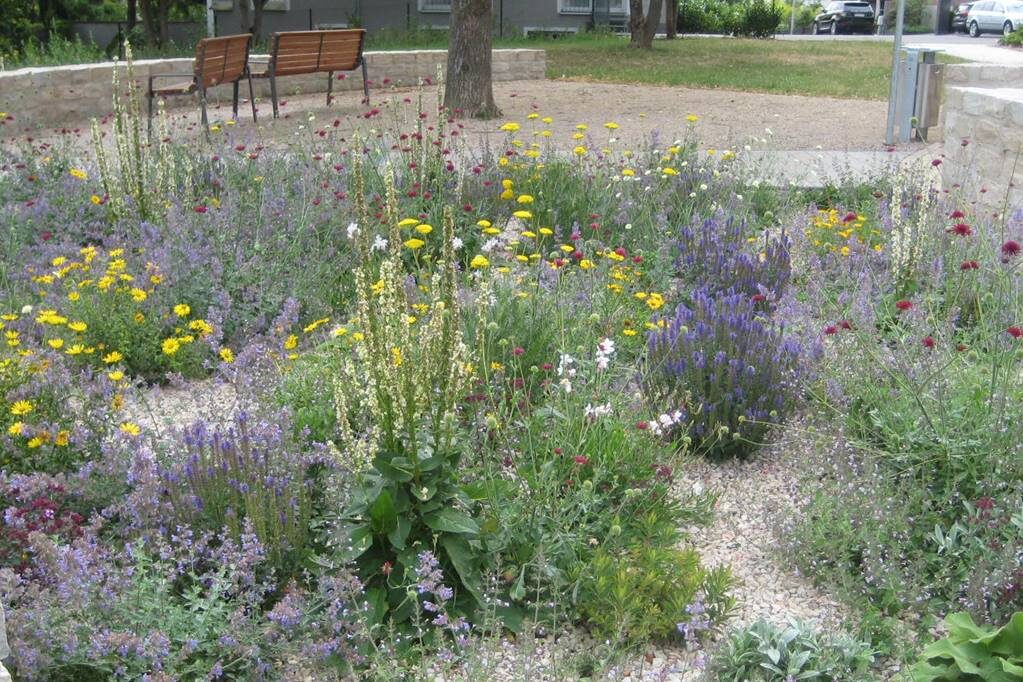
Many people walk past them—the supposed gravel beds in the city. Often, these beds initially cause some attentive observers to frown and question their purpose. Gravel beds created and maintained by the state capital? But appearances can be deceiving: these are not stone desert gravel gardens, but deliberately created, heat- and drought-resistant perennial beds. There are plants that thrive best in heat-loving and nutrient-poor locations.
The topsoil is covered with mineral mulch, which fulfills the important functions of protecting against trampling, aerating the soil, allowing precipitation to seep away quickly, and, last but not least, preventing evaporation. In the early stages, it suppresses the germination of competing weeds and helps the young plants in the perennial bed get started.
The following sections explain how a so-called "gravel garden" differs from a drought-resistant perennial bed: