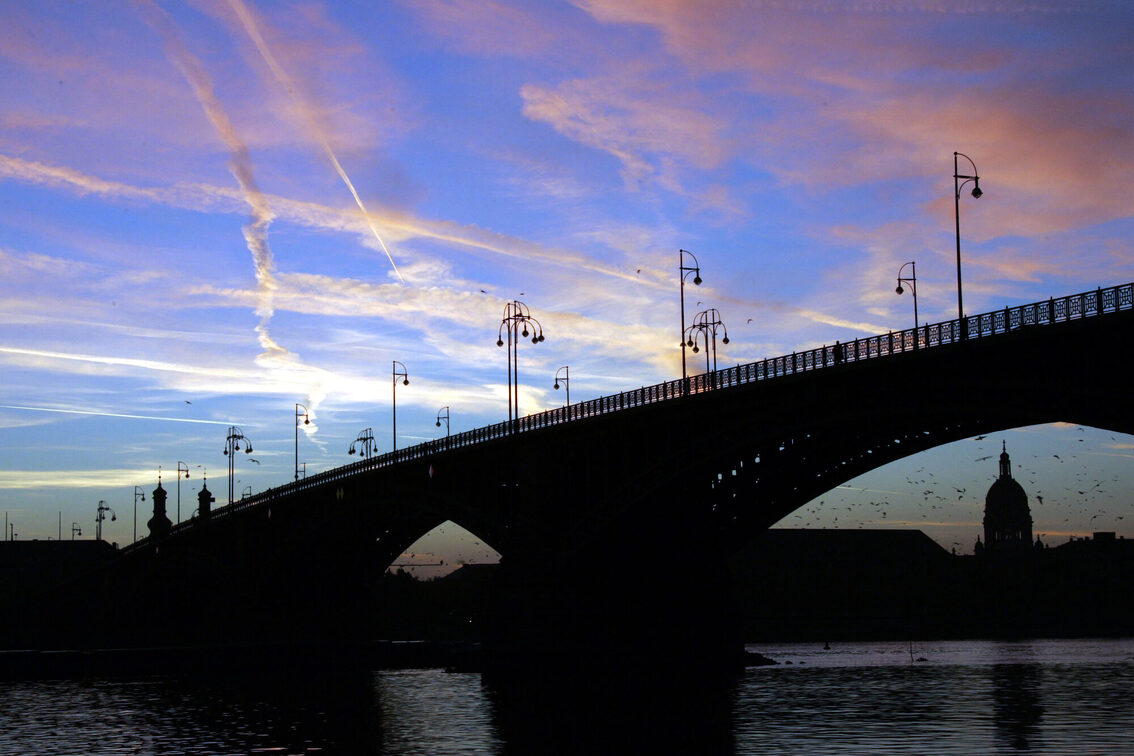
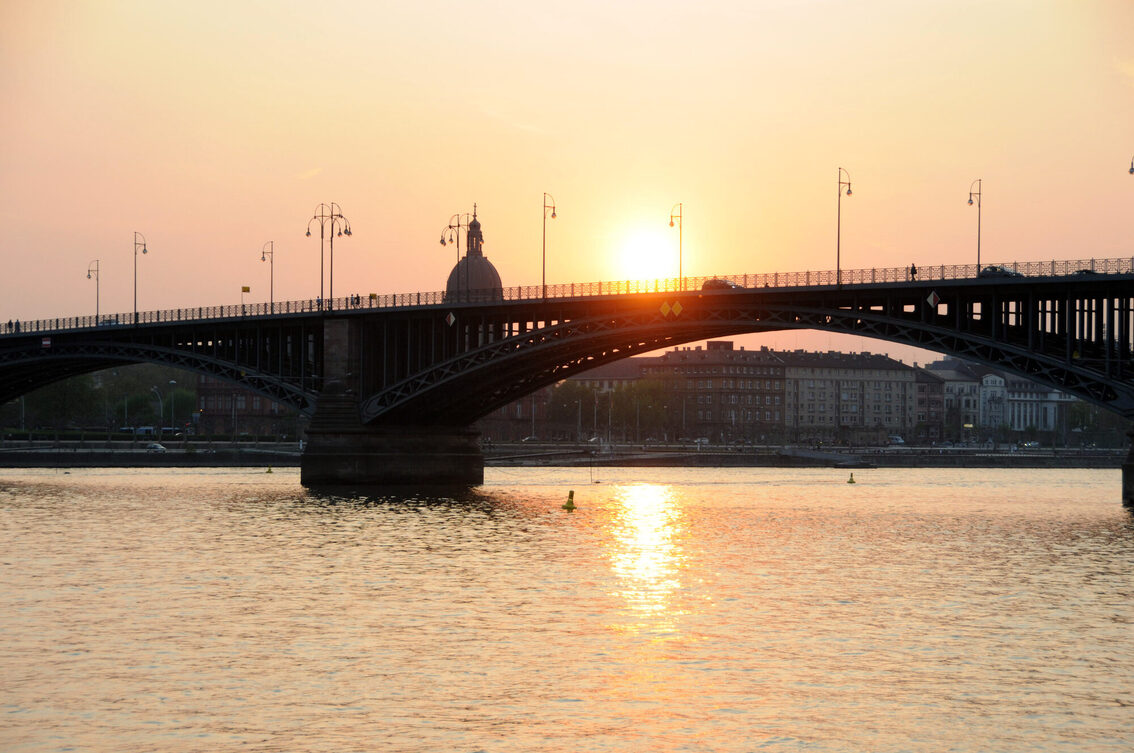
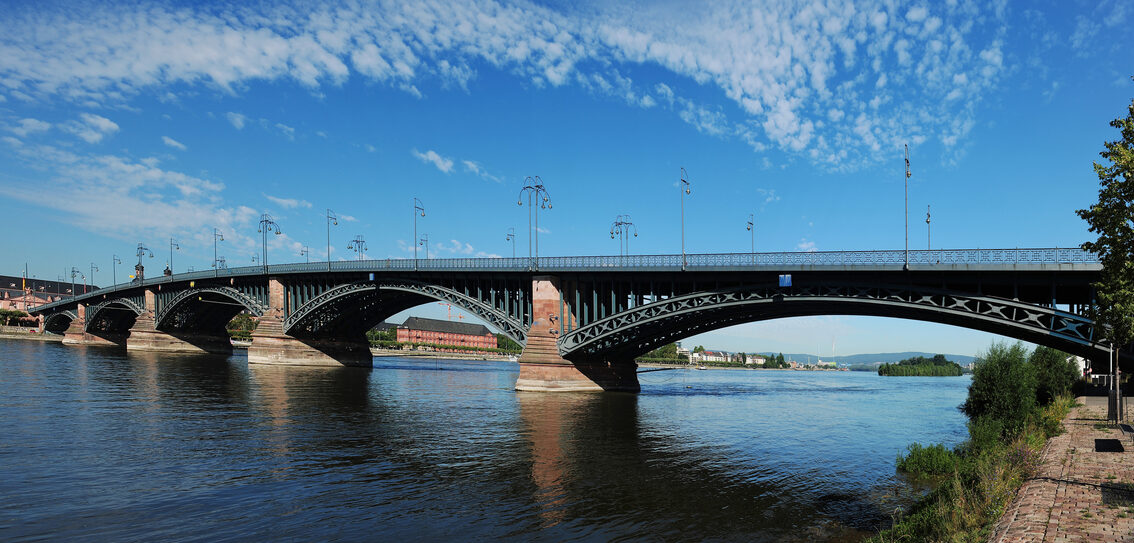
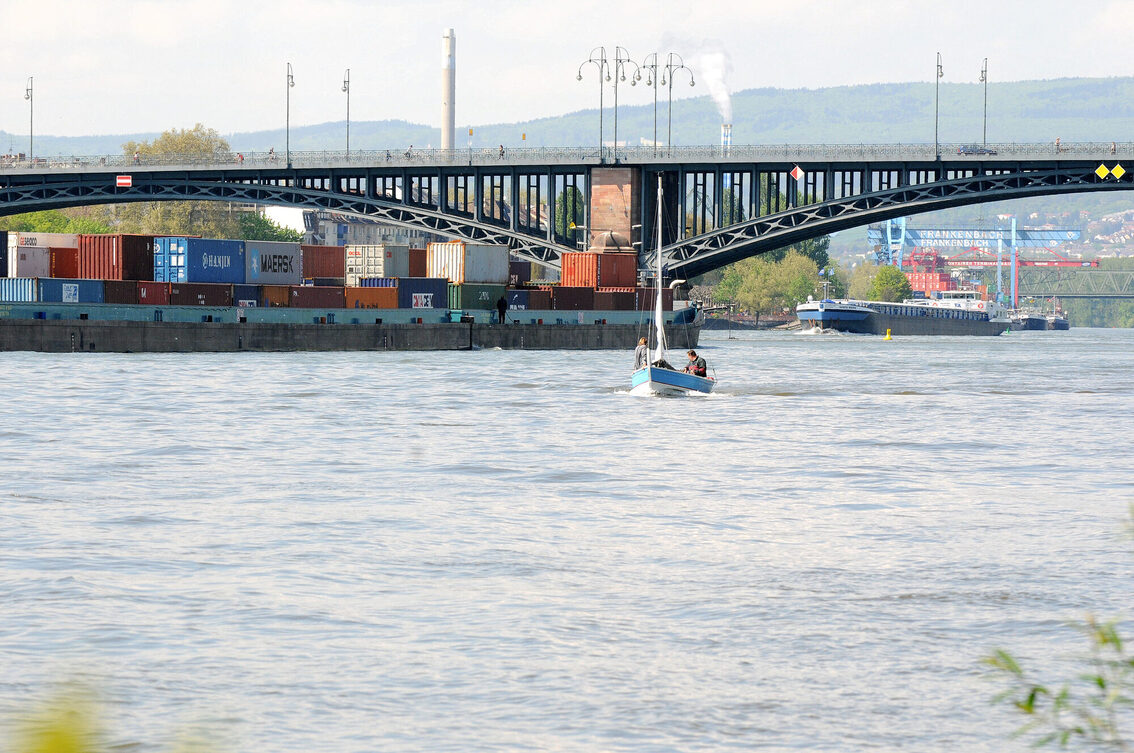
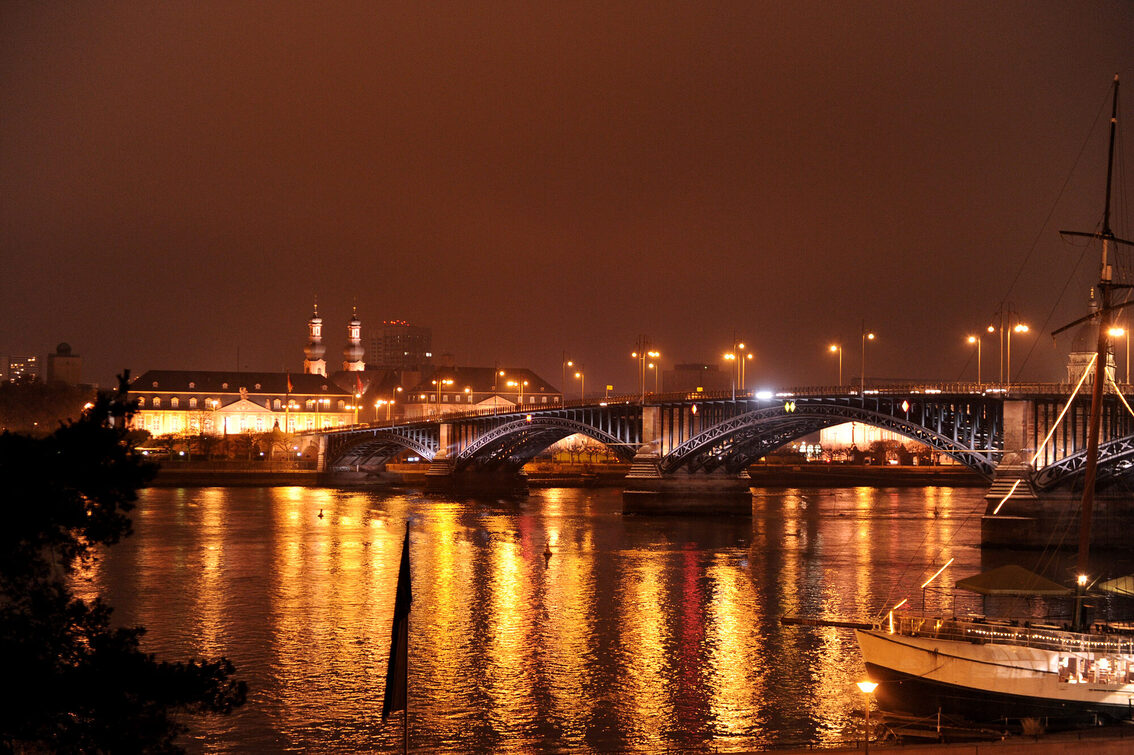
For more than 1,000 years, there was no permanent bridge connecting the two sides of the Rhine. That was to change at the end of the 19th century. Construction work began in 1882 following a Germany-wide tender. From 38 designs, the jury selected the joint project submitted by Philipp Holzmann and the Benckiser brothers.
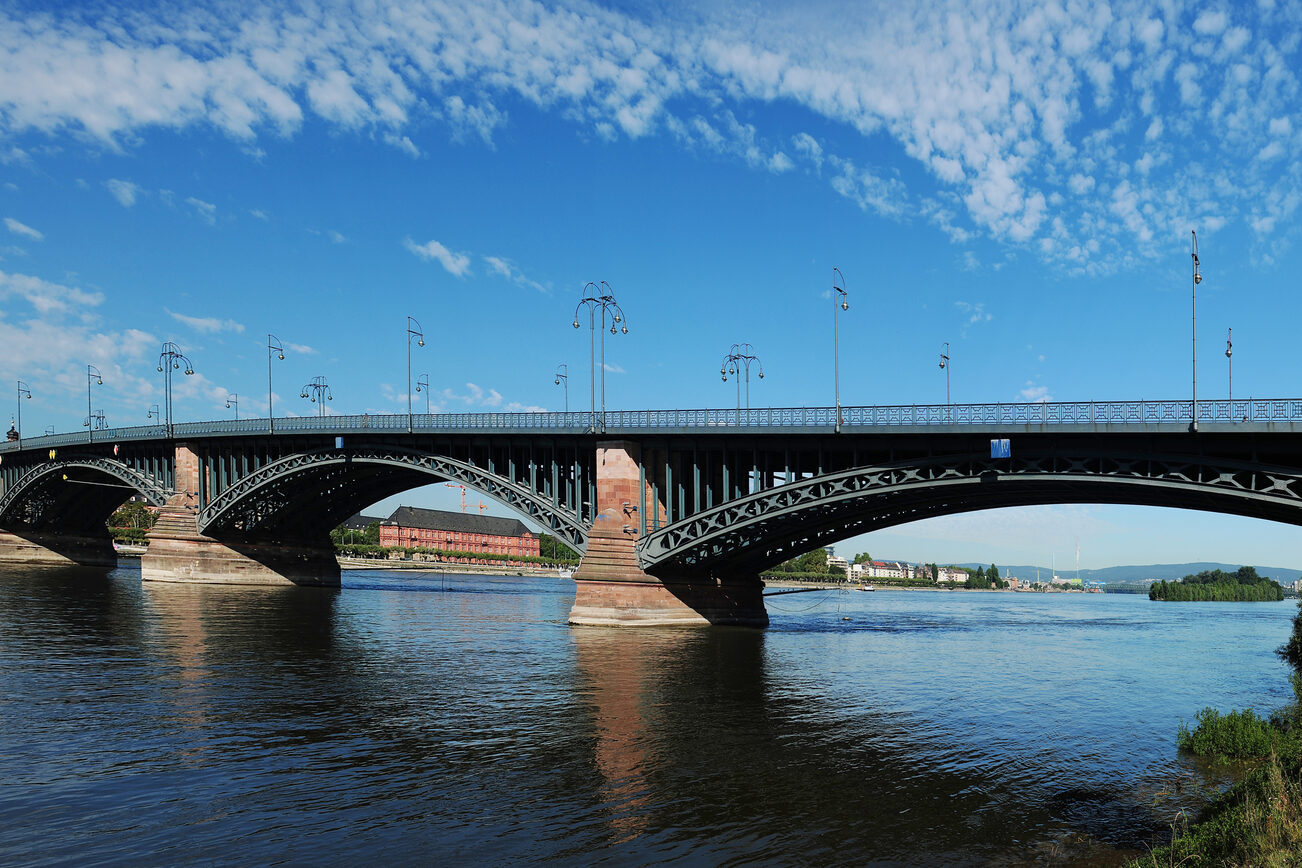
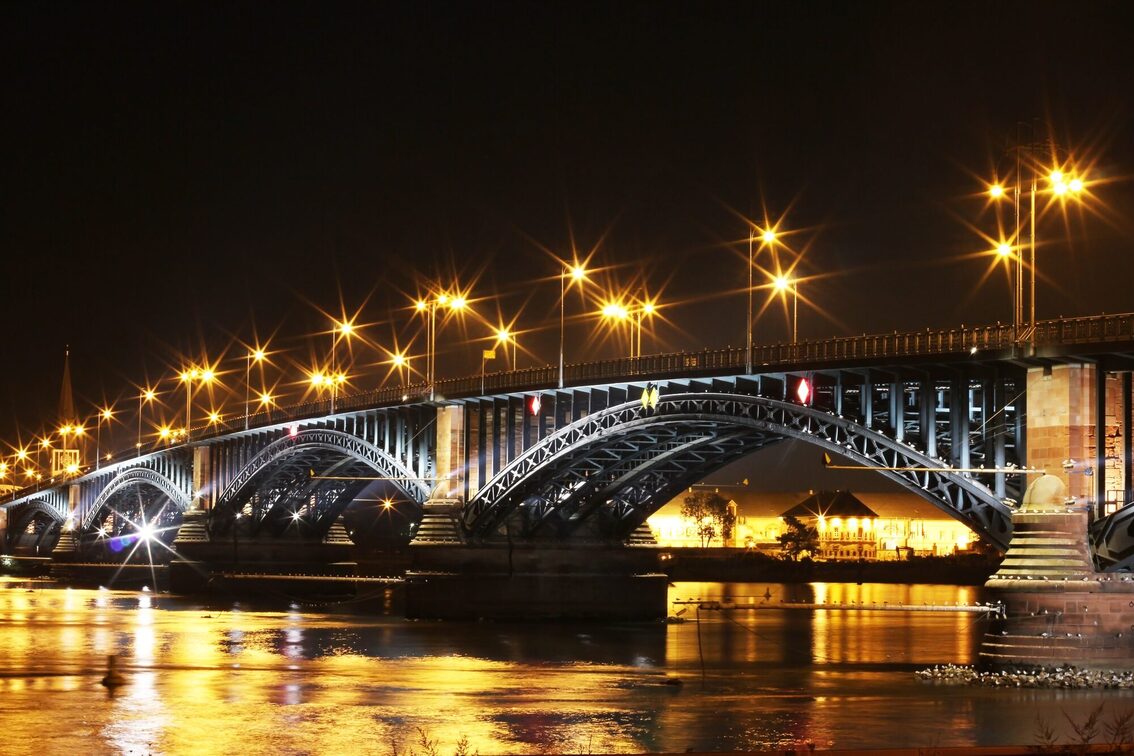
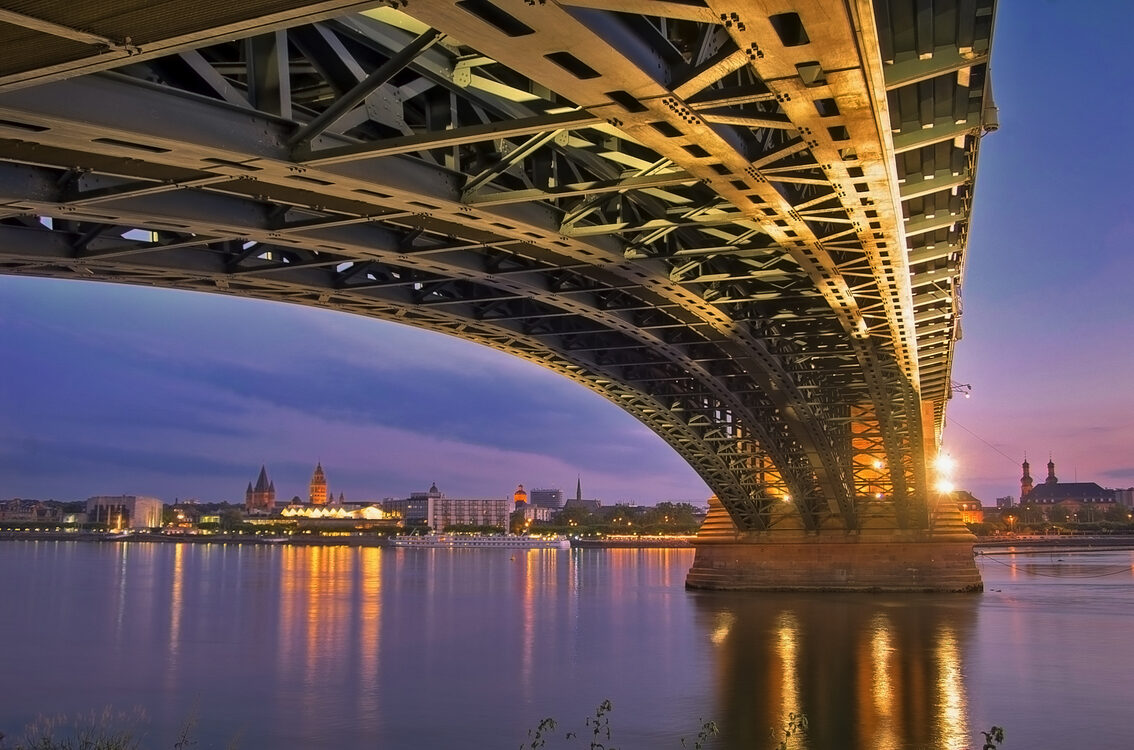
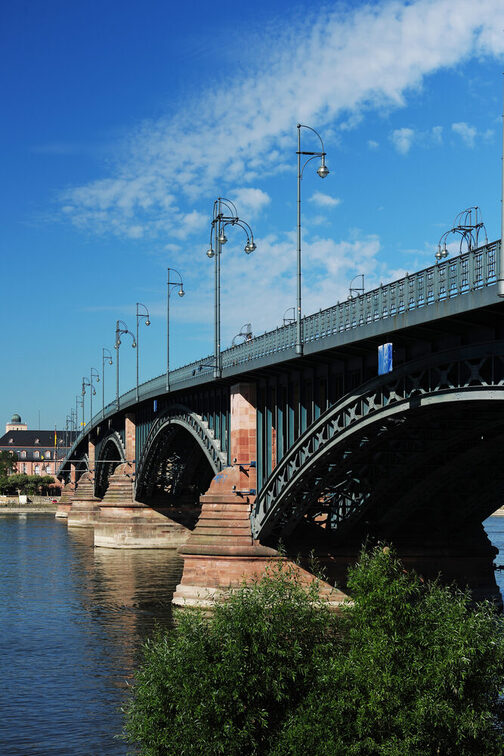
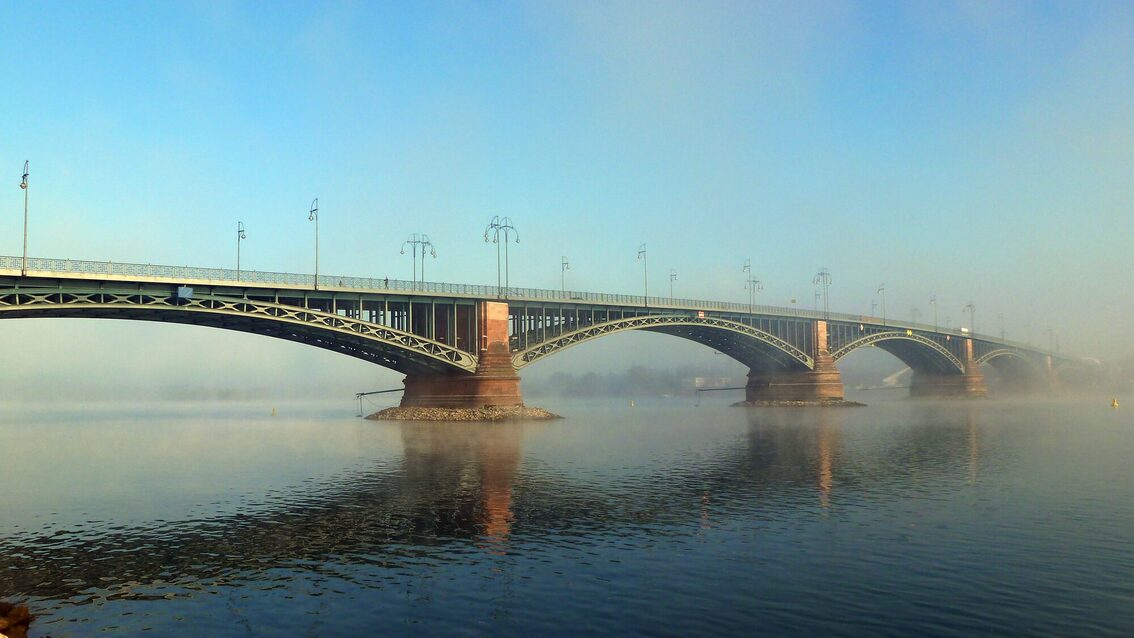
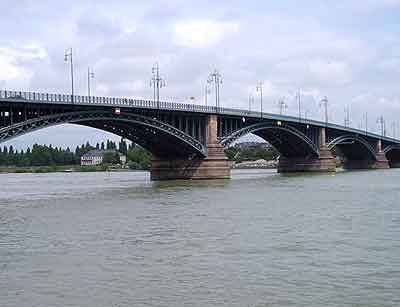
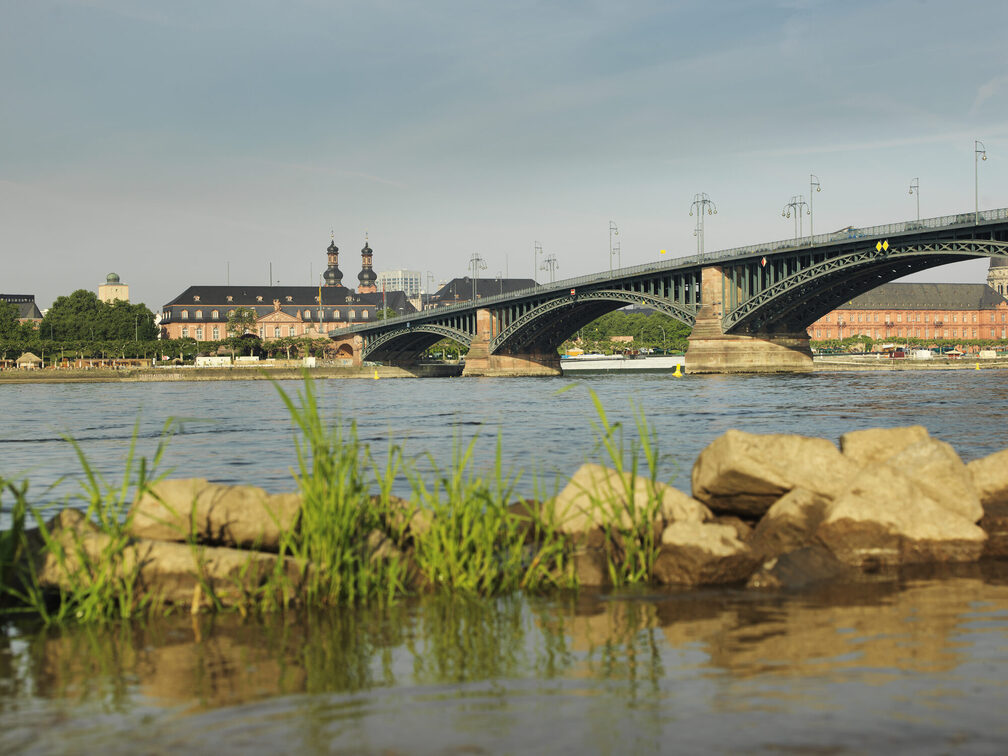
Flood disasters in the winter of 1882/83 severely hampered construction work, but in 1885, work on the five steel arches on massive sandstone pillars came to a successful conclusion.
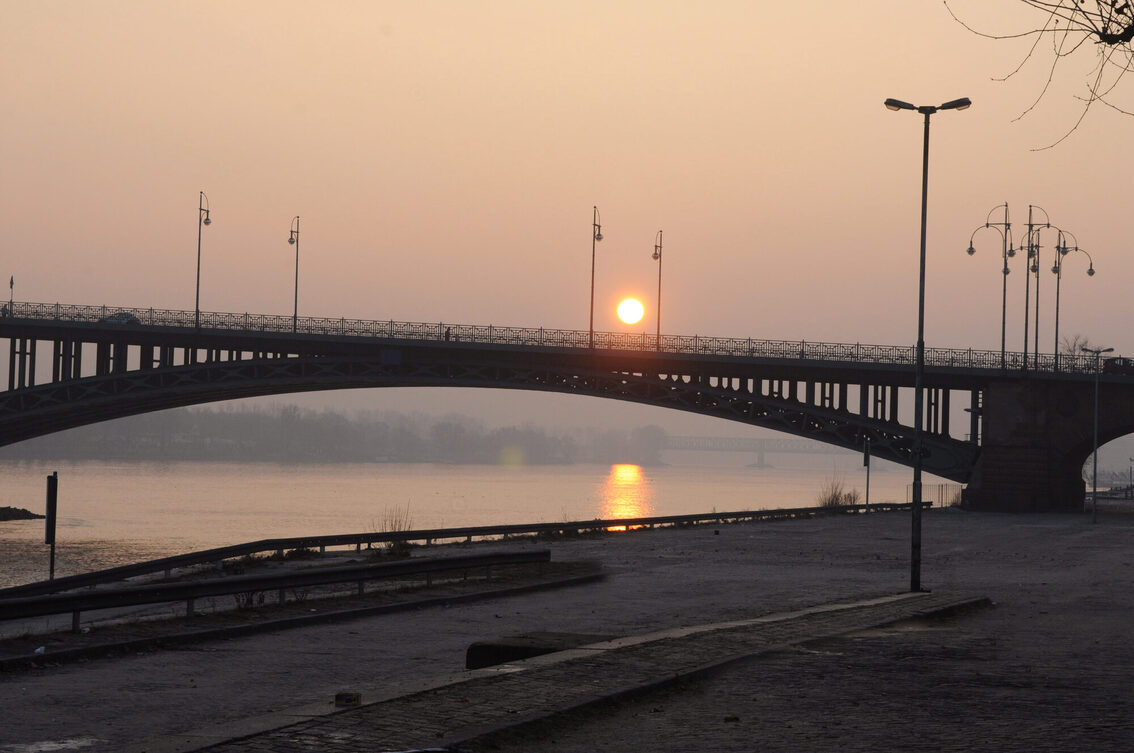
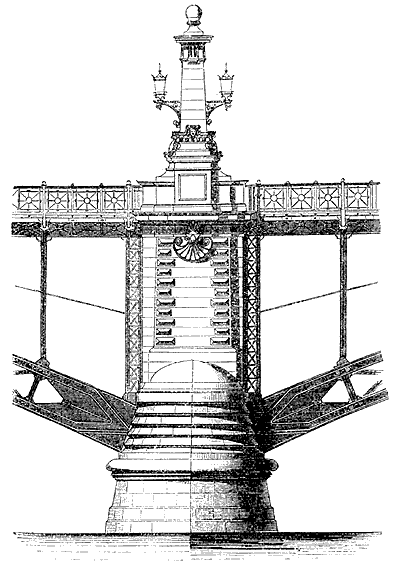
3.5 million kilograms of wrought iron were required, and countless rivets held the structure together. After the new arches were installed, they were sold to the public at the bridge festival held to mark the occasion. The spans of 87-99-103-99-87 meters not only ensured smooth shipping traffic, but also contributed significantly to the elegant appearance of the structure to this day.
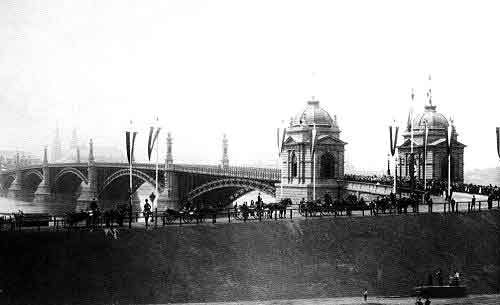
On May 30, 1885, the time had come: the new bridge was officially inaugurated. On that day, use of the bridge was still free of charge. From June 1, 1885, all passers-by had to pay a bridge toll: four pfennigs for each pedestrian, five pfennigs for each passenger on the horse-drawn tram, and even one pfennig for a pig or a goat. Schoolchildren were exempt.
Customs officers sat in so-called octroi booths at both ends of the bridge and collected the toll. What was initially limited to three years ultimately lasted 27 years. It was not until 1912 that the bridge toll was abolished.
The bridge toll was levied by the grand ducal state government to refinance the construction costs, which were immense for the time, amounting to 3.6 million gold marks.
Already in the first decades of the 20th century, traffic volume increased to such an extent that the bridge was widened by five meters between 1931 and 1934. This was no easy task, as the pillars also had to be rebuilt in the unstable riverbed for structural reasons.
Second World War and reconstruction
In 1945, German engineers blew up the bridge in the final months of the war (in March), but this did not stop the advance of the Allies. US engineers built a pontoon bridge for the duration of the reconstruction, which was celebrated with a bridge festival in 1950. This bridge was similar to the one that had existed since 1661 during the electoral period.
The rebuilt bridge, in the simpler forms of modern times, still carried tram tracks. In 1960, the Kastel side was given a roundabout to cope with the traffic flows from three intersecting federal highways.
Since 1945, the bridge has taken on another significance: after the Second World War, the Rhine was declared the border between the American and French occupation zones, thus dividing the city of Mainz. The part of Mainz on the left bank of the Rhine was subsequently incorporated into the newly formed state of Rhineland-Palatinate, while the districts on the right bank were assigned to the newly founded state of Hesse.
Mainz-Kastel on the right bank of the Rhine, like Mainz-Amöneburg and Mainz-Kostheim, was placed under "fiduciary administration" by Wiesbaden, now the capital of Hesse.
General refurbishment from 1991 to 1995
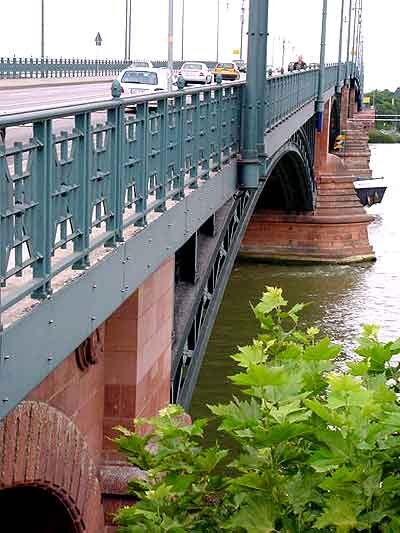
The bridge underwent a major transformation during its complete renovation from 1991 to 1995. In particular, the steel arches had to be replaced and the road slabs renewed. During the renovation, the monument preservation authorities ensured that, in addition to the technically and functionally necessary work, the original character of the structure was also taken into account. In selecting the lamps, railings, colors, and installing historical details such as the coat of arms cartouches and an original half-arch on the Kastel bank, every effort was made to restore the structure to its former beauty.
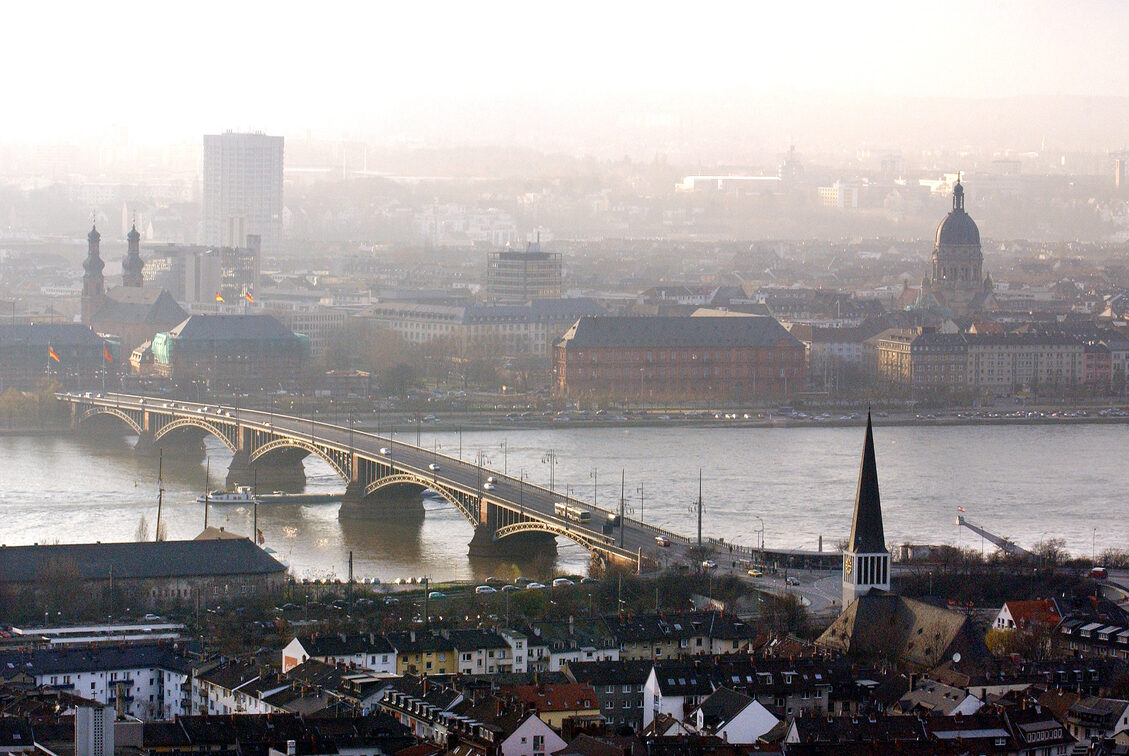
In addition to the technical challenges of the renovation, the bridge builders of today accomplished a mammoth task while traffic continued to flow. The renovation cost a total of 139.5 million marks. This was a lot of money, but it was well spent in view of the function of this important connection and the aesthetics of the structure against the famous Mainz city panorama.
After more than three years of general renovation, the Theodor Heuss Bridge was reopened to traffic on July 18, 1995. On that day and the following day, however, it was only open to around 200,000 pedestrians who had flocked from the two state capitals on either side of the Rhine to celebrate their most beautiful connecting axis with a bridge festival.
Not quite in the middle of the bridge, the Mainz-Kastel place name sign marks the state border between Hesse and Rhineland-Palatinate. The road bridge in the center of the city has always been and continues to be something special for the people of Mainz on both sides of the Rhine. This is the only way to explain the large crowds that gathered after the restoration work on the 110-year-old structure.
This had also been the case at the three previous bridge festivals. In 1995, passersby were able to pay a bridge toll to help finance the festival with its seven stages, a double musical fireworks display, and the purchase of a small souvenir.