Manz Winery
The basic sound of viticulture: "Craft, passion, fascination"
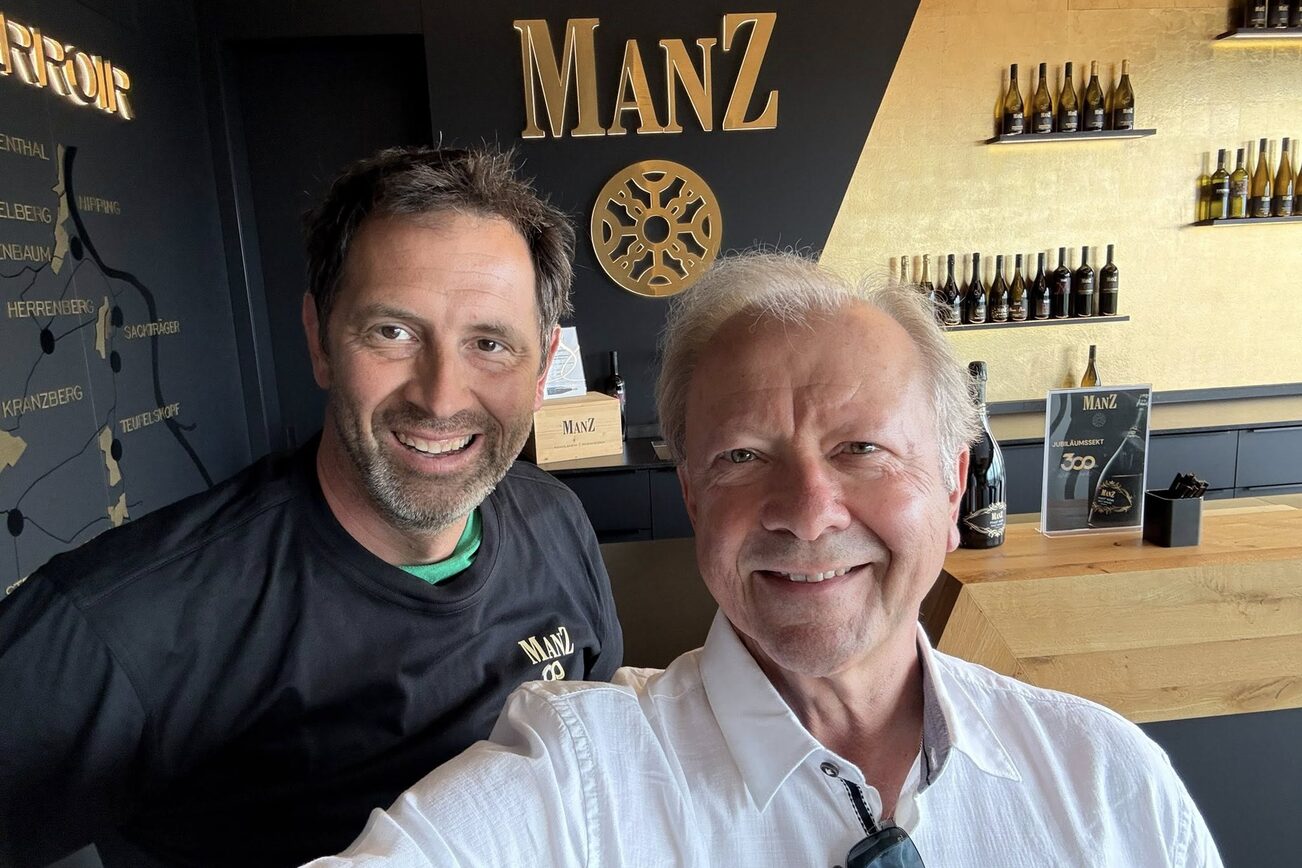
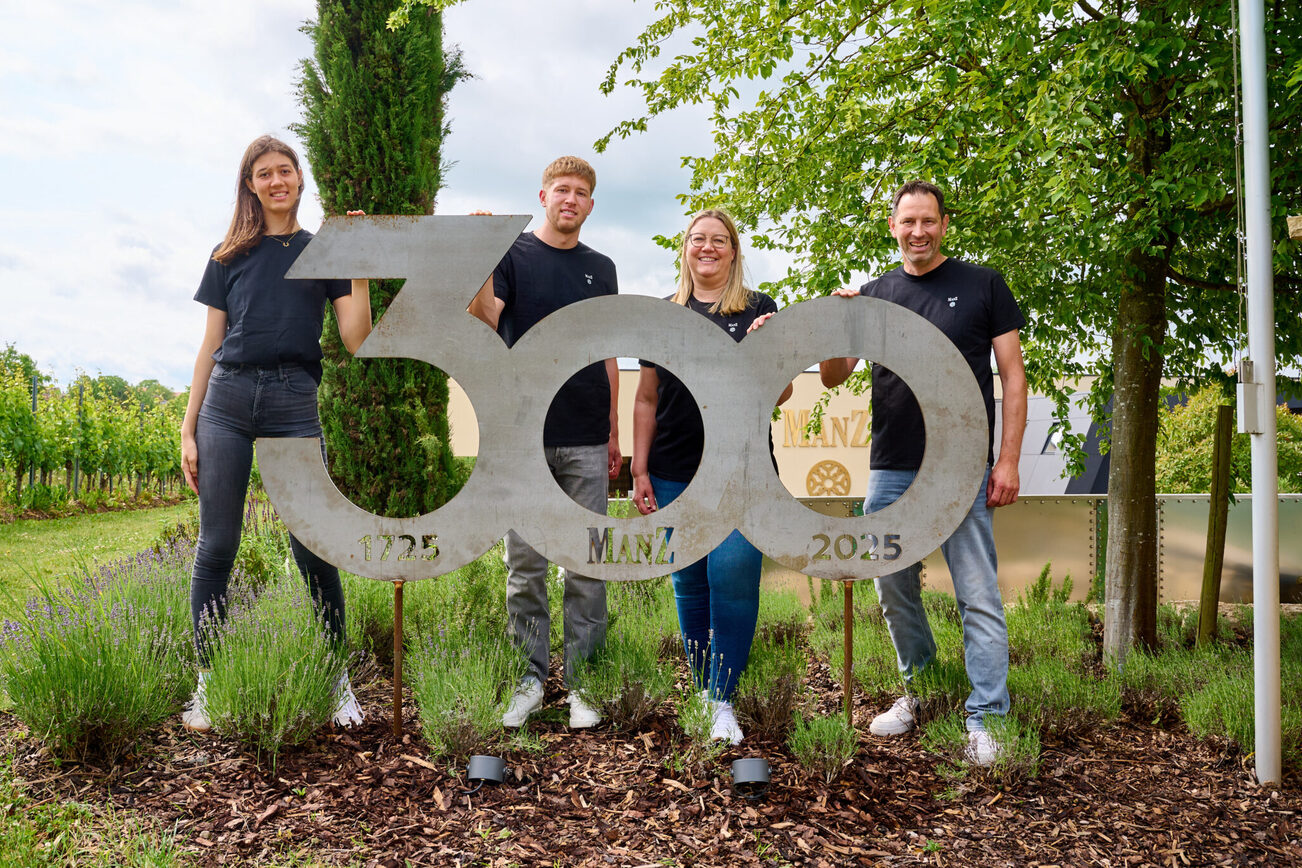
Eric Manz has arrived in the modern age—you can see that just by looking at the energetic Rheinhessen winemaker in his prime. In 2025, the winery celebrated 300 years of winegrowing – and with its modern-style winery building, the Manz family is also pointing the way to the future. At the same time, the cool winemaker Eric has remained true to himself: "We remain down-to-earth, rooted in the region – we're not into anything pretentious!"
Cleverly styled regionality
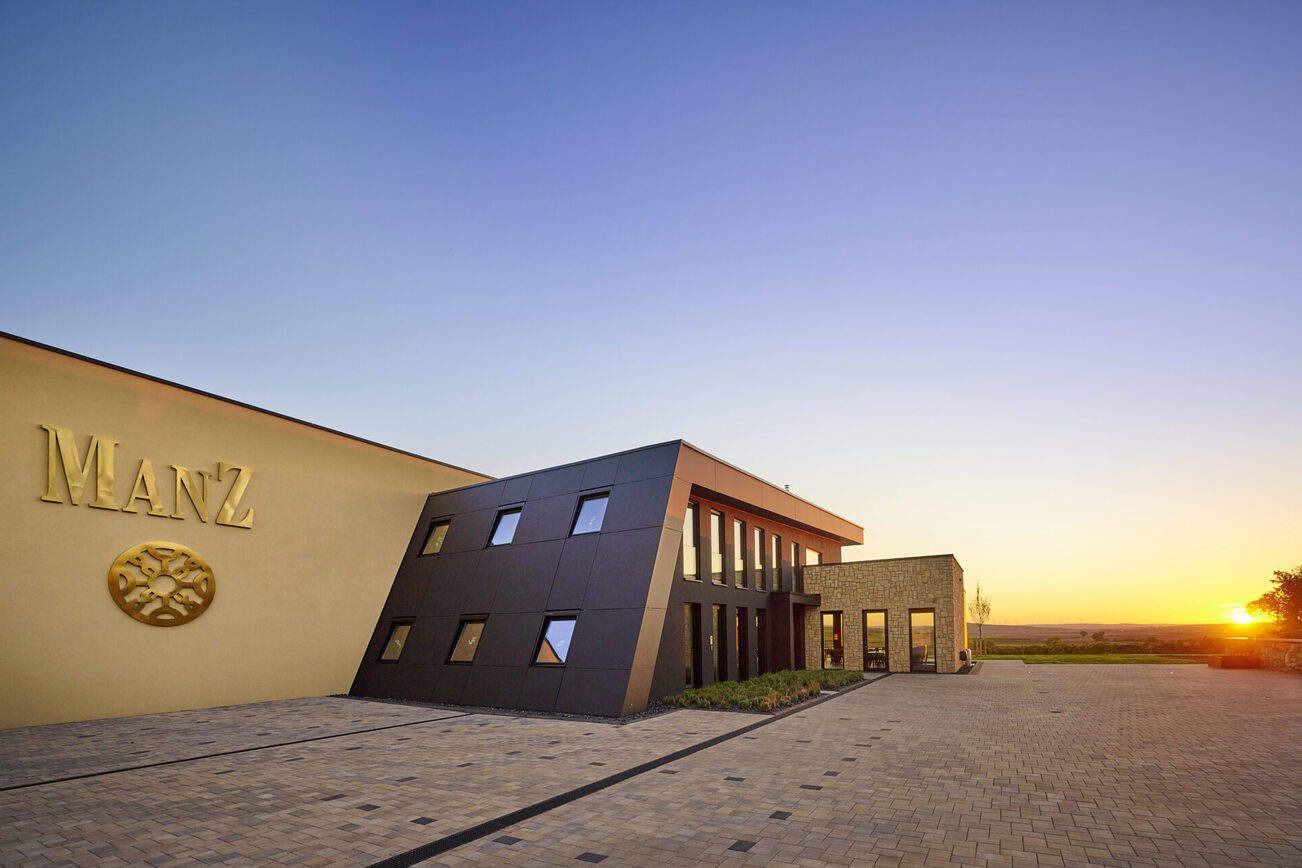
The outstanding architecture of the wine shop and treasure chamber is impressive at first glance, almost monumental – but on closer inspection, it reveals classic elements, cleverly styled regionality, and pleasant restraint. The modern building is not a spaceship in a wine village, but rather architecture that blends into its rural surroundings. Together with Palatinate architect Tim Reiter, Eric Manz created a place that reflects all aspects of the winery. "Craftsmanship, passion, fascination" is written on dark blocks together with the winery logo outside the building. "The three terms stand for the designations estate wine, local wine, and single-vineyard wine," explains Eric Manz. The striking logo also has a regional reference: in a stylized form, it echoes the shape of a historic Franconian amulet found during excavations in Weinolsheim: "It looks like four people holding heaven and earth together, connected by four wine cups," is Eric's fitting interpretation. The winemaker had long wanted a modern wine shop—and he has more than succeeded.
Panoramic view and treasure chamber
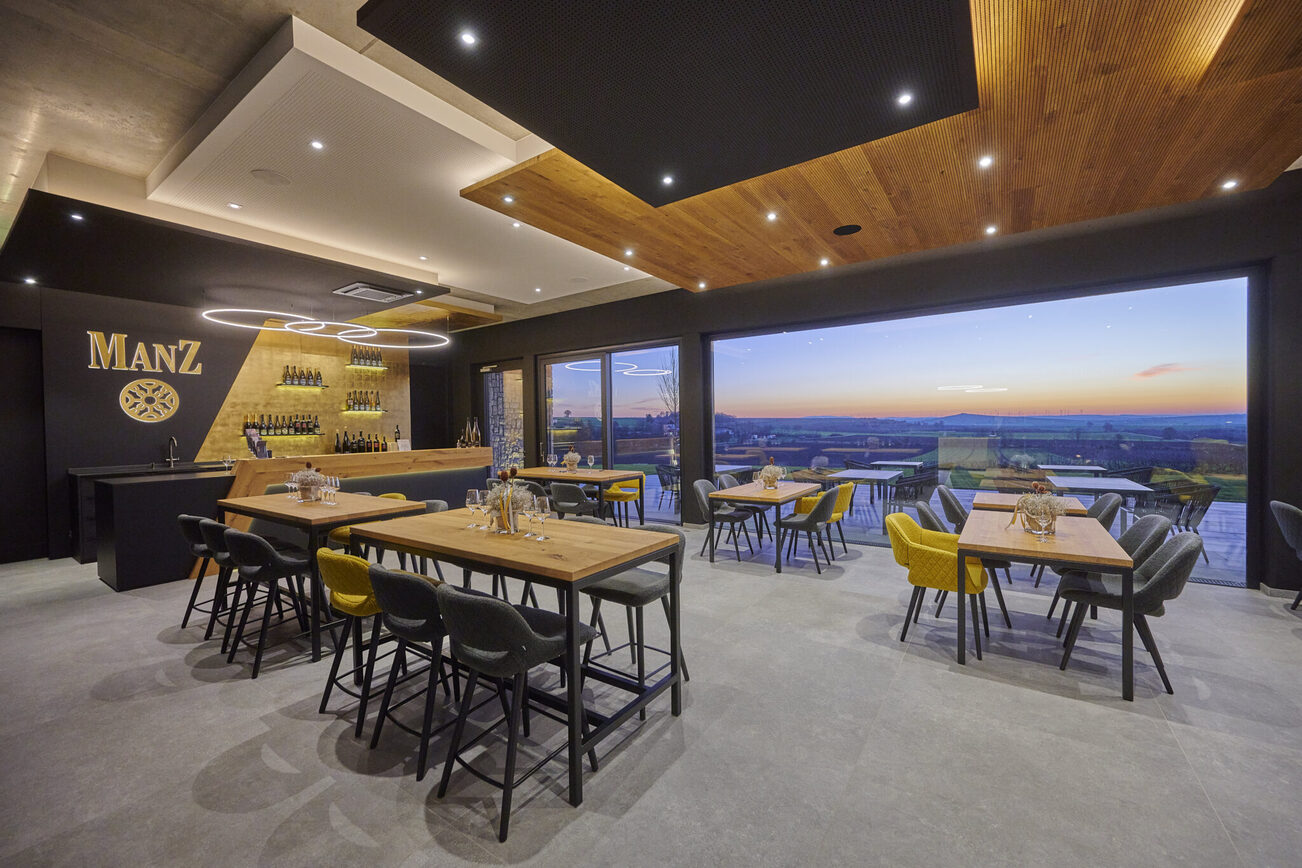
The spacious room impresses with a beautiful panoramic view of the Rhine-Hessian vineyards and the Petersberg. The eye-catcher is a 28-square-meter stone slab with original soil from the winery's top vineyards. Europe's largest soil profile shows the red soil of the Pettenthal and Hipping vineyards, clay marl and shell limestone, and even the loess soil on the Rhine front. The profiles exemplify the diversity of soil in Rheinhessen. Following the stairs down the vine root in the clay marl profile, you enter the impressive treasure chamber built with exposed concrete. "We have a complete collection of bottles dating back to the 1937 vintage!" says Eric Manz happily. In the middle, big bottles in double magnum and larger sizes are lined up.
Tradition and modernity complement each other
The modern architecture is rooted in traditional structures: In this typical Rheinhessen family business, three generations work together—parents Conny and Erich, Eric and his wife Martina, Eric’s brother, and their children Pauline and Julius. The winery has since grown to an impressive size: the estate cultivates approximately 70 hectares of vineyards. Burgundy varieties account for two-thirds of the vineyard, while Riesling makes up 20%. This grape variety produces the winery’s top wines from the Weinolsheimer Kehr and Niersteiner Pettenthal vineyards. “I stand for authentic, down-to-earth wines shaped by their terroir,” emphasizes cellar master Eric Manz, who learned his craft at the renowned Keller Winery. The estate’s multi-award-winning wines are a testament to his work—at the Federal Wine Competition, the estate received the award for the best dry white wine collection of the year—proving that teamwork pays off.
The jury awarded the Great Wine Capitals Best of Wine Tourism Award 2025—both nationally and internationally—in the “Architecture, Parks & Gardens” category, with a focus on architecture, to the Manz Winery with full conviction. “An absolute top destination in our region!”
About the blogger
Wolfgang Junglas, a TV and wine journalist, works in the entertainment department at SWR Television in Mainz, where he produces programs such as “Election of the German Wine Queen.” He is an author, chairman of Weinfeder eV, president of FIJEV, and an adjunct lecturer at Geisenheim University—and, since 2021, the blogger for GWC Mainz | Rheinhessen.