Erfurt

Brief information
Erfurt, capital of the federal state of Thuringia since 1991, is known in Germany and beyond as a city with an impressive cathedral and many other old churches, as a place of important Luther sites, and as Germany's flower and seed city. It is located in the center of Germany on old European trade routes and not far from the Thuringian Forest, a beautiful low mountain range. Erfurt's location in the fertile and climatically favorable Thuringian Basin has contributed to the flourishing of the city, which has a population of around 214,000. The city is an administrative center and home to emerging industries.
History
The first written mention of "Erphesfurt" was in 742, when Boniface founded a bishopric in Erfurt. This first mention gave the people of Erfurt reason to celebrate the city's 1250th anniversary in 1992. The diocese of Erfurt was soon united with the archdiocese of Mainz. Around the year 1000, the archbishops of Mainz also gained political rights in Erfurt, but the city retained a large degree of independence and enjoyed a position of almost imperial immediacy until 1664. Trade, especially in the blue dye woad, brought Erfurt wealth and power in the late Middle Ages.
During the Reformation, most of the population of the city, in whose Augustinian monastery Martin Luther had spent decisive years of his life, converted to the new doctrine. In 1664, the Electorate of Mainz succeeded in subjugating the city by force of arms. Karl Theodor von Dalberg (1772-1802), probably the most important and at the same time last Electorate of Mainz governor, had a beneficial effect on the city both economically and culturally. In 1802, the city was incorporated into the Prussian state. From 1806 to 1814, it was directly under Napoleon's rule and then returned to Prussia.
After the end of World War II, Erfurt became part of the state of Thuringia and was its capital from 1948 to 1952. After the state of Thuringia was effectively dissolved in 1952, it was divided into three districts until reunification and political reorientation, of which the Erfurt district was the largest in terms of area and population.
Places of interest
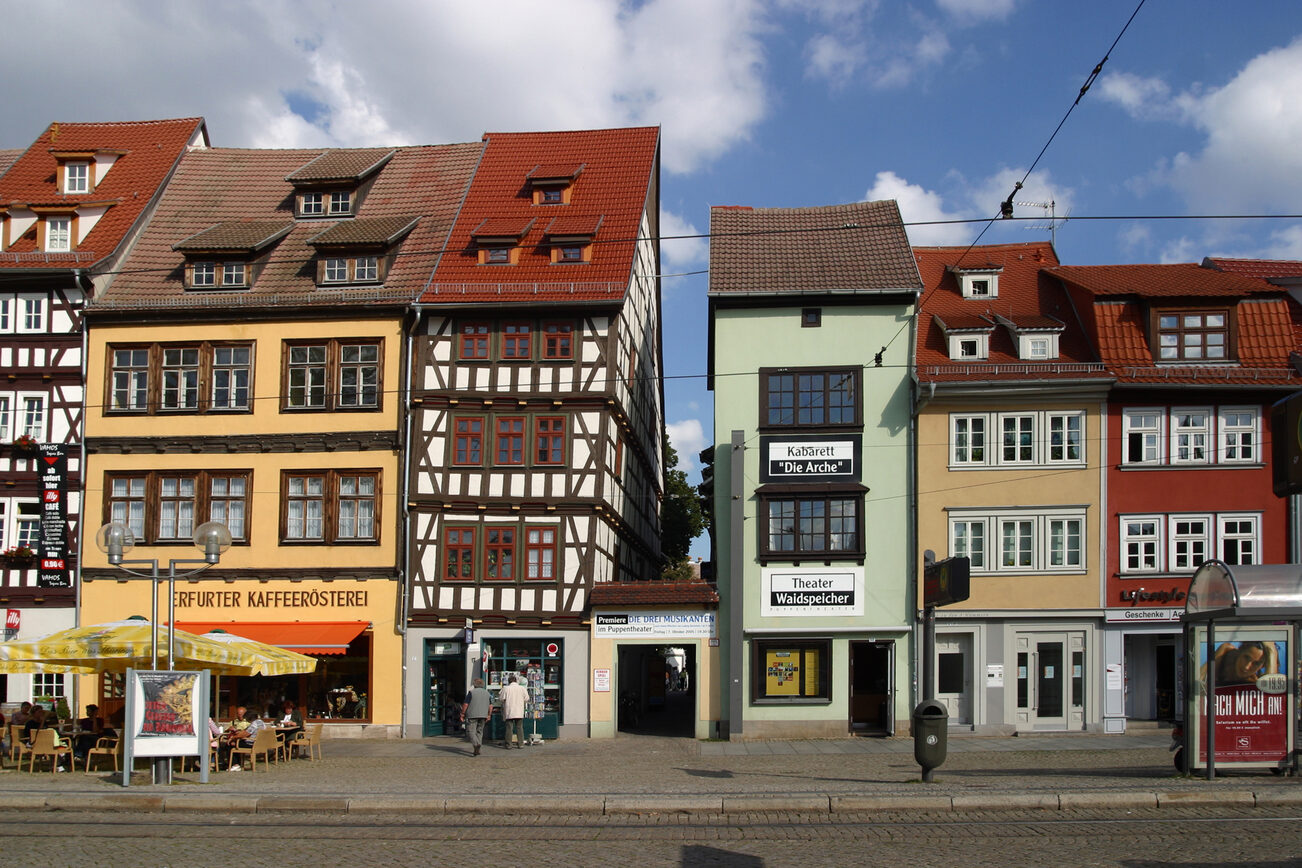
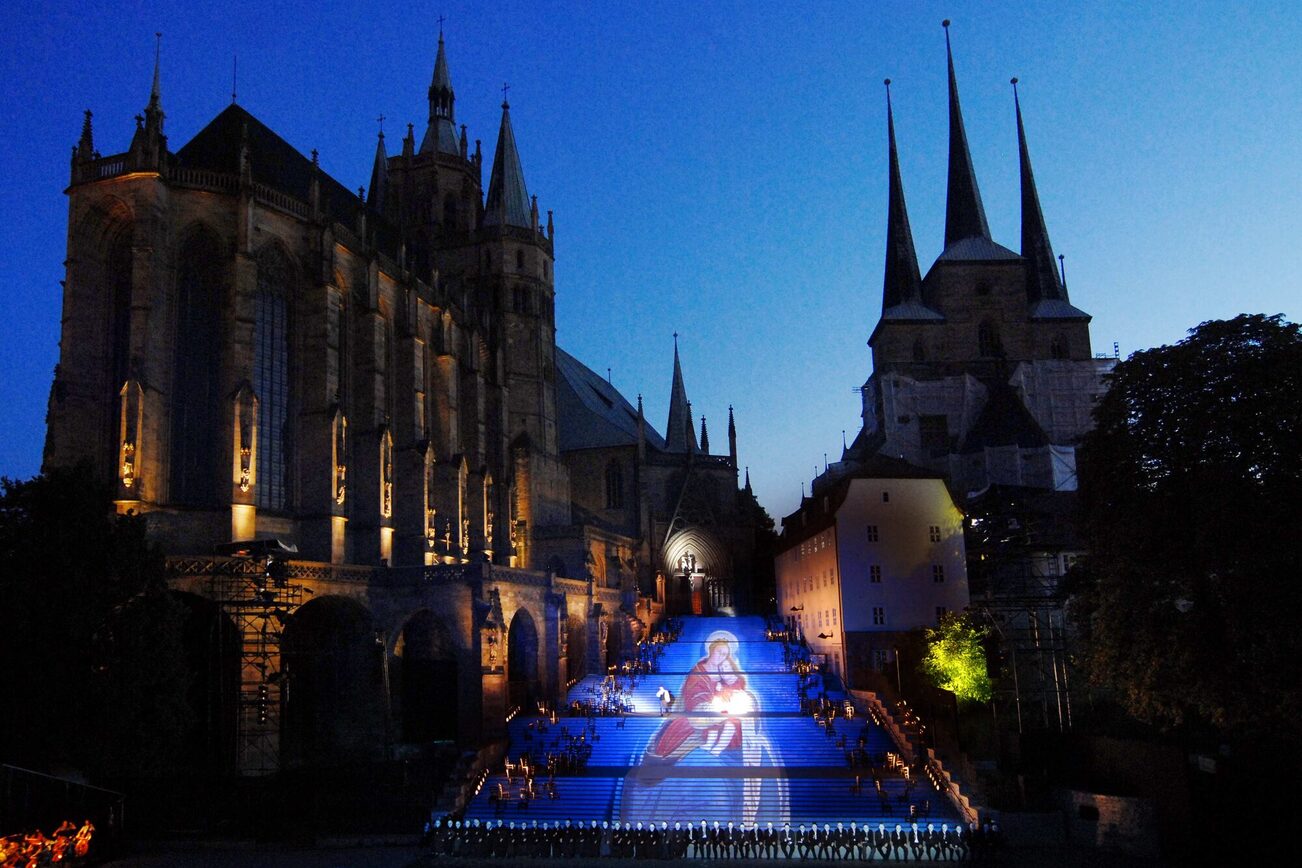
Despite bomb damage during World War II and modern new buildings, the charming old town with its atmospheric alleys and squares on the Gera River has retained its medieval structure and is an important monument to German urban architecture. Erfurt's landmark, the cathedral and Severi Church, a church ensemble unique in Europe, towers majestically over the cityscape.
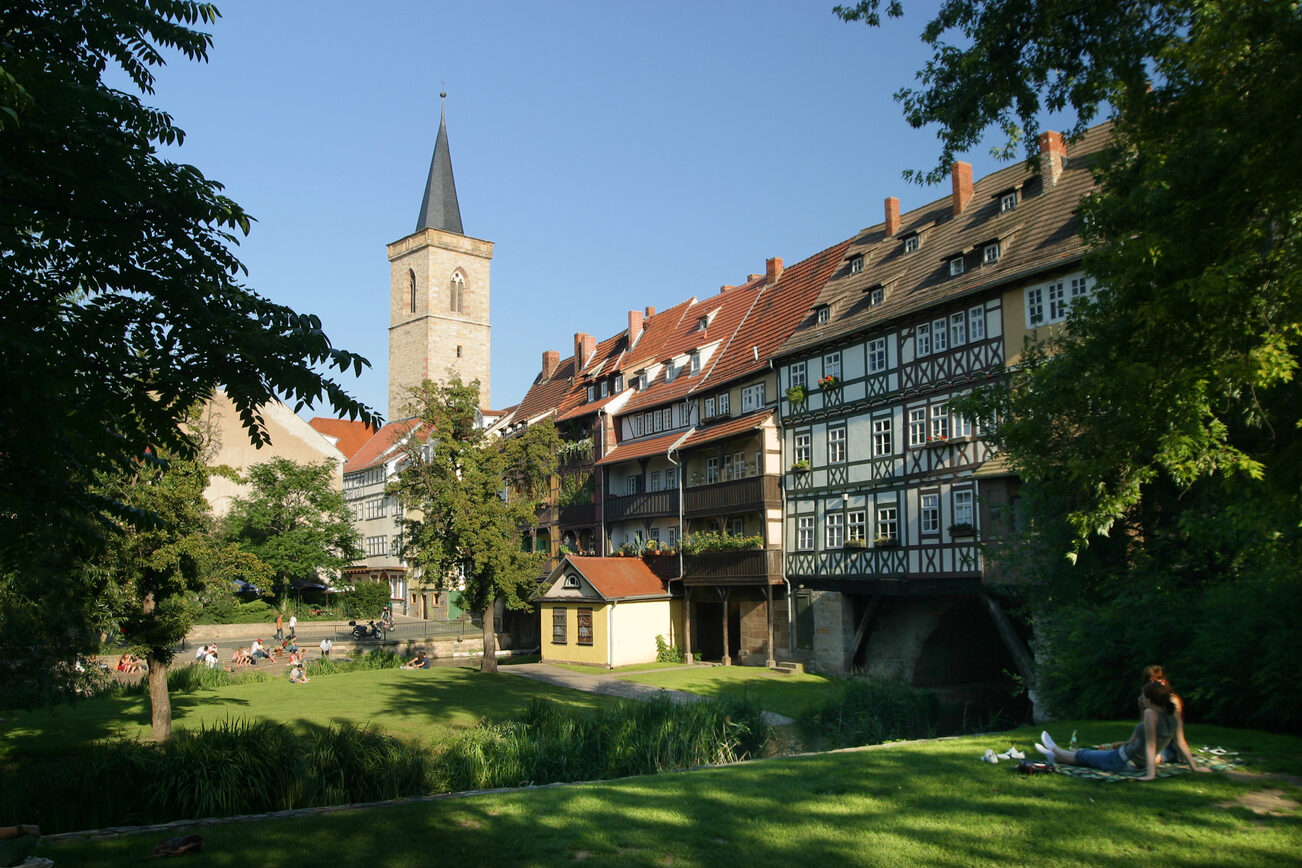
Another landmark of the city is the Krämerbrücke bridge over the Gera River. The stone arch bridge, which resembles a half-timbered street, is the only completely built-up residential and commercial bridge in Europe that has been preserved to this day. In the immediate vicinity is Michaelisstraße, which features numerous old town houses. This was also the site of the main building of the more than 700-year-old university, which was destroyed by bombs in 1945. Only parts of the portal and the window jambs survived the air raid. The building was reconstructed and is notable for its impressive Gothic portal. World-famous sites that had a significant influence on Luther's life are the Augustinian monastery (1277) and the Augustinian church (1290-1350). On the north side of the Anger is the Kaufmannskirche, where Johann Sebastian Bach's parents were married and 61 children of the Erfurt Bach families were baptized. In front of this church is the Luther monument, erected in 1889.
The Anger, which had been a market place for the woad trade since the end of the 14th century, developed into a prestigious street with the economic upswing following the dismantling of the city's fortifications in the second half of the 19th century. In the 1970s, the area was redesigned as a shopping and pedestrian zone. This, together with the fact that it boasts numerous historic and architecturally remarkable buildings, makes it particularly attractive. Over 20 parish churches, numerous chapels, and a dozen monasteries and convents gave the city the nicknames "Thuringian Rome" and "Erfordia turrita" (Erfurt crowned with towers).
Particularly noteworthy is the house at Anger 37/38, which has what is probably the most beautiful Renaissance portal in Erfurt. In Dalberg's day, the building was often a meeting place for famous personalities. Goethe and Schiller, as well as the Humboldt brothers, enjoyed staying here. A modern attraction is the new theater, which opened in September 2003 after four years of construction.
University and schools
On May 1, 1392, the University of Erfurt opened its doors as the fifth Studium Generale. Alongside Cologne, it was the only university in Germany that owed its foundation to the citizenry. Its prestigious law faculty earned it the nickname "the Bologna of the North." In the 15th century, the university was of great importance and was a center of humanism. Martin Luther was probably its most famous student. The university was closed in 1816.
The old Erfurt university found a continuation, at least for the medical department, in the medical academy founded in October 1954, which served as a training center for young doctors. In 1987, a group of Erfurt citizens founded the "Interessengemeinschaft Alte Universität Erfurt" (Old University of Erfurt Interest Group). The aim of this community, which developed into a citizens' movement during the political transition, was to cultivate the humanistic tradition of the Alma mater Erfordensis and to reestablish the University of Erfurt.
On April 29, 1994, the state government held a ceremony to mark the reestablishment of the University of Erfurt. The University of Erfurt is a humanities-focused university with faculties of philosophy, political science, education, and Catholic theology, as well as the Max Weber College, a faculty-like central institution for research and teaching that combines a center for advanced study, a research institute, and a graduate college. In 1991, the University of Applied Sciences Erfurt was founded with eleven departments.

Economy
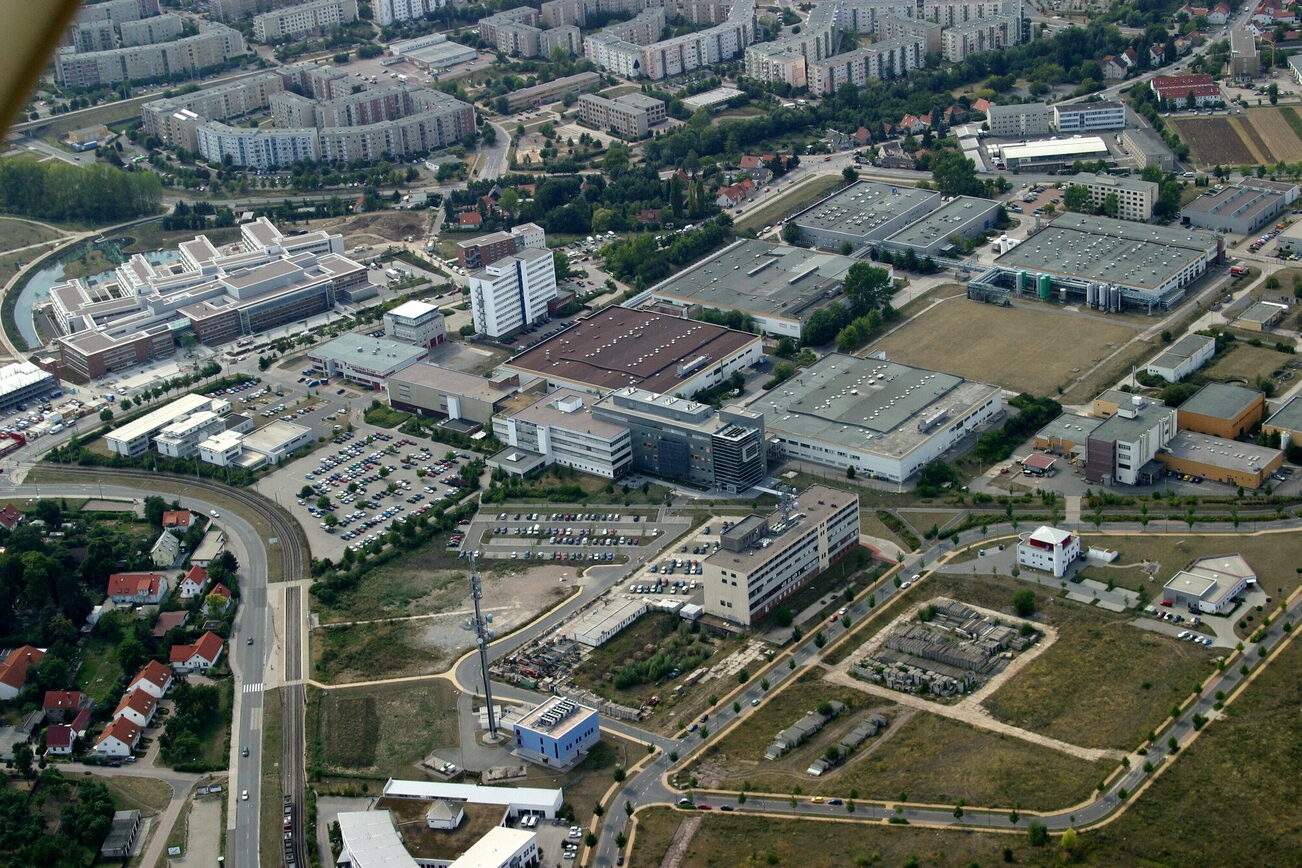
The state capital Erfurt is the political, economic, and cultural center of the Free State of Thuringia. Due to its location in the geographical center of Germany and its infrastructural advantages, the city already achieved fame and prosperity in the Middle Ages. At the beginning of the third millennium, the city continues to benefit from this favorable location. Residents, visitors, and, last but not least, entrepreneurs appreciate its central European location at the intersection of major east-west and north-south transport routes.
The A 4 and A 9 motorways are being supplemented by the rapid expansion of the A 71. Once completed, the ICE route from Berlin via Erfurt to Munich will complement the existing rail connections and link the region to European cities in the shortest possible time. Erfurt International Airport is recording growing passenger numbers and freight volumes.
The business location is characterized by a balanced mix of manufacturing, services, and retail. Its profile is shaped by its core competencies in microsystems technology/photovoltaics, mechanical and plant engineering, logistics, agriculture/horticulture, and children's media. Companies in the traditional sectors of mechanical and plant engineering, the food industry, and horticulture have successfully adapted to the current needs of international markets. Today, the production location is increasingly dominated by companies in the fields of microsystems technology and photovoltaics. The children's channel, founded by ARD and ZDF, is providing innovative impetus for the media industry. In addition to programs for children, numerous companies in Erfurt and the surrounding area produce content for various program providers. Erfurt-based companies develop products specifically for children that are age-appropriate and can be used with a wide variety of media – from interactive games to educational software. High-quality services relevant to
the location are offered in line with the needs of the various industries. One of the most modern exhibition centers in Europe, financial institutions, state and city authorities, and the accommodation and leisure industry complete the range of services on offer.
Culture and events
Erfurt also has a lot to offer those interested in culture. Theater Erfurt, a two-genre venue offering musical theater and concerts, Theater Waidspeicher, the cabaret "Die Arche," several museums and galleries, including the Kunsthalle, the Forum Konkrete Kunst, and the Kulturhof Krönbacken, as well as a wide variety of exhibitions and concerts characterize the cultural diversity of the city.
Throughout the year, Erfurt offers a first-class program in the musical sector. Particularly noteworthy are the DomStufen Festival, which takes place against the impressive backdrop of the cathedral and Severi, the New Orleans Music Festival, the Jazz Mile, the International Organ Competition, the Erfurt Church Music Days, the Musica Rara Festival, and the Erfurt Bach Days. The "Erfurt Magazine," the state capital's official monthly calendar of events, provides information about the current offerings.
Recreation and leisure
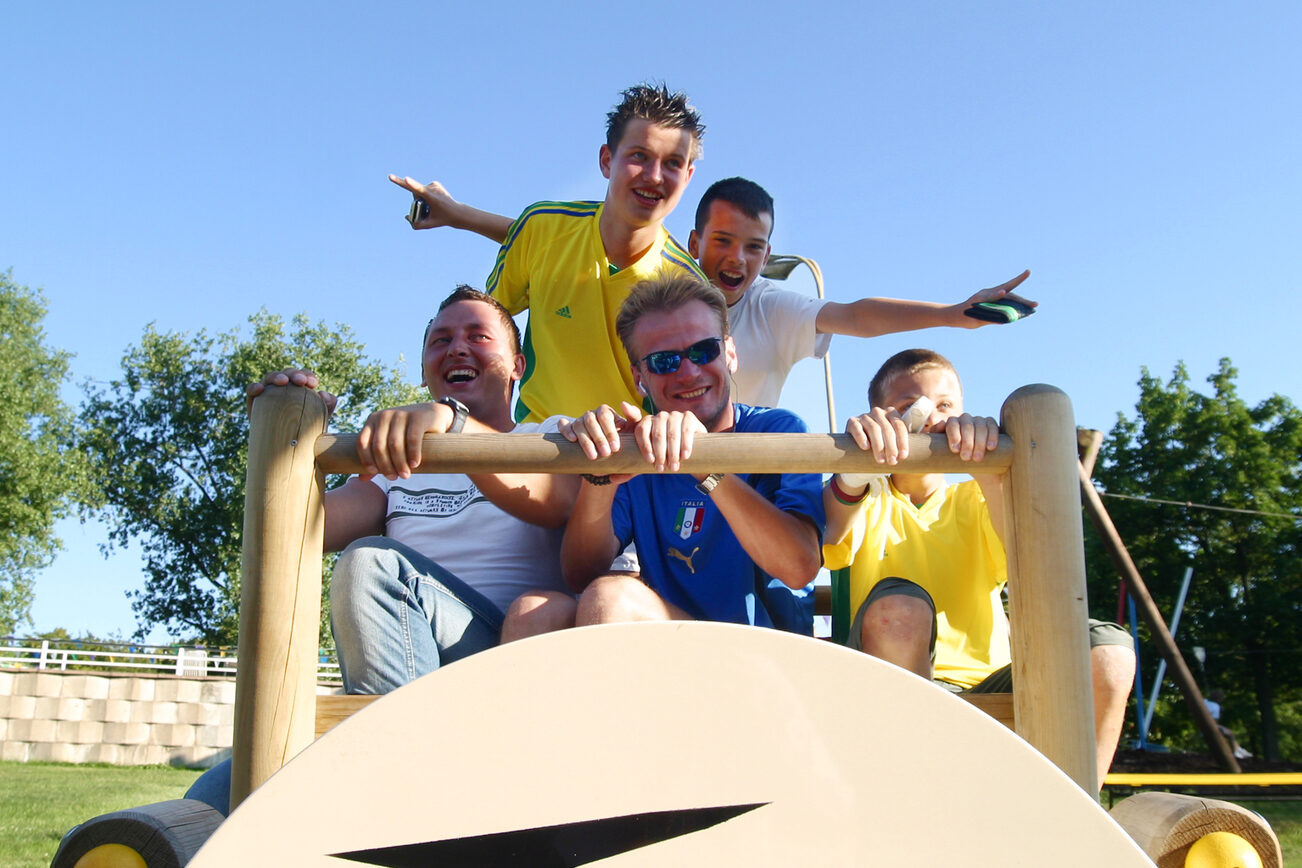
The flower city of Erfurt presents itself in a special way on the grounds of Erfurter Garten- und Ausstellungs-GmbH Cyriaksburg (ega). The garden architecture of the complex impresses with its integration of nature's diversity into an overall picture. The 90-hectare site features rose and iris gardens, the "Karl Foerster Garden" with perennials and evergreen shrubs, show houses with tropical plants, cacti, orchids, and a large play and leisure center.
In the immediate vicinity is the Erfurt Exhibition Center, an event center with three halls that regularly hosts trade fairs, exhibitions, events, and music concerts and is now one of the most important venues in Germany for concert organizers.
The Thuringian Zoopark Erfurt invites visitors to take an educational or even research excursion into the animal world of almost every continent. The zoo is home to rare wild animal species and has long been dedicated to the conservation of endangered domestic animal breeds. Lush parks and the Steigerwald forest near the city also offer a variety of opportunities for delightful excursions to cultural and natural monuments.
Erfurt is not only considered the gateway to the Thuringian Forest, but is also located in close proximity to the old Thuringian cities of cultural and historical significance, such as Arnstadt, the city of Bach; Eisenach, the city of Wartburg Castle; and Weimar, the city of Goethe and Schiller, which is also associated with the memorial and remembrance site on the grounds of the former Buchenwald concentration camp. Visitors to Erfurt should take a detour to the nearby royal seats of Gotha and Rudolstadt. It is also worth visiting Molsdorf Castle, one of the most beautiful Rococo buildings, just a few kilometers from Erfurt.
Specialties
There are the famous Thuringian dumplings, the unmistakable Thuringian grilled sausage, and the delicious Erfurt beer, which, following an old tradition, is loudly praised by the historic beer caller in Erfurt's beer gardens and taverns.
Development of the town twinning
Given their centuries-long shared history, it was only natural that Mainz would seek a town twinning agreement with Erfurt. As early as 1972, the then mayor Jockel Fuchs made an initial attempt to establish cultural and partnership relations with the city of Erfurt, as the general situation seemed very favorable thanks to the intra-German talks between Federal Chancellor Willy Brand and the Chairman of the Council of Ministers of the GDR, Willi Stoph. However, the time was not yet ripe for such a development.

In 1987, Mainz made another attempt to establish contact when a delegation of local politicians from Mainz held initial talks in Erfurt. And on February 20, 1988, the time had come. The mayors signed the first partnership agreement between the two cities in Mainz City Hall. It was intended to be a "promising opportunity to engage in dialogue" – albeit at a time when two German states existed. All measures agreed between the two cities had to be approved by the relevant ministry in East Berlin. Private contacts remained the exception. Then came November 1989 and with it a completely changed situation. In the first weeks after the "Wende," thousands of Erfurt residents visited their twin city of Mainz. The interest of Mainz citizens in their Thuringian twin city also grew. Many contacts and friendships were established in the first few weeks and some of them still exist today. On July 14, 1990, the two city administrations agreed on the contents of a new partnership agreement and, by signing it, set new priorities for future relations. This ensured that the partnership was not only maintained at the official level, but above all that contacts were established among the population. Sports clubs, music clubs, school classes, and numerous individuals began an intensive friendly exchange.
