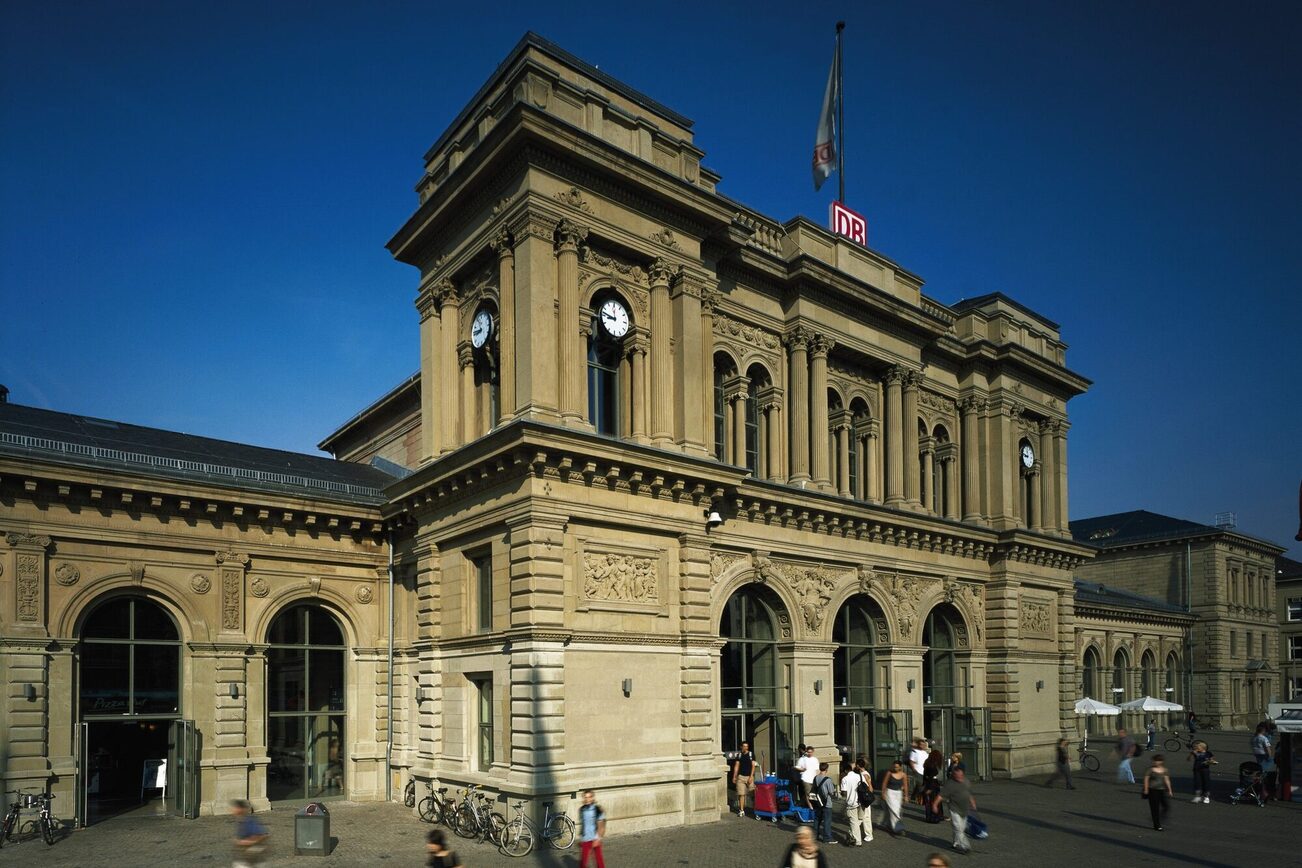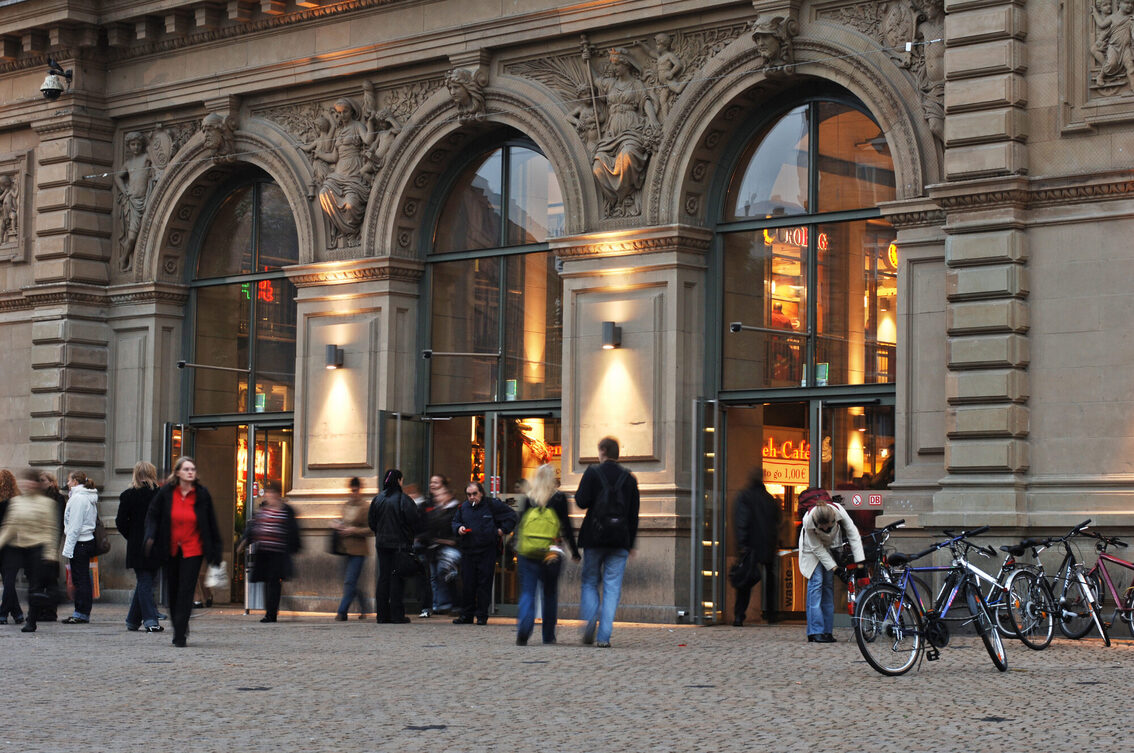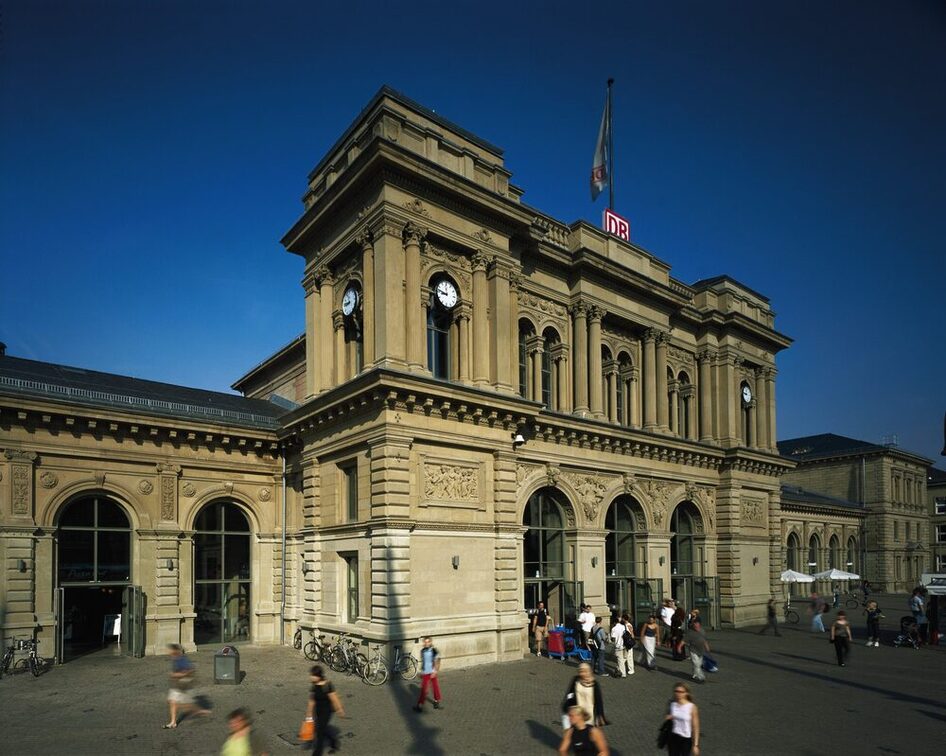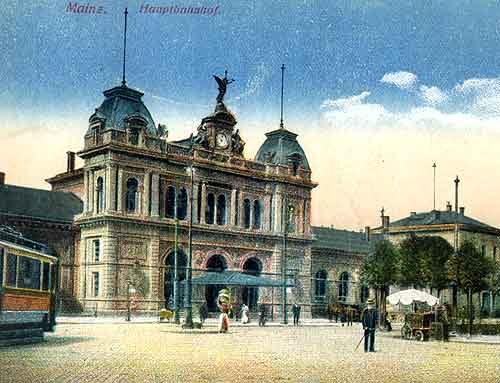
The history of the railway began for Mainz in 1840 in Kastel on the right bank of the Rhine. This is where the Taunus Railway station on the Frankfurt-Wiesbaden line was opened. The founding of the Hessian Ludwigsbahn in 1845 meant that the city was connected to the railway network on the left bank of the Rhine. Just two years later, construction work began on the line between Mainz and Oppenheim. It went into operation in 1853, and Mainz's first "central station" was located on the banks of the Rhine near the wooden tower. In 1862, the railway bridge over the Rhine to Gustavsburg was built.
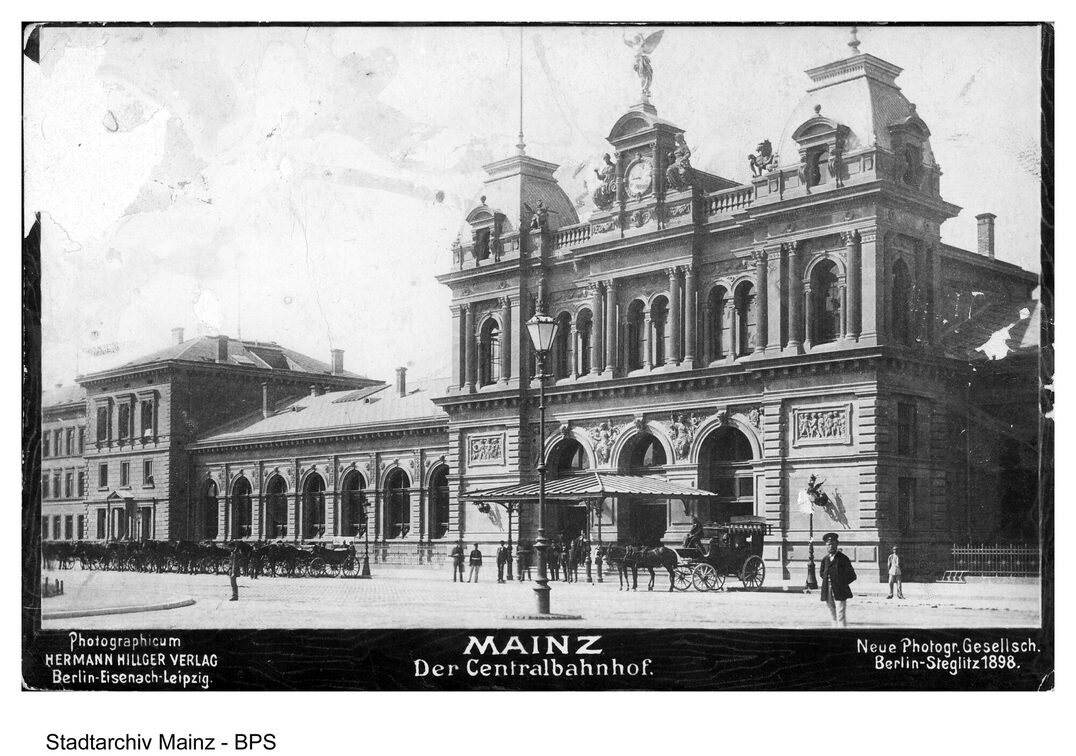
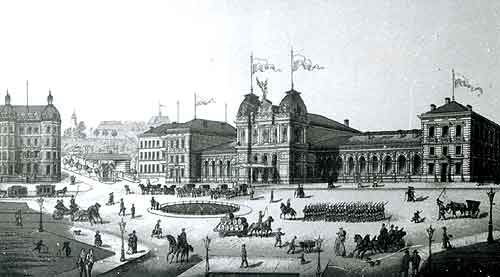
The increase in rail traffic and the continuous expansion of the rail network made it necessary to relocate the station. In 1873, city architect Eduard Kreyßig proposed moving the railway facilities to the southwestern edge of the old town and building a new main station at the junction with what is now Neustadt. Construction work began three years later.
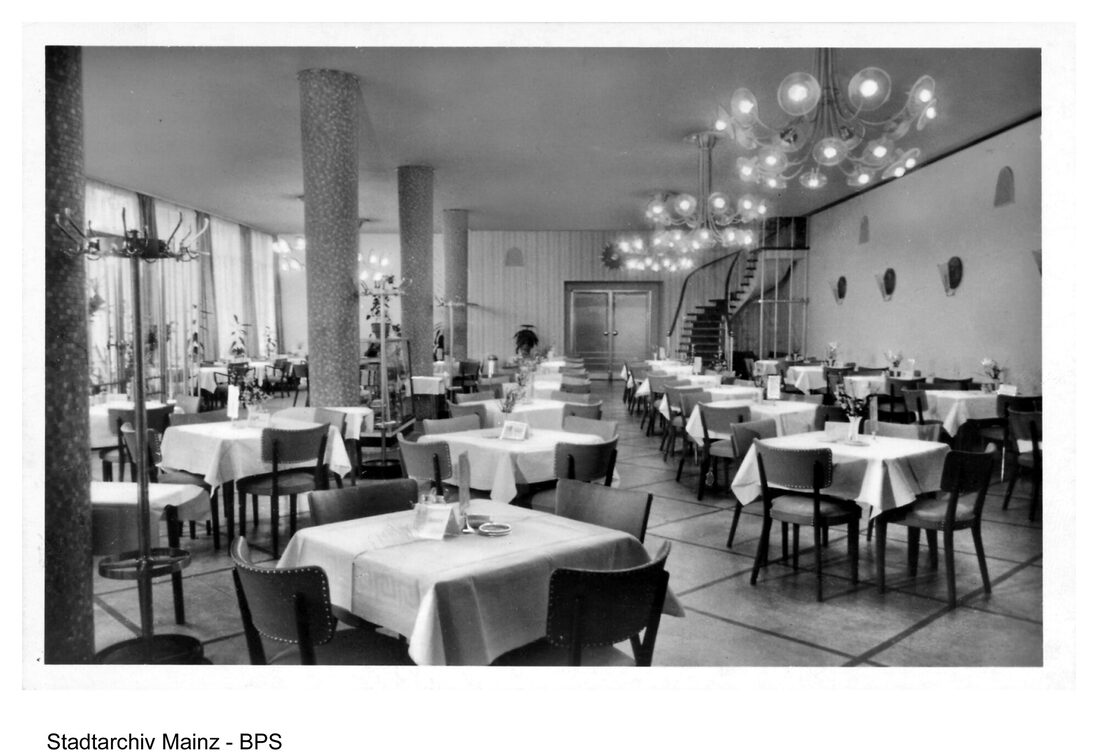
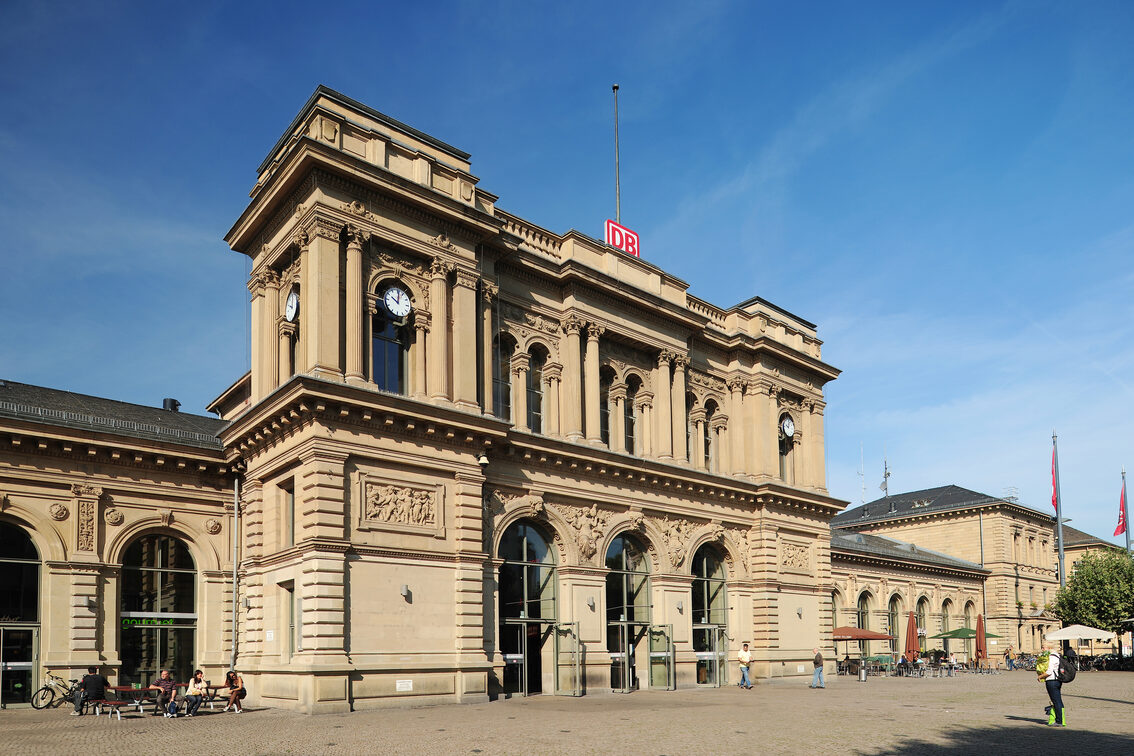
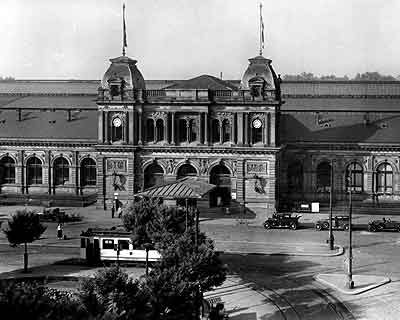
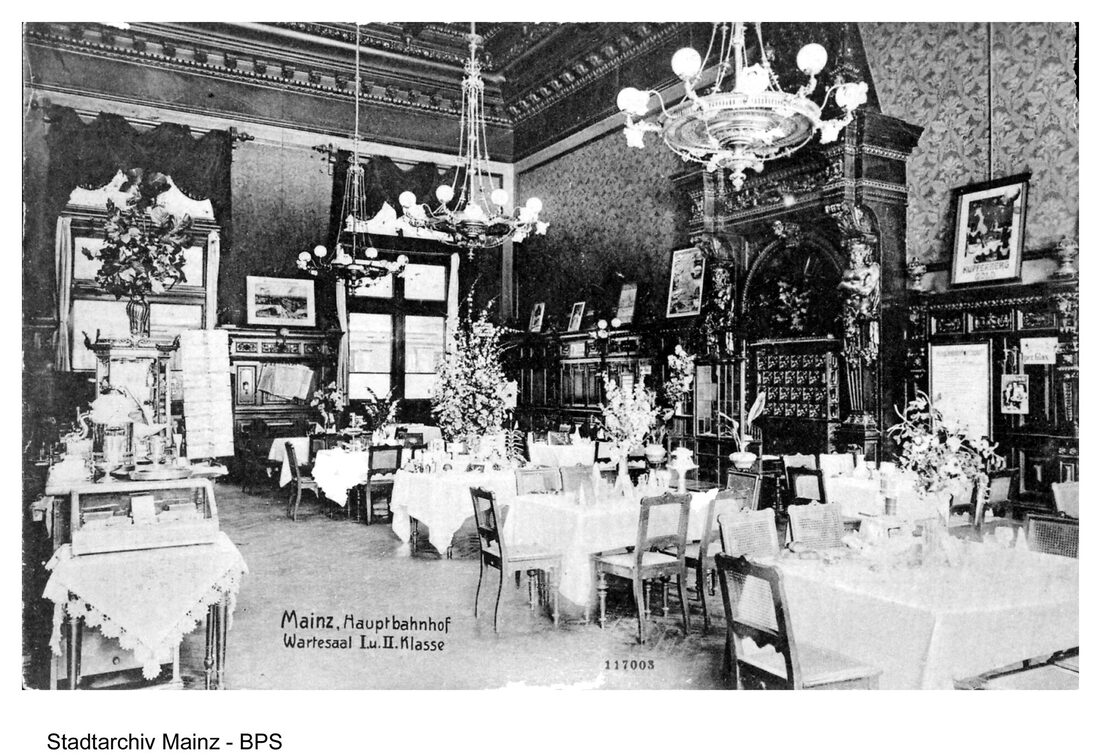
The new main station was opened in 1884. Passengers could freshen up in washrooms and toilets or relax in refreshment rooms. Those who hadn't inhaled enough smoke from the steam locomotives could take a seat in the smoking room. Those who craved fresh air could sit in the non-smoking room.
Fire and conversion
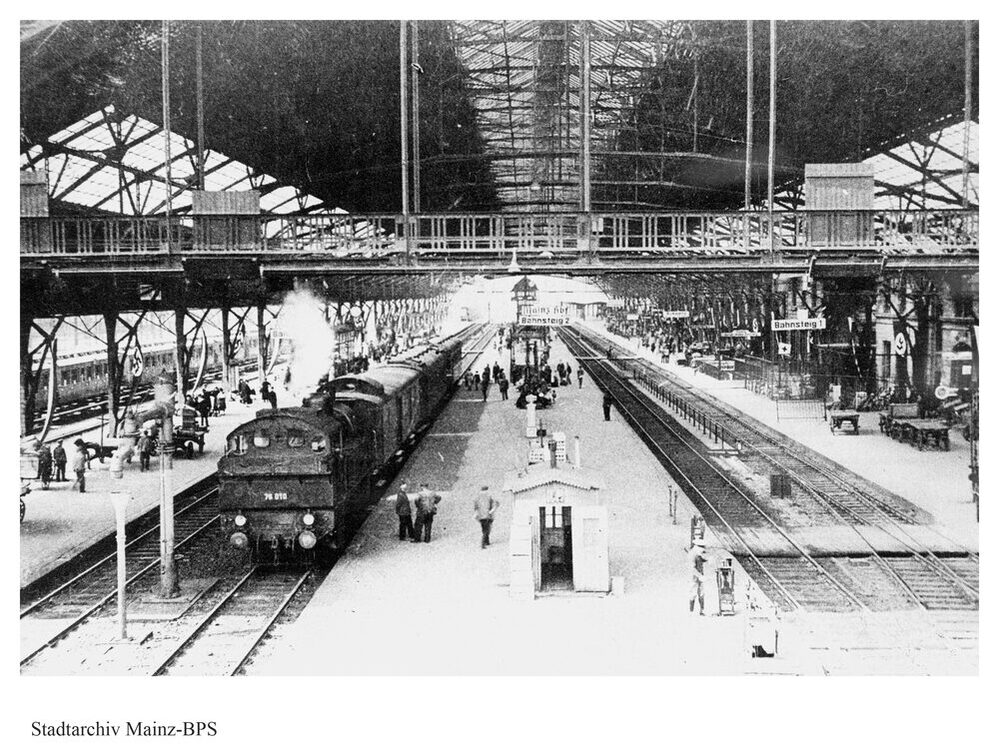
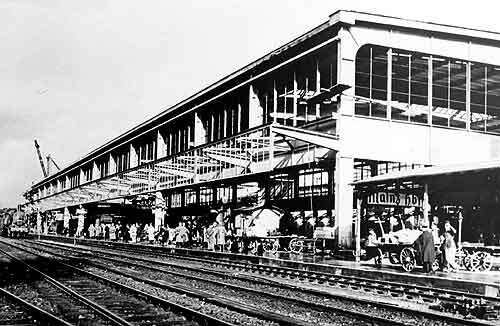
On December 8, 1934, the Mainzer Anzeiger announced the renovation of Mainz Central Station as part of the Reichsbahn Directorate's job creation programs. A few weeks later, on December 23, 1934, a serious fire broke out in the roof truss of the station building. The storage room and adjacent bedrooms of the station staff fell victim to the flames. Thanks to the rapid intervention of the fire department, train traffic was maintained and the collapse of the platform hall was prevented.
World wars and reconstruction
The two world wars left their mark: bombs severely damaged the station forecourt and the station building. Office and check-in buildings, warehouses, and the wine hall burned down completely. 1,767 meters of track, six signal boxes, and 198 points were destroyed. In 1945, the Reichsbahn Directorate recorded damage amounting to around 180 million marks.
It was not until two years later that restoration of the forecourt and station building began. The outer walls and basic design were retained, but the floor plans were improved. A single-story glass structure was added to the right and left of the main entrance. On the left, it covered the station restaurant and on the right, a row of shops. In the following years, more and more shops, kiosks, and even a hairdresser's moved into the interior.
Central station in transition
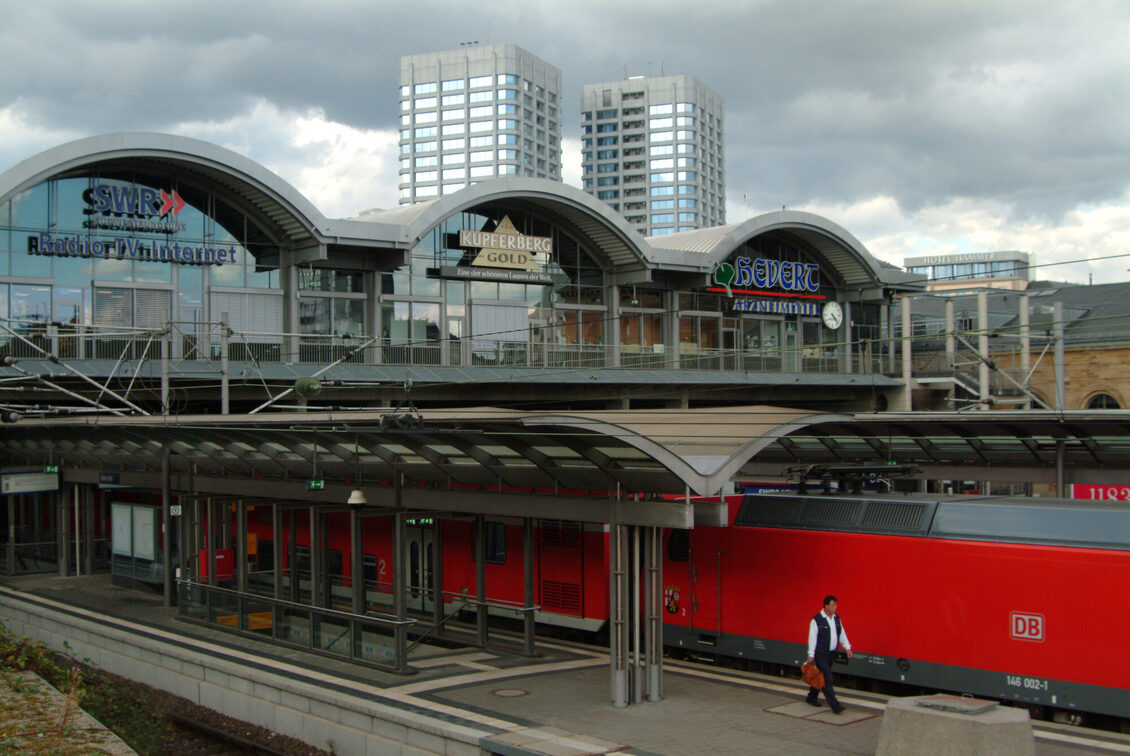
In the 1950s, all train traffic was converted to electric locomotives. To secure the power supply, the entire rail network had to be equipped with high-voltage lines. The appearance of the station changed forever.
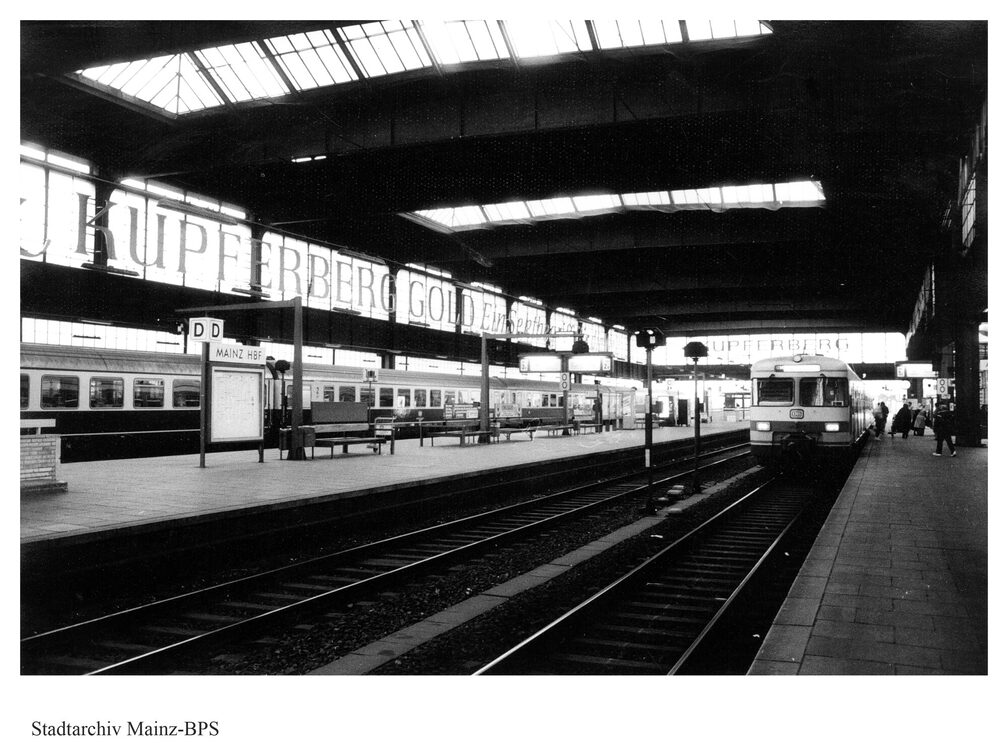
The large Kupferberg window in the track hall became the station's landmark. When modern Mainz residents saw this image on their return from a trip, they knew: "I'm home again."
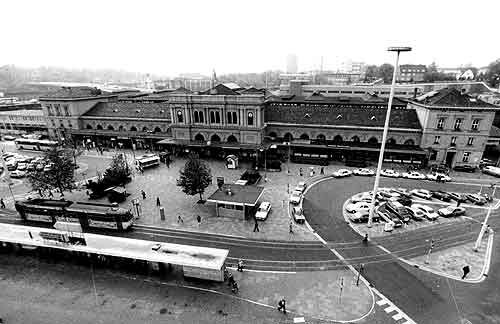
As travelers walked toward the main exit, they were greeted by the "Welcome to Mainz" window from (Blendax) toothpaste. When they stepped outside in 1980, they found themselves on a forecourt that no longer bore much resemblance to the site built almost 100 years earlier. Instead of the green roundabout, they found gray tram stops in front of them.
To his left was a parking lot; hotels lined and still line the square.