
Blog Domhof
Cloud nine, an old synagogue and heavenly delights in the Domhof in Guntersblum
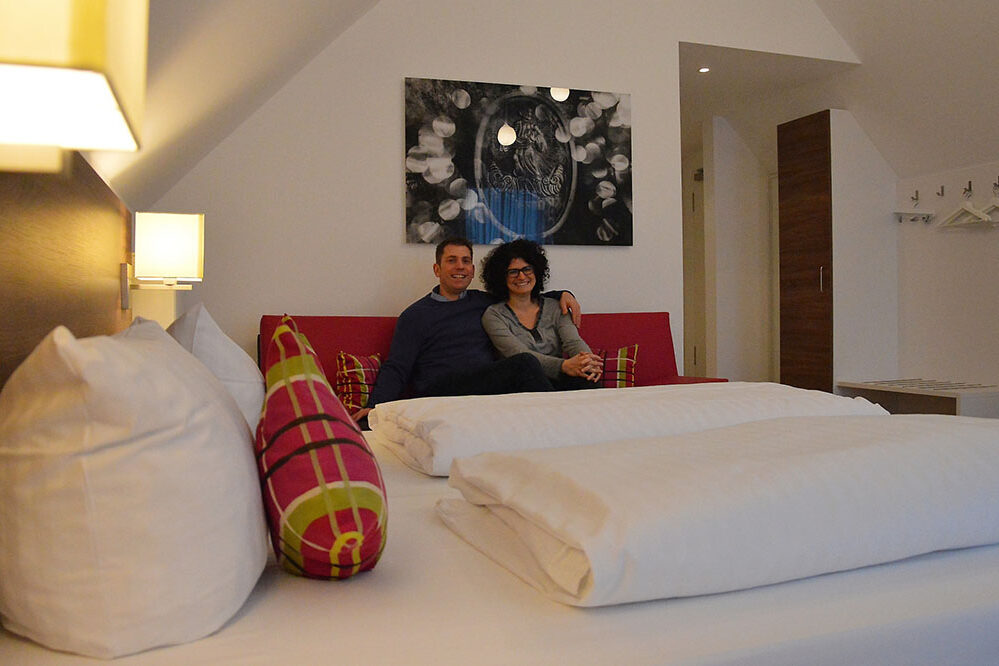
Guests sleep on cloud nine here, or optionally in the Seitensprung (affair) room. Those who wish can also stay in the Barrique-Lager (barrique cellar) – in any case, guests can expect a spacious, wonderful room with modern comforts in warm brown and purple tones. The Hotel Domhof in Guntersblum has twelve small rooms and is located in the heart of the old town center of this wine-growing community, just across the street from the Domhof winery to which it belongs.
This is truly historic ground: the number above the entrance to the wine cellar says 1754, but the farmstead dates back to the 12th century. The farmstead once belonged to the Worms Cathedral Chapter, and the large barn was once the tithe barn for the farmers' taxes. "My great-great-grandfather bought the farm," says Alexander Baumann. Heinrich Schmitt was a cavalry captain, a respected man, in 1874.
It was the French emperor Napoleon who ended the rule of the church in Rheinhessen. The "Domhofbeständer," the estate administrators, had to travel all the way to Paris to buy back the estate from the French. Napoleon's Legion of Honor had put the estate up for auction, and the Guntersblum family bought it back.
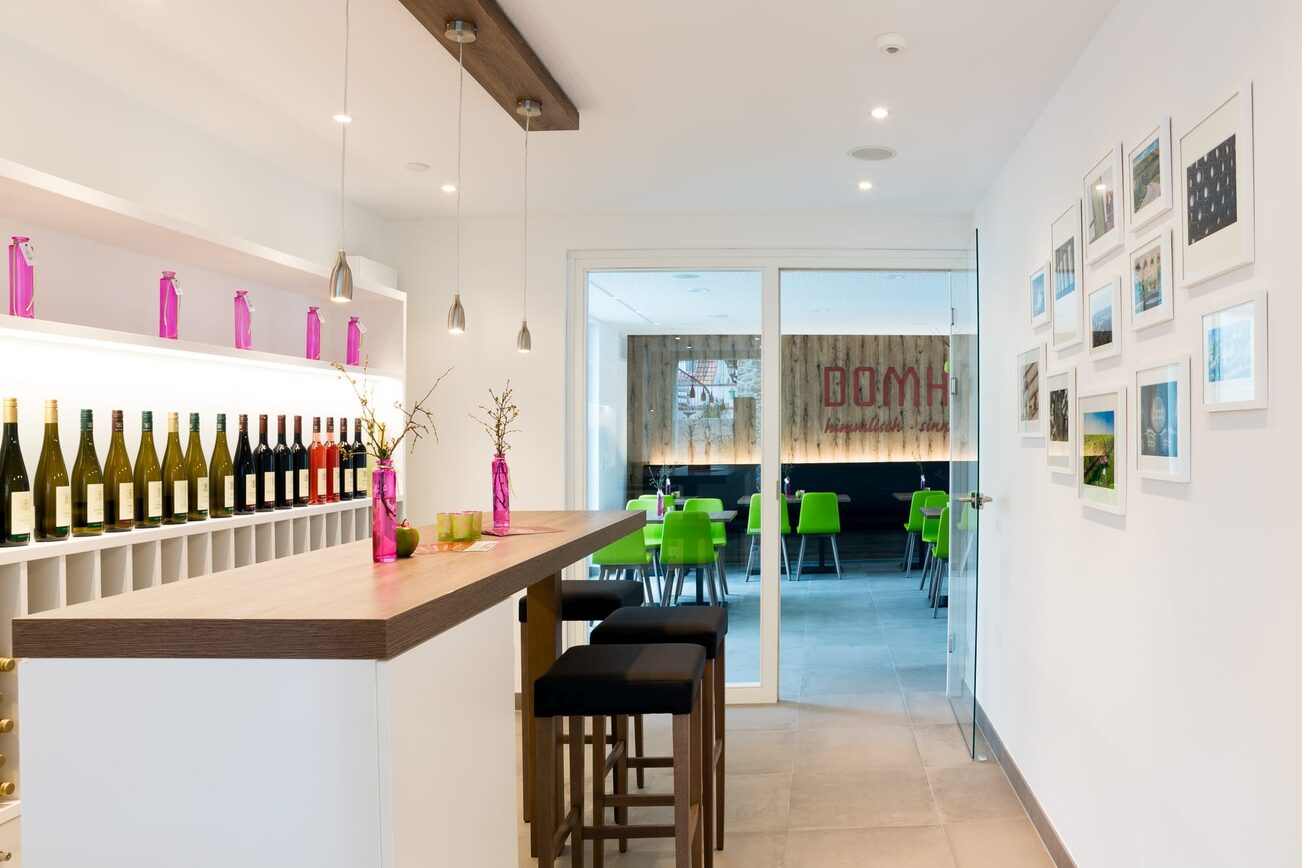
Today it is called "Domhof" again, as Alexander Baumann gave the winery back its old name. "Petrus, the patron saint of Worms Cathedral, has always adorned our coat of arms," says Alexander Baumann, "the keystone on the farm gate and the labels on our wine bottles." Yes, you can breathe history here at the Domhof, but there is nothing dusty about the fresh, clear Riesling in the glass on the modern bar of the small hotel.
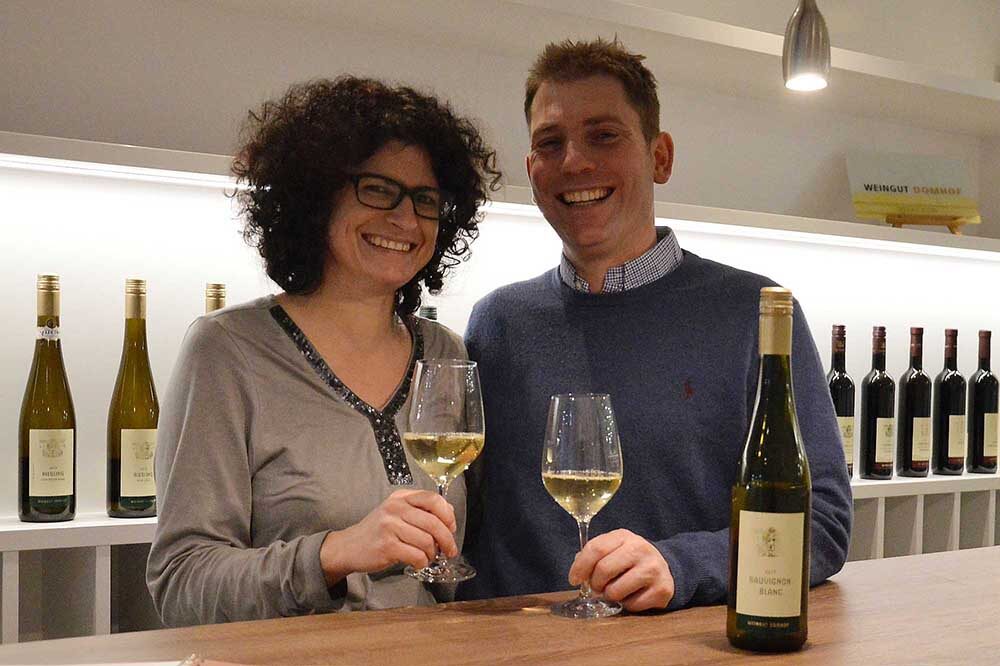
Alexander and his wife Chris Baumann cultivate ten hectares of vineyards, 35 percent of which are Riesling and 18 percent red wines. They have Sauvignon Blanc here, Scheurebe as well, and the Pinot Noir matures in French barrique barrels. "I always said I would never marry a winemaker," says Chris with a laugh, "that was my firm stance." But then she met this young winemaker from Guntersblum at the wine festival in Nierstein, Chris's hometown... and fate decided otherwise.
Alexander trained as a viticultural technician in Veitshöchheim, Franconia, and in 2004 the couple took over the family winery. "My father started producing bottled wine," Alexander explains as he opens another bottle of Riesling: limestone, loess, and red clay slate from the famous Roter Hang in Nierstein form the basis of Domhof wines, perfect for a wine tasting across the Rheinhessen terroirs.
We compare the fresh, mineral Riesling from the limestone with the slightly broader, fruitier one from the Roter Hang and talk about this wonderful Rheinhessen wine country, which only discovered style and class about thirty years ago. Today, they serve four-course lobster dishes here with matching wines. "My father was one of the pioneers," says Alexander, whose son now focuses entirely on enjoyment and aromas.
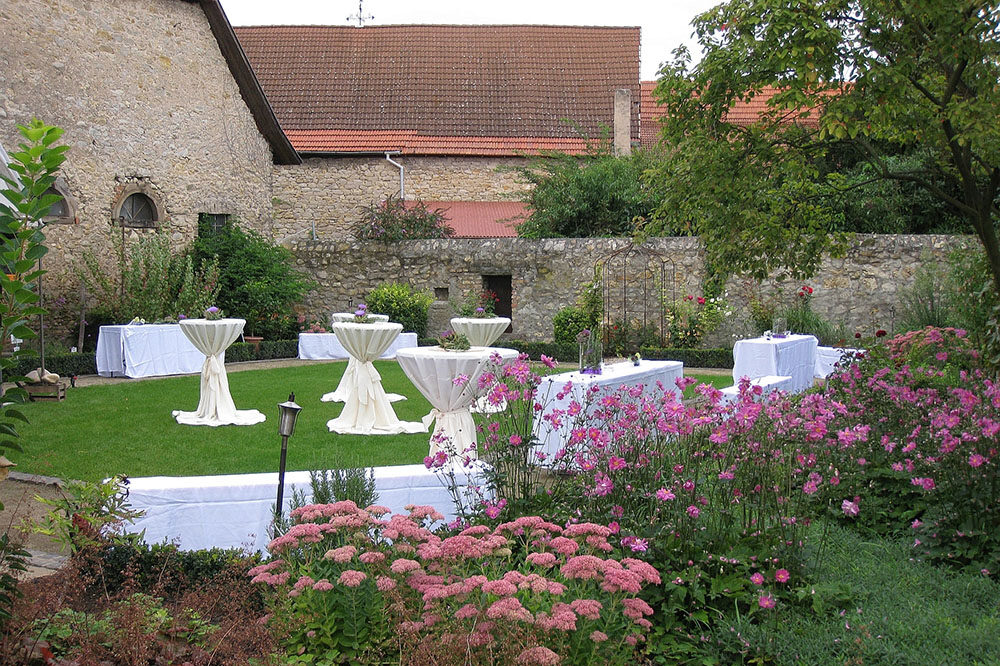
Next to the new wine shop, they built an aroma garden where the main grape varieties grow alongside plants that reflect their aroma: lemon balm, thyme, and red vineyard peach next to Riesling, raspberry, blackberry, and vanilla verbena next to Pinot Noir. In summer, there are wine tastings in the garden with aroma stations at individual points, says Chris. In 2010, the Baumanns won their first Best of Wine Tourism Award for this.
In 2018, they won the award for the second time, this time for their accommodation. "There just weren't enough beds for our guests," says Chris, so in 2016 they built the cute little hotel on the other side of the street, on the site of the old bottle storage facility. Many short-break vacationers from the Rhine-Main area come here, says Chris, as do hiking enthusiasts and wedding couples. The old horse stable now houses a registry office, and the old barn still holds a secret: "This was the synagogue of Guntersblum," says Alexander, "and it was supposed to be burned down by the Nazis during Kristallnacht."
They had already stacked the wood when Alexander's great-great-grandfather stopped the arsonists – and bought the synagogue on the spot. Today, the old walls house the wine cellar, with only the gallery inside still reminiscent of its former purpose. "Jewish visitors come here from time to time," says Chris, but the Jewish community never wanted the building back. A touch of history wafts through the old walls, and perhaps that inspired the Baumanns for their latest project: "We're currently building an escape room with wine puzzles," Alexander reveals, "down in the old wine cellar, of course." It's the cellar with the 1754 above the entrance.
About the blogger
Journalist Gisela Kirschstein has lived in Mainz since 1990 and, among other things, is constantly on the lookout for exciting topics from Mainz and Rheinhessen for her website Mainz&. In 2015, she won the Great Wine Capitals' international bloggers' contest.