Mainz wine vocabulary
The "Meenzer per se" is highly educated, but he doesn't know it. He speaks fluent French and Latin, but in his own way.
The people of Mainz maintain their dialect, known as "Meenzerisch," with remarkable persistence. This dialect is the vocabulary of a 2,000-year-old occupying language that has been passed down orally, and whose Roman and later French elements, including Rotwelsch, are still used generously and creatively today.
But there is also genuine Mainz vocabulary that you should know. For the uninitiated wander through the labyrinth of "Meenzer" word creations in amazement until they finally reach their desired destination and communication is successful.

To ensure you have an unmarred wine experience, here are a few common "Meenzer" neologisms you’ll come across in the wine bar:
- Schoppe
A Mainz unit of measurement for wine. - Halbe
The “Halbe” (pronounced “Halwe”) is short for a “Halwe Schoppe.” It’s served in half-liter glasses—called “Schoppegläser” or “Meenzer Stange”—and is a staple in traditional Mainz wine bars. - Piffche
: The smallest unit of measurement in Mainz (0.1-liter glass); “e Piffche” means: The amount is so small that the pleasure of drinking the wine is as brief as a whistle. - Schoppestecher
: A wine drinker who enjoys drinking his “Schoppe.” - Woi
: Wine of any quality. - Fleischworscht
: The typical Mainz sausage, served cold or hot. - Weck, Worscht, and Woi
The “year-round national dish” of the people of Mainz. Hearty, simple, good. - Racheputzer
A term for a wine that’s out of balance. - Nackisch Worscht
: Mettwurst with the casing already removed. - Hausmacher Worscht
: A sausage platter or plate topped with meat tripe, blood sausage, and liver sausage; made from home-slaughtered meat. - Handkäs mit Musik
The Mainz cheese specialty: Handkäse, which is usually marinated in vinegar, oil, and onions and can lead to “music” after consumption. - Spundekäs
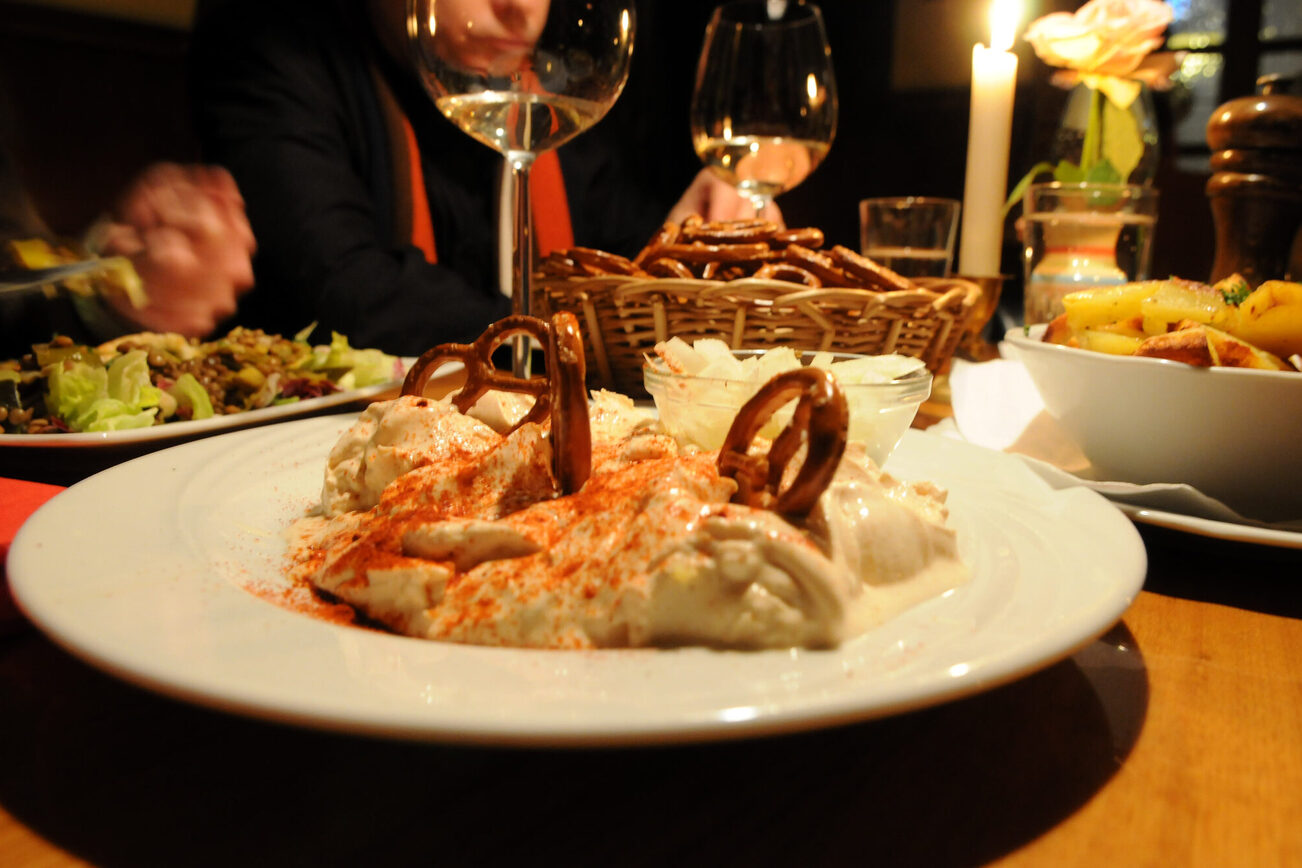
A cheese specialty, eaten with wine and usually served with pretzels.