Declaration on accessibility in plain language
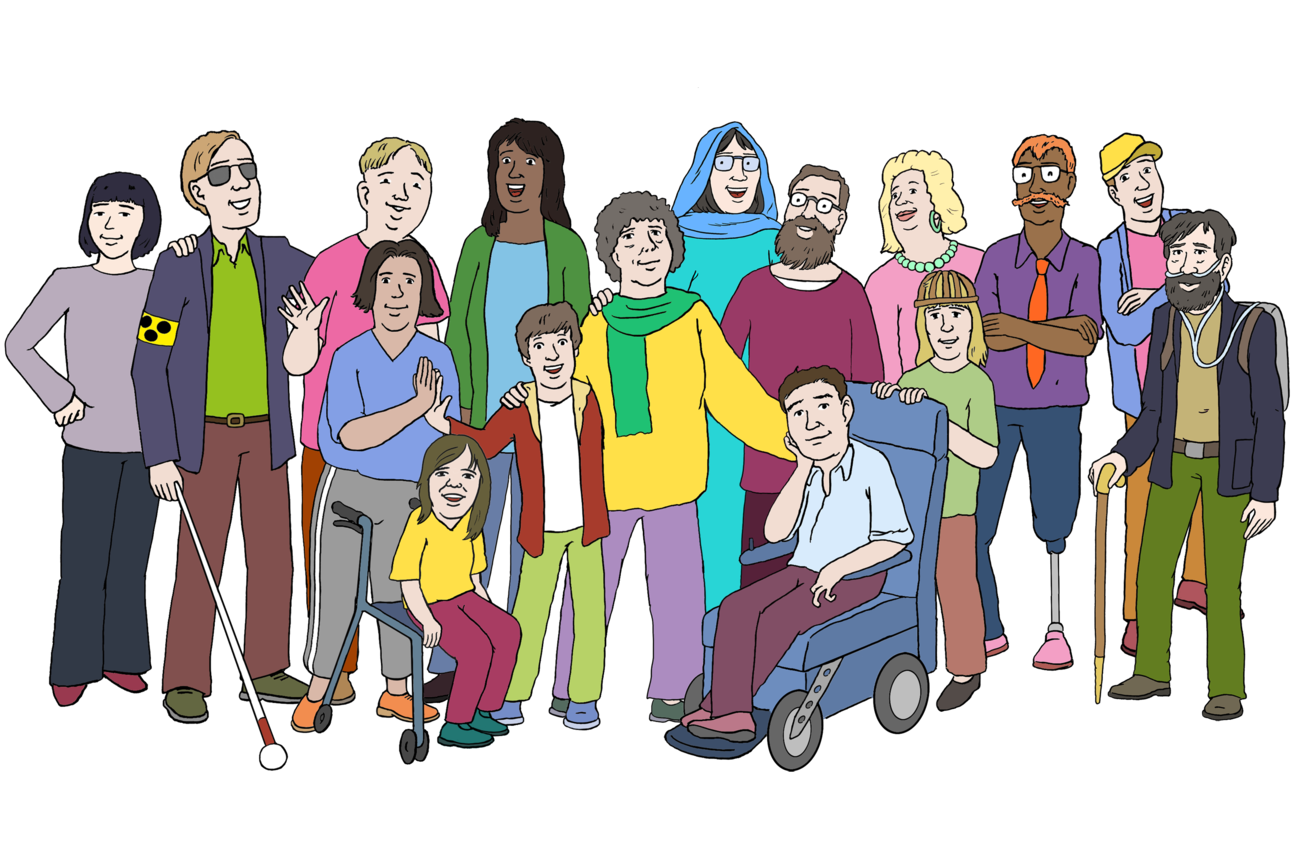
Everyone should be able to use the mainz.de website easily.
Everyone should be able to understand the information on mainz.de.
That is our goal.
And our duty.
Because all government agencies must provide
information that is easy to understand.
This is stated in the laws:
- In the Rhineland-Palatinate
Participation Act (opens in a new tab). The page is in plain language. - In the Participation Act (opens in a new tab). The page is in plain language.
- In the Information Technology Ordinance (opens in a new tab)
The page is in complex language.

It is also said that
a website should be accessible.
Accessible means: without barriers
Government agencies must check:
- Is our website accessible?
- Why might some parts not be
accessible?
Our website offers special features.
For example:
- Pages for logging in
- Pages for filling out
- Pages for payment
These special features are also accessible.
Exception:
There are pages from third-party companies.
We do not know
whether those pages are accessible.
What does the declaration apply to?
- The main website mainz.de
- Other websites
that are part of mainz.de
What does the declaration not apply to?

How should an accessible website be?
The law contains rules for websites.
The relevant sections of the law are:
- Section 3, paragraphs 1 through 4 of the Accessible Information Technology Ordinance 2.0.
The abbreviation is BITV 2.0. - Section 4 of BITV 2.0

- For example, the rules are as follows:
The website is accessible:
The text is easy to read.
You can enlarge the font.
Images are described in words.

- The website is user-friendly:
You know right away
where to click.
You have plenty of time to click.
You can use the keyboard.

- The website is easy to understand:
it includes explanations and help.
It features content written in simple language.
All sections of the website have a similar
layout.
- The website is responsive:
you can access it on any device—
whether it's a smartphone or a screen reader.
Does the website of the city of Mainz comply with the rules?
The mainz.de website complies with most accessibility guidelines.
In technical terms, this means
we meet Level AA standards.
This means the website is easy to use
.
There are a few guidelines we do not meet:
- You cannot change the font size.
- You cannot change the color contrast.
This is intentional.
Because most people can already do this—
using their computer or assistive technology.
Where did we get the information about our website?

We work with a company.
The company designs our website.
The company has checked:
Is our website accessible?
There is a program online for this check: Accessibility
Check (opens in a new tab)Check (opens in a new tab)
The site uses plain language.
There will be another check in 2026.
Then experts will check our website.
More info
Read aloud

Use from the website
Enlarge font
Sound and video
Search

Print pages
You can print the page on paper.
The page will look a little different. Only the important information
will appear on the paper.
Special functions

How our employees work

What is not barrier-free?
PDF documents
- Videos
- Audio recordings
- Some texts are not yet available in easy-to-read language or sign language.
Making a website accessible requires a lot of work.
That is why the law states:
If it is too much work, the
entire website does not have to be accessible.
The relevant section of the law is
Article 5 of Directive (EU) 2016/2102
We want to improve our website.
We want to offer more content in easy-to-read language.
And sign language.
We are working together with the Participation Officer.
How can you reach us?

Please send us an email at
mainz.onlinestadt.mainzde.
We will respond within 4 weeks.
Would you like to complain?
Haven't we responded after 4 weeks?
Or are you not satisfied with the response?
Then contact the Enforcement Office. The Enforcement Office acts as a complaints office.
Its staff works to
ensure there are fewer barriers on the internet.
Address of the Enforcement Office:
Contact us
Address
Ministerium für Arbeit, Soziales, Transformation und Digitalisierung des Landes Rheinland-Pfalz
Landesbeauftragte für Menschen mit Behinderung, Durchsetzungsstelle
Bauhofstraße 9
55116 Mainz
Telephone, fax and e-mail address
Your way to us
More info

Here you will find all the directives:
EU Directive 2016/2102 (opens in a new tab)
The page is written in complex language.
Images: © Lebenshilfe für Menschen mit geistiger Behinderung Bremen e.V., Illustrator Stefan Albers