
Greenwashing
Environmental tip from the Mainzer Umweltladen
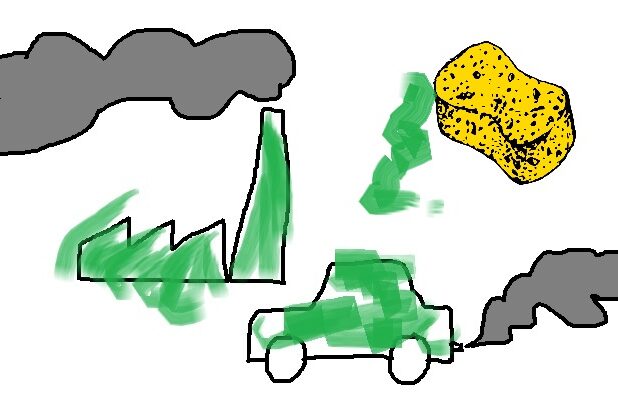
When companies, corporations, or organizations spread lies or distort facts in order to present a false image of environmental friendliness or sustainability to the public, this is called greenwashing. Since climate change and environmental protection have become firmly anchored in society's consciousness, we have seen a wave of greenwashing and pseudo-green image cultivation. Companies often invest considerable sums in whitewashing marketing instead of in the products themselves to make them more environmentally friendly. They do not always lie directly, but they omit information, distort facts, or use visual elements such as images or symbols to portray a product as green or particularly sustainable. This makes misleading advertising very difficult to identify and punish. Consumers have no choice but to be skeptical, question everything, and look for alternative sources of information. Here are a few tips to help you question corporate advertising with a skeptical eye:
- Don't be fooled by nice-sounding words. Terms such as "climate-neutral," "climate-friendly," "environmentally friendly," or "environmentally sustainable," which are intended to evoke positive ecological associations, are neither precisely defined nor particularly meaningful.
- Only trust environmental labels that are monitored by independent bodies. More and more products carry labels created by marketing experts featuring trees, clouds, or flowers that look very similar to official seals, suggesting social or ecological benefits, but are often meaningless and arbitrary.
- Pay attention to absolute consumption values. If a product is described as much more ecological than the others on the market or is said to consume much less energy than others in its category or class, this may be true, but it says nothing about the absolute (usually high) consumption or emission values.
- Take a close look at what an advertising claim refers to. Even if a product can be described as climate-friendly, this does not necessarily mean that its production is also climate-friendly. The manufacture of the product may have been disproportionately energy- or resource-intensive.
- Be particularly skeptical of certain industries. Climate protection is often emphasized in industries that generally emit high amounts of CO2. For example, the energy and automotive industries are not to be trusted in this regard, and not just since the diesel scandal and other incidents.
- Check alternative sources of information. The internet has numerous sites where you can find out about various advertisements, labels, companies, or specific claims. You can find some of them under "Further information."
Environmental tip for June 2018
More info
Contact us
Address
Environmental store
Mainzer Umweltladen
Steingasse 3
55116 Mainz