
Odessa

Brief information
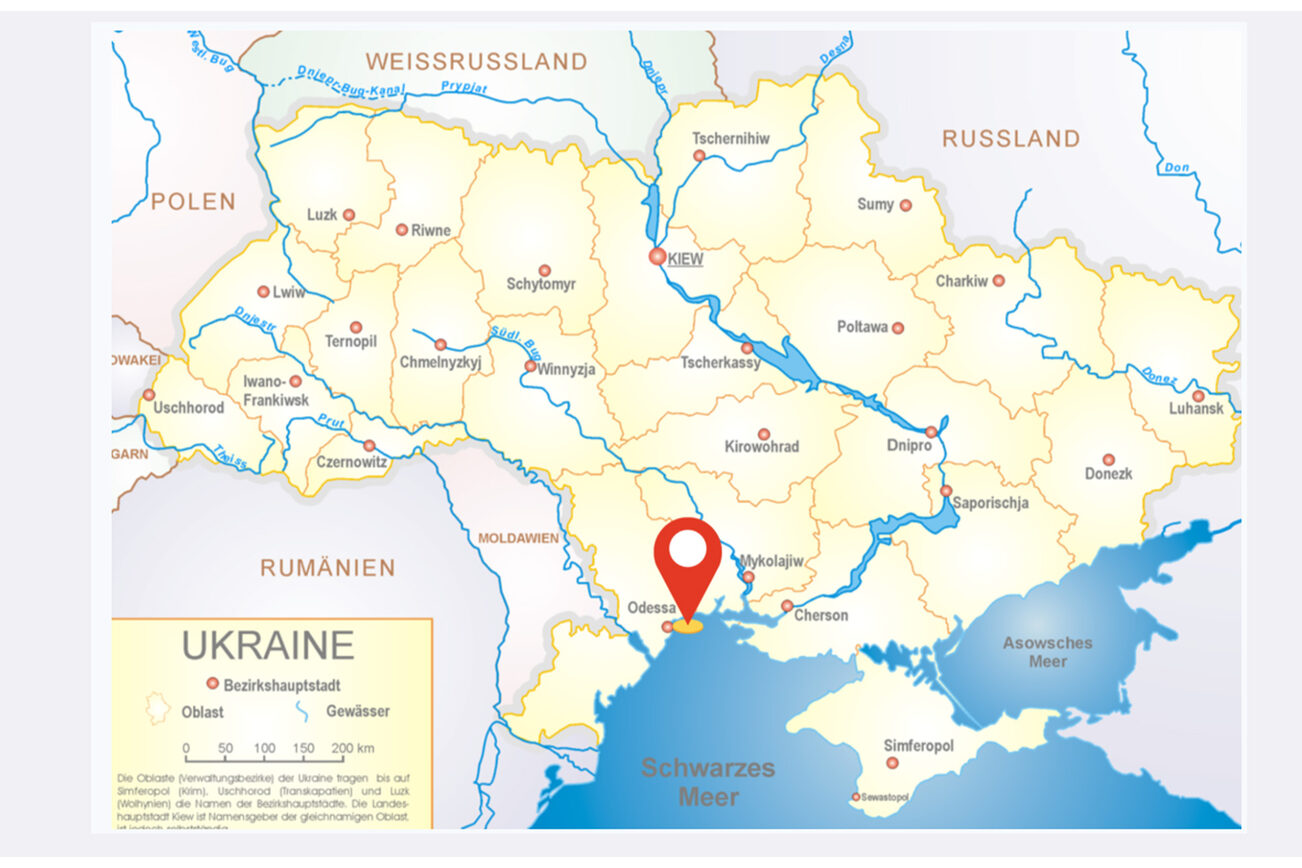
Odessa (UkrainianОдеса is located in southern Ukraine on the Black Sea. Odessa is 50 kilometers from the border with Moldova, 180 kilometers from Crimea, and 443 kilometers from Kyiv. It is still a very young city, founded in 1794 by Catherine II, also known as Catherine the Great. The city quickly gained importance and had over one million inhabitants at the beginning of 2022. Currently, the number of inhabitants has fallen below 900,000 due to the war.
History

Located on the northern Black Sea coast, various ethnic groups settled here in ancient times. Excavations suggest that a Greek settlement existed here since at least the sixth century BC.
The city's name comes from the Greek colony of Odessos, which is said to have been located in the area. Catherine II founded the city because of its favorable location, which made it possible to build a naval and commercial port. The port contributed to Odessa's global connectivity. The city also acquired a cosmopolitan character due to its intercultural population, which was made up of people from numerous countries. In addition to Ukrainians and Russians, the Jewish, Greek, French, Armenian, Italian, and German communities in the city were significant and influenced each other culturally.
Russian writer Alexander Sergeyevich Pushkin wrote about Odessa: "The city where the air is filled with all of Europe, French is spoken, and European newspapers and magazines can be read." Odessa was a cosmopolitan and cultural melting pot, especially during the time of the Russian Empire.

Due to a ban on settlement during the Tsarist era, it was not possible for Jews to settle in Moscow and Saint Petersburg, so many came to Odessa. The city became a magnet for Jewish people from Russia and parts of Eastern Europe. However, the Jewish heart of the city was lost during World War II. By 2017, only 1.2 percent of the population was Jewish.
On February 24, 2022, Russia invaded Ukraine with the strategic goal of occupying the coastal region and taking Odessa. Air strikes were launched on the city on the very first day. This plan failed thanks to the city's determined defense, and Odessa remains part of free Ukraine to this day. Russia attacks the city with missiles and drones on an almost daily basis.
In October 2025, Ukrainian President Zelensky appointed a military administration in Odessa under the leadership of Serhiy Lysak. This administration works in parallel with the civil administration under the new acting mayor, Ihor Koval.
Places of interest
Odessa is known for its beauty and mild climate. Before Putin's attack, the number of tourists was three million per year. Since the war, most tourists from abroad have stayed away, with only soldiers and people from neighboring regions visiting the city to recover from the horrors of war.
One of Odessa's attractions is the Potemkin Stairs, which lead down to the city's harbor with their 192 steps. Another attraction is the 19th-century Vorontsov Palace, built in the English palace style. Deribasovskaya Street is considered the most beautiful street in the city; it was a tourist attraction and a popular meeting place for locals.
The city's landmark is the magnificent opera house, which was built by the Viennese architects Ferdinand Fellner and Hermann Helmer and opened in 1887. It is the creative masterpiece of the two architects. At the end of the street lies Odessa's picturesque Taras Shevchenko Park, located between the old town and the waterfront promenade. Here, the city's literary connection is immediately apparent in the park benches, which are shaped like open books.
Economy
The port of Odessa has gained importance since Russia's annexation of Crimea in 2014. It is vital to the Ukrainian economy and is considered Ukraine's largest seaport on the Black Sea.
Odessa is located 300 kilometers from Crimea and is easily accessible for ships from Europe. Before Russia's invasion of Ukraine, 10,500 technology companies and 150 tech firms were based in Odessa. Since the start of the war, these numbers have increased significantly, with many companies moving to Odessa, mainly from Kyiv and Kharkiv. Despite the war, the city is on its way to becoming "Ukraine's number one technology hub."
Universities and schools
The city is home to Odessa National University, one of the oldest and most important universities in Ukraine, which also includes the Odessa Astronomical Observatory. Other universities include: Odessa State Polytechnic University, Odessa State Maritime University, Odessa National Medical University, South Ukrainian State Pedagogical University named after K. D. Ushinsky, and Odessa National Economic University. In addition, there is the Odessa Conservatory and several other academies, such as the Odessa Military Academy.
Culture and events
Odessa, also known as the "City of Smiles," is home to a rich cultural landscape, is a World Heritage Site, and is also called the City of Books. Its most famous literary resident was Alexander Pushkin.
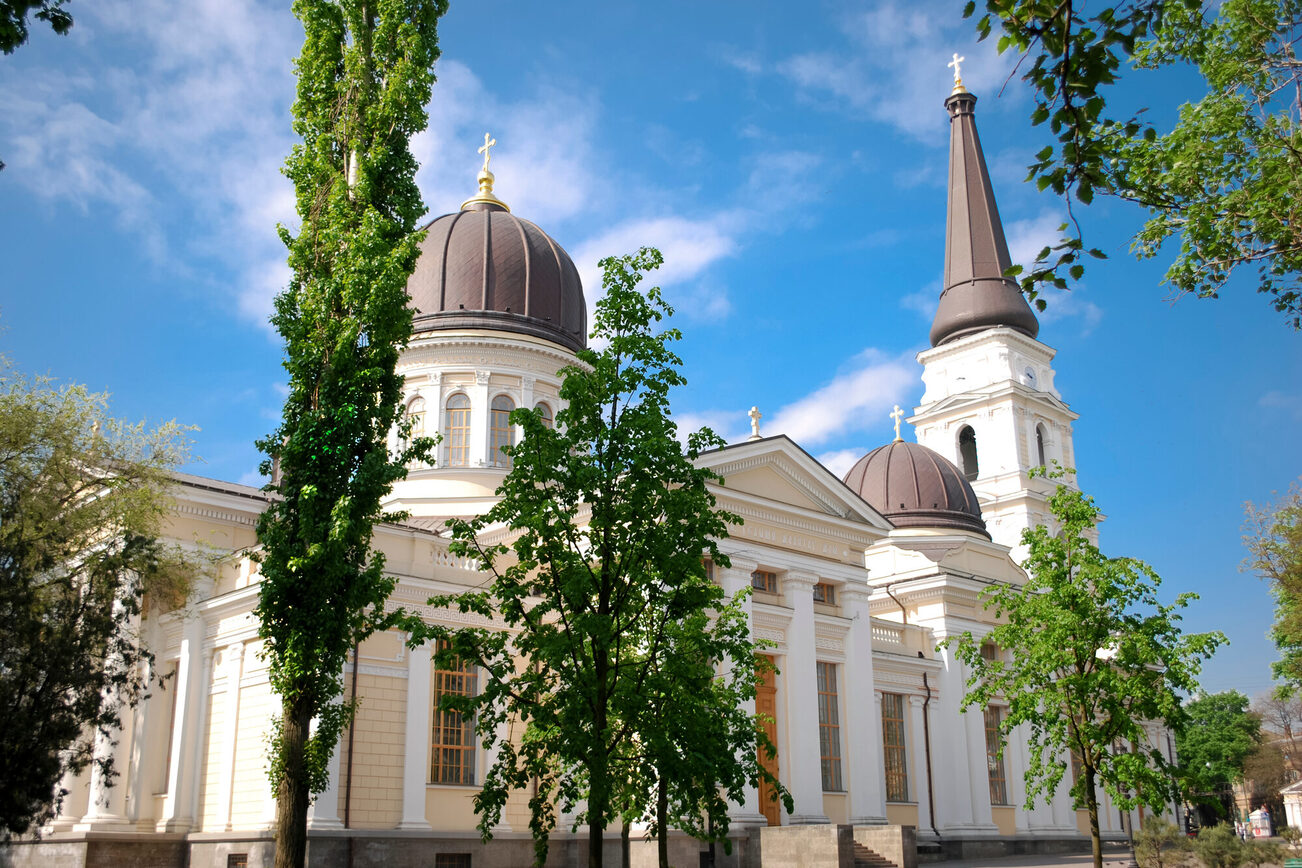
The destruction of the war has also affected important cultural monuments in the city. Several museums were damaged in the historic center of Odessa, which is a UNESCO World Heritage Site. The Archaeological Museum, the Maritime Museum at the port, and the Literary Museum, which was housed in a prestigious building, were all attacked. The important Transfiguration Cathedral on the edge of the old town, founded in 1794, was also severely damaged.
The Odessa Literary Festival, which attracted international authors every year, had been held since 2015.
Specialties
Ukrainian cuisine is a mixture of Russian, Polish, Turkish, and even German cuisine.
Potatoes are often used in dishes. The national dish is borscht, a vegetable soup with beetroot as the main ingredient. The soup originated in Ukraine. Another Ukrainian specialty is vareniki, boiled dumplings with various fillings, such as mushrooms, meat, or potatoes.
Development of the town twinning
Town twinning usually arises from similarities in size, infrastructure, and the special characteristics of a municipality. The Mainz–Odessa town twinning is based on solidarity with Ukraine, the city, and its inhabitants, who have been defending themselves against Russian military attacks since 2022.


At first glance, there are major differences between Odessa and Mainz: Odessa is four times the size of Mainz, Odessa is a young city, Mainz is over 2000 years old. Nevertheless, the two cities have many similarities – Odessa and Mainz are a good match. Both regions are considered melting pots of many cultures, languages, and religions. Mainz and Odessa are each part of the largest wine-growing region in their respective countries. Both cities were centers of Jewish life; today, the Jewish community in Mainz has around 1,000 members, including some from Odessa.
Further information
Downloads
Links
- Partnership association Mainz - Odessa (opens in a new tab)
Mainz and Odessa twinning association
- Press reports on the twinning of Mainz and Odessa (opens in a new tab)
- Press release: State capital Mainz launches appeal for donations
Electricity means life for Ukraine - State capital Mainz launches appeal for donations to purchase generators for the twin city of Odessa
- Press release: Solidarity with Odessa
- Press release: A new town twinning in a spirit of solidarity
- Press release: Resolution on town twinning between Mainz and Odessa unanimously adopted (15.05.2024)
Contact us
Partnership association
Address
Städtepartnerschaftsverein Mainz – Odessa e. V.
An der Ochsenwiese 6
55124 Mainz