
Well protected from ticks
Climatic developments with increasingly mild winters allow ticks to be active for longer periods of the year. In addition, new tick species are migrating to Germany. This environmental tip provides information about ticks, how you can protect yourself and what to do if you are bitten by a tick.
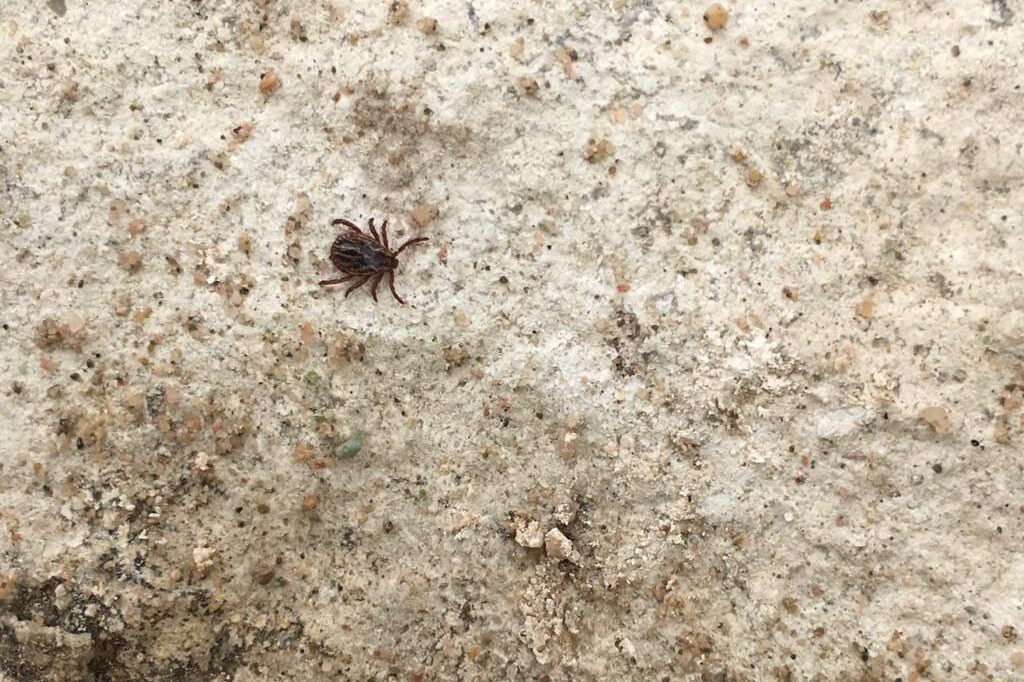
Favorable climatic conditions for ticks
Climate change, with increasingly mild winters, now suggests year-round tick activity and higher population densities. In Germany, the castor tick (Ixodes ricinus) is the most common tick species. However, there are also other, in some cases new, heat-loving species with a smaller distribution, such as the hedgehog tick (Ixodes hexagonus), the sheep tick (Dermacentor marginatus), the riparian forest tick (Dermacentor reticulatus), and Hyalomma ticks (Hyalomma marginatum, H. rufipes). All species can transmit dangerous diseases. Thus, larvae, nymphs, and adult ticks all pose a threat to humans and animals.
The life of a tick
The castor bean tick feeds three times during its lifetime. Each blood meal marks the beginning of a new stage, each of which lasts about a year. A tick therefore lives for about three years, during which time it bites three times.
In the fall, the female tick lays around 2,000 eggs in a suitable spot on the ground. The eggs overwinter until microscopically small, asexual larvae hatch in the spring. Their hosts are small rodents such as mice, squirrels, or hedgehogs. Once the ticks have fed on blood, they molt for the first time.
The nymphs hatch; they are recognizable by their body size of about one millimeter. More mobile than the larvae, they climb up grasses and shrubs to a height of about half a meter. Their biting apparatus is also larger by this stage, allowing them to target larger hosts, such as deer and even humans. This blood meal also triggers a molt.
Then the tick reaches sexual maturity. After mating, the female must feed for several more days so she can lay eggs. During this time, her body weight increases 200-fold. After the bite, the tick drops to the ground, lays her eggs, and dies.
Of the 2,000 eggs, on average only two develop into sexually mature adults. The others die before that. The reasons for this are the long development cycle and dryness—the tick’s main enemy. To survive, it needs moisture and warmth. This also explains their preferred habitat: forest edges. Warm sunlight reaches these areas, yet at the same time, the tick can retreat into the moist undergrowth if it becomes too hot and dry. Humans are primarily bitten by nymphs, as they are more numerous than adult ticks.
Ticks as disease carriers
Ticks are masters of endurance and can wait up to a year for a host. Since ticks feed on the blood of other animals, they can transmit pathogens. When a tick bites—inserting its proboscis into the skin—it transmits bacteria and viruses. This can trigger diseases such as Lyme disease (bacterial) or viral early summer meningoencephalitis (ESME).
Lyme disease is considered the most common tick-borne illness in Germany. It can affect various organ systems—primarily the skin, the nervous system, and the joints. A key sign of Lyme disease is circular redness of the skin around the bite site or on other parts of the body (erythema migrans). Typical symptoms include burning nerve pain, flu-like symptoms, or joint pain, which can sometimes appear months or even years after the tick bite. There is currently no vaccine against this bacterial infection, but early treatment with antibiotics is highly effective in most cases.
Early summer meningoencephalitis (ESME) is an inflammation of the brain and meninges caused by viruses. It is characterized by flu-like symptoms such as fever, headache, and body aches. However, it can also lead to nervous system dysfunction and permanent damage.
In Rhineland-Palatinate, the district of Birkenfeld, bordering the Saarland, is the only area classified as an FSME risk zone. The Standing Committee on Vaccination (STIKO) recommends the TBE vaccine for people exposed to ticks in TBE risk areas, people at occupational risk of TBE (such as those working in forestry or agriculture), or those planning to travel to TBE risk areas. Information on risk areas is available from the Robert Koch Institute; see the list of links below.
Correct behavior and preventive measures
When searching for a host, ticks respond to three stimuli: movement, heat, and scent. They sense the vibration when an animal or human approaches, detect body heat, and pick up on body odor or sweat. Through a special sensory organ in their front legs, they can smell the presence of a host. When a person or animal passes by, ticks extend their front legs and can latch onto the host in a flash with tiny claws. Long pants, sturdy shoes, and long-sleeved tops provide protection. And since ticks are usually found at knee height in grass or bushes, the risk of contact is reduced on well-trodden paths. If you’ve been in the grass or in the woods, you should check your body. Ticks tend to attach themselves primarily to the following areas: ears, hairline, neck, armpits, elbows, navel, genital area, or the back of the knees.
Finding and removing ticks early reduces the risk of infection. The most common tick species in Germany feeds for several days. This is precisely why it spends an hour or more searching for the most sheltered spot on the body. Borrelia bacteria are only transmitted after prolonged feeding, as they are located in the tick’s gut. The situation is different with TBE viruses: they are found in the salivary glands and can quickly enter the host’s bloodstream through the bite.
Insect repellents, such as those used against mosquitoes, can also help against ticks. The active ingredients disrupt the ticks’ sensory perception, preventing them from biting. However, the effect of sprays is temporary, and the spray must be reapplied after a few hours. Those who prefer natural products can use, for example, remedies containing coconut oil or essential oils such as eucalyptus.
What to do after a tick bite
Here’s how to do it:
- Grasp the tick as close to the skin’s surface as possible using tweezers with inward-curving tips, a tick card, or tick tweezers, and slowly pull it out of the skin. Try to apply as little pressure as possible to the tick, as this can force pathogens from the tick into the bloodstream.
- Always pull ticks out by their mouthparts and never by their engorged body.
- If no suitable tool is available, you can also remove the tick with your fingernails. However, the tick must be grasped as close to the bite site as possible by the head to avoid crushing it.
- Under no circumstances should you apply oil, glue, nail polish remover, or other chemical substances to the tick. These substances increase the likelihood that the tick will release pathogens into the bite site.
- Once you have removed the tick, you can disinfect the bite site. Check to make sure the tick has been completely removed. It is best to document where on the body the tick bite occurred and when. If the tick cannot be completely removed or if the bite site becomes inflamed, you should see a doctor.
Further information
- Competence Center for Climate Change Impacts Rhineland-Palatinate (opens in a new tab)
- Stiftung Gesundheitswissen - Tick-borne pathogens (opens in a new tab)
- TBE risk areas 2026 (opens in a new tab)
- Vaccination recommendation FSME (opens in a new tab)
- Planetwissen.de - Ticks (opens in a new tab)
- Deutsches Grünes Kreuz e.V. - Types of ticks (opens in a new tab)
Contact us
Address
Environmental store
Mainzer Umweltladen
Steingasse 3
55116 Mainz